Researchers test low-cost driver assistance system using YOLOv3 on Raspberry Pi
A study explores running YOLOv3 object detection for driver assistance on a low-cost Raspberry Pi, revealing significant hardware and thermal hurdles.
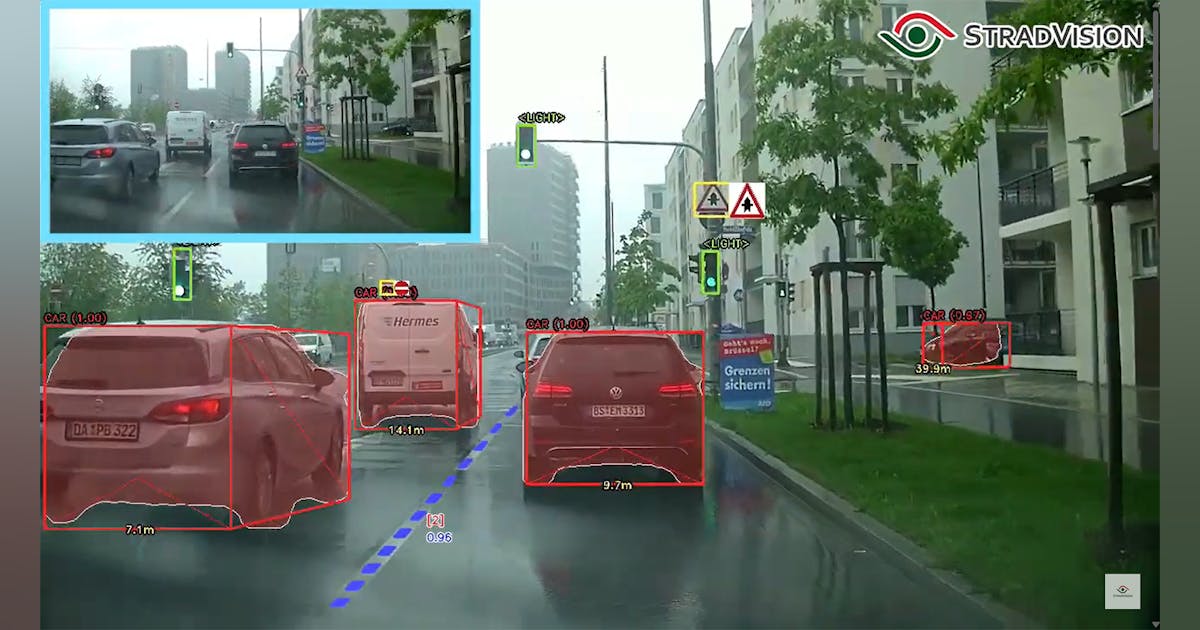
Researchers testing an affordable driver assistance prototype built with YOLOv3 on a Raspberry Pi have highlighted both the potential and the processing hurdles of bringing deep-learning perception to low-cost hardware.
Advanced Driver Assistance Systems, or ADAS, typically rely on expensive sensors, dedicated electronic control units, and powerful onboard computers. However, research details an experimental prototype designed to bring real-time road hazard detection to budget-friendly equipment. Using the You Only Look Once version 3 algorithm paired with a standard USB webcam, the system aims to warn drivers of nearby cars, traffic lights, and road signs.
Motor vehicle accidents have a significant impact globally, with world health data showing millions of injuries and deaths annually, particularly affecting young adults. Human error represents the most substantial risk factor in these incidents, prompting active research into vehicle automation and driver assistance technologies that can help drivers avoid collisions and maintain control.
The development process required significant computing resources during the training phase. Researchers utilized Google Colab to retrain the YOLOv3 network using Internet-sourced images from various countries, including Mexico, the United States, and China. After iterations, the retraining process concluded with specific mean average precision marks for different target categories.
Performance and Hardware Metrics
| Object Category | Retraining Precision | Validation Recognition Rate |
|---|---|---|
| Traffic Signs | 90.76% | 95% |
| Cars | 84.92% | 37% |
| Traffic Lights | 62.72% | 40% |
When the retrained model was deployed to the Raspberry Pi 4, real-world testing revealed major hardware bottlenecks. The microcomputer generated high temperatures due to its limited graphical unit, forcing researchers to overclock the processor and install an external cooling system and heat sink to prevent system failure. The prototype achieved an object recognition rate of 0.4 frames per second, yielding a mean average precision of 53% overall. According to the reporting, the YOLOv3 model struggled to identify small objects or items positioned closely together on the road.
The broader automotive industry relies on much more robust architectures for Level 2 and higher automation. For instance, commercial deployments utilize specialized digital signal processors and deep-learning accelerators to handle surround-view perception for commercial platforms.
Commercial ADAS suites combine cameras, radar, and lidar to manage critical functions like adaptive cruise control, lane keeping, and automatic emergency braking. These technologies serve as building blocks toward fully autonomous driving across six distinct SAE levels, ranging from zero automation up to Level 5 systems requiring no human input.
Further developments in low-cost perception systems will depend on whether lightweight neural networks can achieve higher frame rates without requiring heavy thermal management on standard microcomputers.
Vehicle automation remains an active field of research involving vehicle manufacturers, drivers, and organizations seeking to reduce accidents and improve safety. While passive systems like airbags and seat belts work to prevent occupant injuries, active systems such as ADAS control the vehicle to avoid accidents. An effective ADAS relies on low latency for timely warnings, high accuracy to minimize false alarms, and high robustness for challenging environments.
Different sensor modalities offer distinct advantages in commercial configurations. Digital cameras provide high-resolution images for monocular, stereoscopic, or infrared detection. Lidar uses lasers to create high-resolution 3D images and determine object distances, while radar relies on electromagnetic waves for broader range coverage in poor weather or low-visibility conditions. Ultrasonic sensors support short-range tasks such as parking assistance.
In contrast to experimental setups running on single-board computers, industrial applications often leverage specialized architectures. For example, StradVision's SVNet software runs across Texas Instruments TDA4VM processors, utilizing dedicated hardware accelerators and digital signal processors to support mass-market production of Level 2 systems and beyond. Volume production of fully autonomous vehicles remains years away, though ongoing trials and regulatory reporting frameworks continue to evolve across national jurisdictions.
As manufacturers work toward fully autonomous Level 5 capabilities, developers must address complex challenges ranging from hardware thermal limitations and perception accuracy to cybersecurity and data privacy compliance.