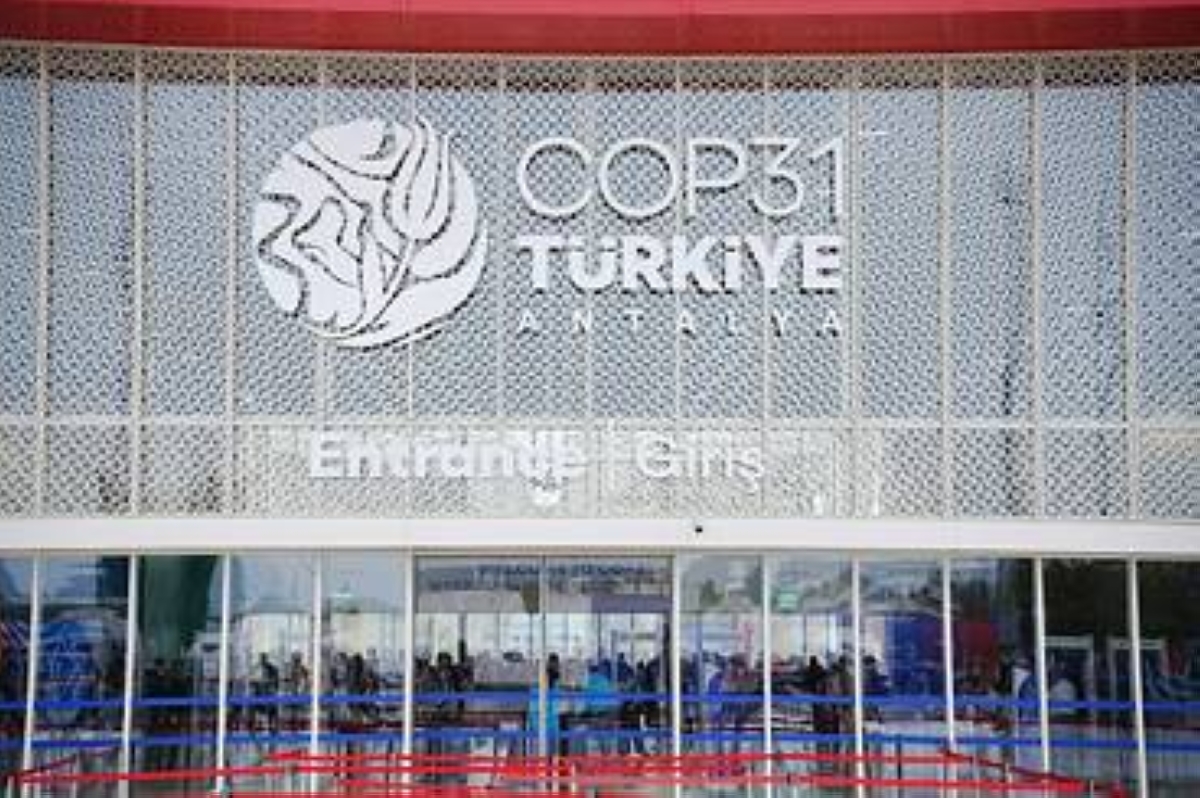
COP31 side event explores early warning systems and energy transition
At a COP31 side event, international delegates and climate experts explored how integrating meteorological early warning systems with energy grid management can safeguard infrastructure against extreme weather.
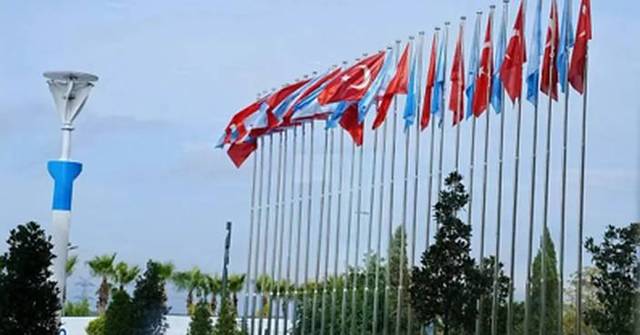
The thematic session, titled "From Early Warning to Energy Action: Pathways for Global Climate Diplomacy and Cooperation," convened on November 13, 2026, at the Global Alliance of Universities on Climate during the 31st Conference of the Parties to the United Nations Framework Convention on Climate Change, according to reports from Bastillepost and PR Newswire. According to data released during the summit by the World Meteorological Organization, global average surface temperatures during the first nine months of the year hovered approximately 1.47 degrees above pre-industrial benchmarks. An exceptionally strong El Niño event is expected to further intensify high temperatures and extreme weather, with impacts likely to continue into 2027.
Jointly hosted by the United Nations Institute for Training and Research and the Public Meteorological Service Centre of the China Meteorological Administration, which also acts as the National Early Warning Information Release Center, the event received strategic support from China Energy News, the foreign affairs working committee of the China Energy Research Society, and the China Institute of Energy Economics Research. Representatives from Russia, China, and international bodies such as the World Meteorological Organization and the International Renewable Energy Agency examined practical methodologies for turning weather alerts into operational energy safeguards. Xie Rongbin, Party secretary, chairman and editor-in-chief of China Energy and Automobile Media Group Co Ltd, president of China Automotive News, and editor-in-chief of China Energy News, stated that the global energy transition requires coordinated management spanning climate risk early warnings, technological innovation, industrial collaboration, market mechanisms, security safeguards, and equitable development.
Media additions
Speakers at the forum emphasized that technical forecasting improvements do not automatically translate into safety on the ground.
Sun noted that bridging the gap requires connecting forecasts directly with power grid dispatch, renewable energy generation forecasting, energy storage management, and emergency response infrastructure. He added that climate risk management should be strengthened in energy planning and investment decisions to improve the initial resilience of projects, while international cooperation should place greater emphasis on capacity building in developing nations."Early warning is not the end point, but the starting point for action,"
Sun Zhengyun, vice chairman and secretary-general of the China Energy Research Society, via PR Newswire
| Indicator / Report | Baseline / Historical Data | Recent or Projected Data | Source Attribution |
|---|---|---|---|
| Multi-hazard early warning systems | 56 countries (2015) | 136 countries (2025) | World Meteorological Organization |
| Developing country adaptation financing needs | — | $305 billion annually by 2035 | UN Environment Programme |
| "Mazu" AI early warning system deployment | — | Deployed in 8 countries, trials in over 50 | High-level South-South forum |
Sergey Kononuchenko, special representative of the Russian Foreign Ministry for climate issues and ambassador-at-large, addressed the delegation by calling for reinforced multilateralism, urging developed nations to honor existing climate financing and technology transfer commitments, and recognizing China's achievements in building the world's largest renewable energy system and carbon emissions trading market. Meanwhile, Andrew Tupper, head of Early Warning Services at the WMO, argued that standard weather forecasts no longer suffice for modern utility grids, advocating instead for impact-based models that trigger automated protective actions for physical energy assets. Tupper noted that the primary bottleneck lies in whether energy departments genuinely rely on meteorological warnings when making dispatch decisions, pointing out that the WMO is now incorporating trust-based collaboration models into its global framework to shift from basic cooperation to substantive operational coordination. Side event discussions also featured Avishek Malla, head of renewable energy at the International Centre for Integrated Mountain Development, who presented multi-tiered early warning systems in South Asia, and Binu Parthan, deputy director of country engagement and partnerships at IRENA, who proposed cross-sector mechanisms for short-term decision-making to address heatwave impacts on cooling demand and transmission lines.
During the session, Dr. Wang Jingyu, assistant director of the national key laboratory of advanced electromagnetic technology at Huazhong University of Science and Technology and an associate research fellow, presented the platform's inaugural bilingual report, titled "From Early Warning to Energy Action: 2026 Innovation Showcase on China's Corporate Actions and Collaborative Practices." The report compiles sixteen practical case studies across six distinct operational categories covering renewable energy output forecasting, infrastructure protection, power grid dispatch and maintenance, energy security for key users, supply-demand adjustment, and emissions reduction and carbon sequestration. These case studies highlight examples such as State Grid Shaanxi Electric Power utilizing artificial intelligence foundation models like the Fuxi model to achieve high accuracy in output forecasting, alongside overseas initiatives such as a 100-megawatt solar project managed by Trina Solar in Texas designed to minimize asset damage during extreme weather events. Additional operational successes included State Grid Zhoushan Power Supply Company reducing fault-resolution times using large AI models, and China Resources Power Technology Institute deploying an integrated climate and energy storage management platform in Hubei Province.
Key Implementation Focus Areas
- Integrating meteorological alerts directly into real-time power grid dispatch and renewable generation forecasting.
- Expanding multi-tiered early warning systems across mountainous regions and vulnerable developing nations.
- Aligning institutional policy frameworks, such as national energy meteorological service guidelines issued jointly by the China Meteorological Administration and the National Energy Administration, to standardize response protocols across 20 tasks by 2027.
- Enhancing international technology transfer and capacity building through platforms like the Global Grid Accelerator initiative.
As the conference continues to evaluate methods for closing the adaptation finance gap, which the UN Environment Programme estimates will leave developing nations facing a shortfall where public financing covers only a fraction of projected needs, delegates are turning their attention toward practical execution. Furthermore, China unveiled its AI-powered meteorological early warning solution, the Mazu all-in-one system, at a high-level South-South cooperation forum, marking another step in cross-border deployments. Observers will be watching whether international institutions can successfully codify trust-based operational coordination between meteorological agencies and energy utility providers before subsequent severe weather seasons test grid stability further.