Clashes Erupt in Barcelona as Millions Join Spain General Strike
Millions across Spain joined the country's first general strike in fourteen years, paralyzing transport and sparking clashes in Barcelona over housing costs.

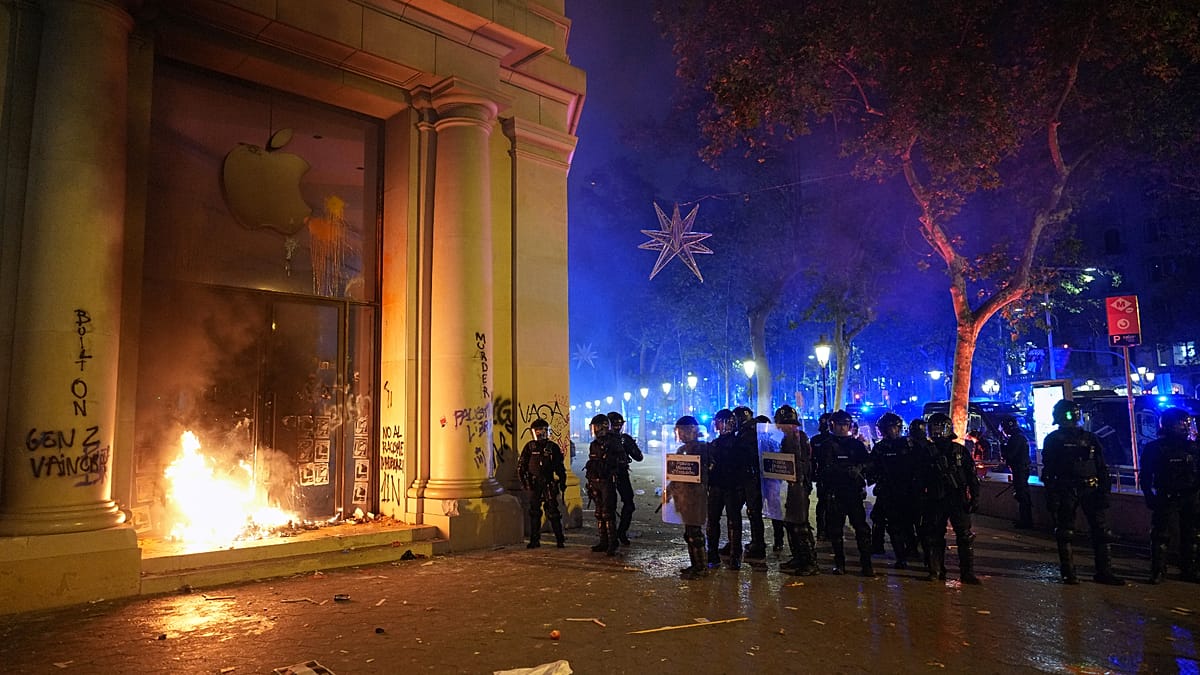
Clashes erupted in Barcelona as millions joined Spain’s first general strike in fourteen years, plunging the fourth-largest economy into turmoil over soaring housing and living costs ahead of a high-stakes snap election.
According to Blazetrends reporting on Confederation of Tenants’ Association estimates, about four million people joined more than ninety marches nationwide under the rallying banner of salaries, housing, and prices. The 24-hour walkout paralyzed public transport, flights, trains, schools, and factories. The U.S. Embassy in Spain issued a travel alert warning of reduced transit and closures of shops, museums, and pharmacies as demonstrators blocked major thoroughfares, including the AP-7 motorway into Barcelona with burning tyres.
Media additions

The unrest follows a sweeping wave of European social unrest driven by inflation and unaffordable accommodation. Euronews noted that similar cost-of-living protests have swept through Portugal, Belgium, France, Italy, and Germany in recent months. Industrial power usage across Spain fell by 7.5% during the early hours of the strike, according to data from operator Red Eléctrica cited by the BBC, compared to a drop of more than 15% during the last general strike.
The trigger for nationwide outrage was the late-September eviction of 87-year-old Maricarmen Abascal from a Madrid flat where she had lived for seven decades after new landlords tripled her rent. She died in hospital weeks later. Gonzalo Álvarez, a 27-year-old sales worker and housing union volunteer in Madrid who knew Abascal, told the BBC that he and his girlfriend pay a monthly rent that absorbs about half of each of their salaries for a one-bedroom flat in southern Madrid’s Arganzuela district.
Another demonstrator, 37-year-old teacher Olga Domingo, told Blazetrends and the BBC that she marched because the housing situation is outrageous and unsustainable compared to wages."It’s absolutely crazy… with the food, with the electricity, with the water, with gas."
Gonzalo Álvarez, Housing union volunteer, via BBC
Property portal Idealista figures highlighted the widening affordability gap, showing that the average monthly rent for a 50-square-meter apartment in Madrid reached €1,170 in October—nearly half of Spain's average gross monthly salary of €2,460 and far exceeding the 30% affordability threshold recommended by housing institutions. Unai Sordo, leader of the CCOO union, told broadcaster Cadena Ser, reported by Blazetrends, that collective bargaining alone could no longer offset annual housing cost increases of up to 12%.
| Metric / Event Phase | City / Official Estimate | Activist / Organizer Estimate |
|---|---|---|
| Barcelona Turnout | 55,000 (City Government) / 20,000 (Guardia Urbana) | 400,000 (Housing Activists) / 120,000 (Organizers) |
| Madrid Turnout | 120,000 | Not separately stated |
| Nationwide Participation | Not separately stated | ~4 million (Tenants' Association / Unions) |
As night fell in Barcelona, peaceful demonstrations along the Passeig de Gràcia and near Plaça de Catalunya descended into violence. According to Aol, groups of masked youths broke away from the main crowd, throwing stones, bottles, and fireworks at police, setting rubbish bins and street furniture ablaze, and smashing shop windows. Local media reported looting at several stores, including a Lego store, while protesters attempted to enter an Apple Store and estate agency offices were attacked, as detailed by Blazetrends and the BBC. Catalonia's Mossos d'Esquadra regional police deployed riot shields, tear gas, and foam projectiles to disperse the rioters as disturbances spread toward Las Ramblas. Euronews and NewsCord noted divergent accounts of law enforcement conduct, with unions threatening a criminal complaint over a response they termed disproportionate, while the Spanish Interior Ministry reported more than 50 arrests nationwide.
Catalan President Salvador Illa condemned the violence, stressing that it did not reflect the spirit of the peaceful protests. Business association CEOE vice-president Miguel Garrido criticized the walkout entirely, complaining to the BBC that businesses had little to do with housing prices and claiming the strike was driven by political motives linked to early elections rather than labor concerns.
The strike has injected intense friction into the parliamentary election campaign. Socialist Prime Minister Pedro Sánchez called a snap election for November 29 after right-wing opposition parties voted down his government’s housing reform package in parliament. Uniquely, Sánchez and his cabinet encouraged workers to join the walkout. Sánchez wrote on social media, as cited by Blazetrends and the BBC:
Sánchez later defended the action on Spanish television, stating,"Your eight-hour day. Your pension. Your public healthcare… These were collective conquests."
Pedro Sánchez, Prime Minister of Spain, via Blazetrends and BBC
What is nonsense is to question the rights of workers to strike.
Opposition leaders fiercely contested the government's stance. Alberto Núñez Feijóo, leader of the conservative People's Party (PP) which leads in opinion polls ahead of the vote, dismissed the strike as nonsense and branded the unions as a mafia and trash, according to Blazetrends and the BBC. PP spokesman Miguel Tellado accused the Socialist administration of weaponizing the industrial action to campaign against a prospective right-wing coalition.
What to Watch Next
- Voters head to the polls for the snap parliamentary election on November 29, which polls suggest could empower a coalition of the People's Party and the far-right Vox.
- Unions and housing associations have vowed to continue mobilization and collective bargaining until housing affordability is restored.