Taj Mahal marble slab taken in 1816 heads to UK auction
A centuries-old marble slab taken from the Taj Mahal during the colonial era is heading to a UK auction house for sale.
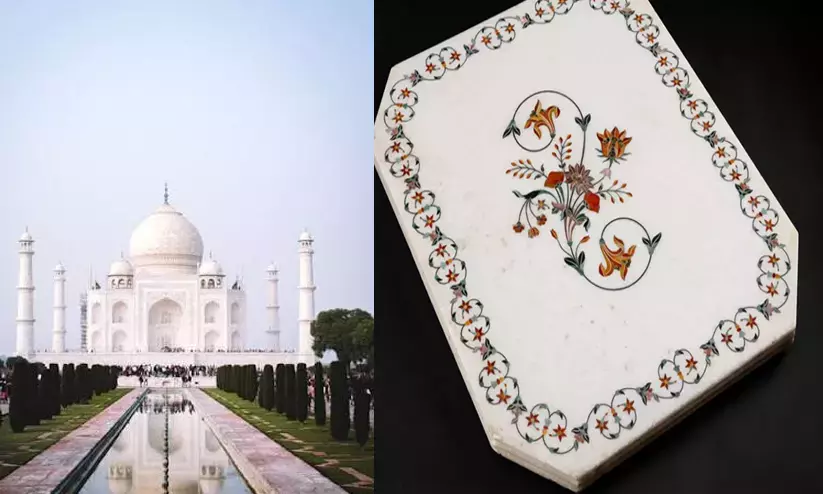
A centuries-old marble slab removed from the Taj Mahal during the colonial era is heading to a United Kingdom auction house, reigniting discussions around historical artefacts and provenance.
According to reporting from Livemint, the rectangular marble piece features intricate floral designs and a border that draws inspiration from the upper surface of the cenotaph of Mughal emperor Shah Jahan. The central scrollwork also mirrors a design on the left-and-side of the cenotaph, though it includes additional detailing and an extra floral element. The cenotaph's decoration was carved after Shah Jahan's death in 1666. Auction organisers estimate the artefact will fetch between £20,000 and £30,000, which translates to approximately ₹24 lakh to ₹36 lakh, as detailed by Madhyamam and Tbsnews.
The item is scheduled to be offered at an Islamic and Indian Art auction organised by Lyon and Turnbull on 9 December. Alongside the stone itself, the auction lot includes a vintage black-and-white photograph of the monument, a letter printed by the officer's grandson, and another letter handwritten by the Marquess of Bath, as noted by Tbsnews and Livemint. Lyon and Turnbull shared details of the offering via social media, describing the item as an exquisite pietra dura inlaid marble slab.
| Detail | Information |
|---|---|
| Item | Marble slab with floral inlay |
| Origin | Taj Mahal, Agra |
| Removal Year | 1816 |
| Collector | Colonel Pownoll Phipps |
| Auction House | Lyon and Turnbull |
| Sale Date | 9 December |
| Estimated Price | £20,000 – £30,000 (₹24 – ₹36 lakh) |
Historical records indicate the piece was collected by Colonel Pownoll Phipps, an officer with the British East India Company. Born in Devon, England, in 1780, Phipps joined the East India Company's Bengal Army as a cadet in 1799. Following service in Egypt, he returned to India and assumed the role of Fort-Adjutant and Barrack-Master at Agra in 1809. During a seven-year tenure in the position, he held responsibility for looking after the Taj Mahal and other historic buildings.
According to auction notes cited by Livemint and news agency PTI, Phipps's son's memoirs state that the officer discovered two such slabs in an underground area, or souterrain, at the monument. Phipps reportedly believed the stones were intended for repairs and understood he was permitted to keep them. Auctioneers' notes also credit Phipps with efforts to protect the historic site from damage caused by visitors seeking souvenirs, recounting an incident where an English woman attempted to remove agates from the marble using a steel fork. Tbsnews notes that the auction house stated he took his job very seriously and was at times called upon to prevent damage by Europeans looking for keepsakes.
Towards the end of his tenure in Agra, Phipps relocated. In 1816, the Governor General of India appointed him Superintendent of Building in the Lower Provinces, requiring a move to Kolkata. During his career, he maintained a staff of skilled local artists to create detailed drawings of the buildings under his supervision, many of which later entered the collection of the Victoria and Albert Museum in London during the late 19th century.
Phipps returned to Britain with his family in 1823 and died in 1858. The carved marble piece remained within his family's private collection for more than two centuries before surfacing for the upcoming sale.