NHS patients advised on ways to reduce surgery waiting times
Navigating NHS elective surgery backlogs involves proactive steps, such as reviewing clinical priority and using platforms like My Planned Care. Patients can also explore options like short-notice lists or provider choice to help manage their care journey.

- Core Development: Navigating NHS elective surgery backlogs involves proactive steps, such as reviewing clinical priority and using platforms like My Planned Care. Patients can also explore options like short-notice lists or provider choice to help manage their care journey.
- Beat Context: Categorized under NHS with independent corroboration.
- Reporting Depth: 3 minute analytical read synthesized from verified newsroom sources.
Patients navigating the NHS system currently face substantial challenges as they manage time spent on elective surgical waiting lists. Healthcare providers continue to manage high levels of demand, with millions of pathways waiting for consultant-led elective care. While clinical priority determines the order of the queue, several established pathways allow patients to take a proactive role in their own care journey.
Understanding the 18-week standard
The NHS Constitution for England sets an operational standard that patients should start consultant-led, non-urgent treatment within 18 weeks of a referral. This remains a target rather than a guaranteed deadline. Performance against this standard varies by medical specialty — including orthopaedics, gynaecology, and ENT — as well as by hospital trust and geographic region. Patients are encouraged to use the My Planned Care platform to review average waiting times at specific trusts. While the NHS aims to treat all patients regardless of need within 18 weeks of consultation, factors such as funding issues and the legacy of the global pandemic have resulted in persistent backlogs.
Media additions


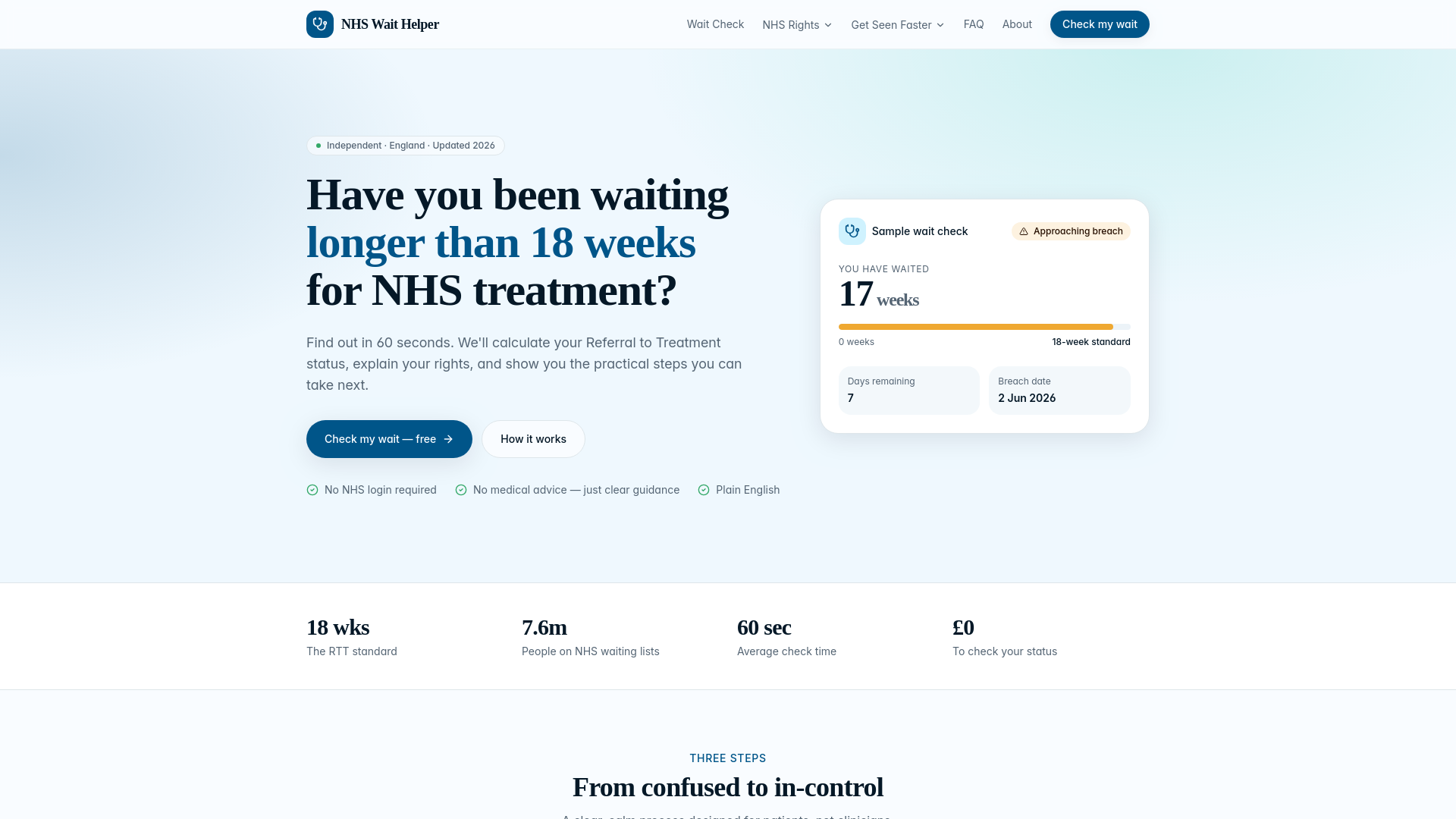
Practical steps for patients on a waiting list
Patients who feel their wait has become excessive or whose circumstances have changed can take several steps to ensure their needs are accurately reflected in the system:
- Review clinical priority: If a patient’s health, pain levels, or mobility have deteriorated, they should inform their GP. A doctor can write to the consultant or re-refer the patient with updated information, which may lead to a review of the referral category.
- Utilise patient choice: In England, patients generally have a legal right to choose where they receive their first outpatient appointment. A GP can search the e-Referral Service for alternative providers, including other NHS trusts or independent sector facilities that offer NHS-funded care, with shorter waiting times.
- Short-notice lists: Many hospital booking teams maintain informal lists of patients prepared to attend appointments or surgeries on very short notice, often 24 to 72 hours. Patients can proactively request to be added to these lists.
- Engage with PALS: The Patient Advice and Liaison Service (PALS) at local hospitals provides assistance in navigating administrative delays and escalating concerns for those who have exceeded the 18-week wait or feel they have been forgotten.
The role of private healthcare
While the NHS remains free at the point of use, many patients choose to step outside the system for some or all of their treatment. Opting for a private consultation or diagnostic test, such as an MRI or blood test, can provide clarity and speed up the decision-making process.
Opting for private care for one condition does not forfeit a patient’s right to NHS care for other issues, and patients can move between NHS and private systems. However, patients are advised to ensure that any results from private diagnostics are shared with their NHS team to prevent a fragmented medical record. While health insurance can cover future treatments, experts warn that new insurance policies rarely cover pre-existing conditions or treatments already required at the time of purchase. Consequently, many patients opt for self-pay models for current needs.
What to watch next
The situation regarding elective recovery remains fluid as hospital leaders anticipate winter demand. Health leaders have indicated that prioritising patient safety across urgent and emergency care pathways may lead to the deferral of non-urgent elective procedures. Patients should maintain current contact information with their primary care provider and remain in regular contact with their GP, as consistent communication ensures medical records remain updated regarding symptom progression.
| Action | Purpose |
|---|---|
| Monitor local data | Check My Planned Care for changes in trust performance. |
| Maintain GP contact | Ensure records reflect symptom changes. |
| Verify insurance status | Check employer benefit portals for existing coverage. |
As capacity shifts regularly across different regions, patients are reminded that there is no automatic right to move up the queue within the NHS, as prioritisation is strictly based on clinical need. Engaging with PALS or contacting a local MP remains an option for those facing unresponsive delays over extended periods.
How significant is this development?
Contribute your assessment to the aggregated reader sentiment ledger.
Frequently Asked Questions
Key questions answered in this reportWhat is the key development in: NHS patients advised on ways to reduce surgery waiting times?
Navigating NHS elective surgery backlogs involves proactive steps, such as reviewing clinical priority and using platforms like My Planned Care. Patients can also explore options like short-notice lists or provider choice to help manage their care journey.
Why is this NHS development significant for the UK?
This report covers critical events in our NHS beat. Independent reporting monitors related UK statements, regulatory shifts, and public responses as further verified details emerge.
How was this reporting corroborated and verified?
Newsarchy UK compiles and cross-references reporting from primary reporting from blog.stopwaiting.co.uk and cross-checked wire reports. All coverage adheres to published editorial standards.
When was this report published?
This briefing was published on July 17, 2026 and is permanently cataloged in the Newsarchy UK NHS archives.