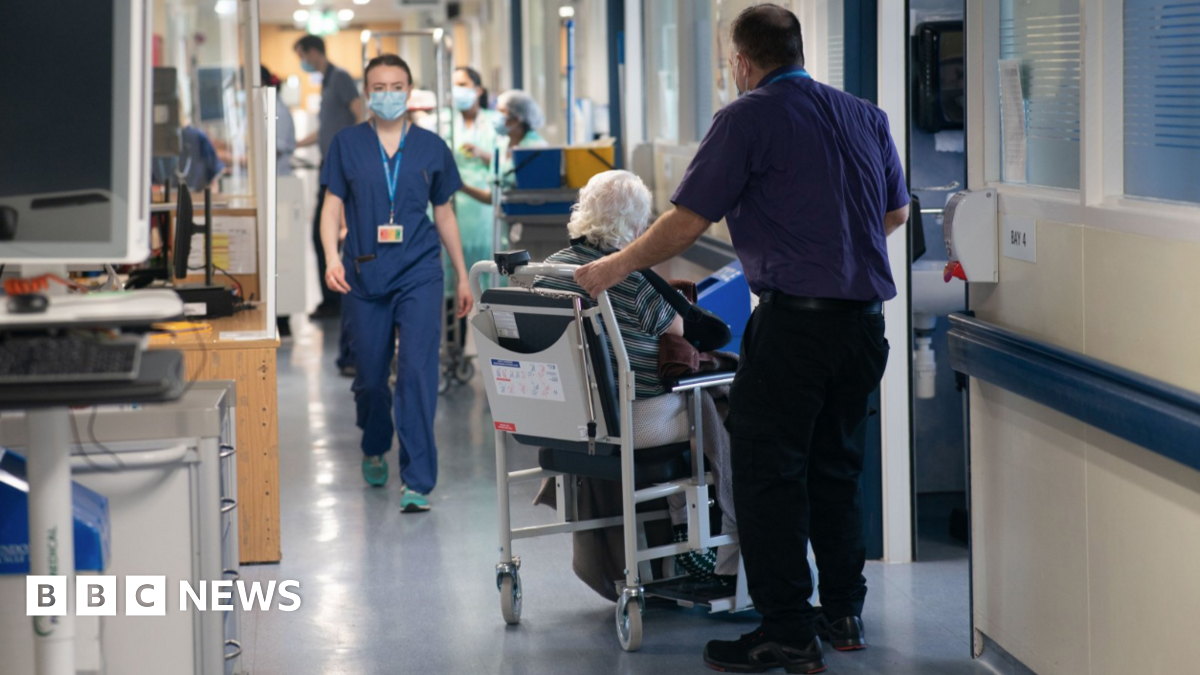
Welsh Government reports two-year waits at four-year low
Welsh NHS waiting times for two-year pathways reached their lowest level since March 2021 in June 2025, even as emergency departments faced record attendance.

- Core Development: Welsh NHS waiting times for two-year pathways reached their lowest level since March 2021 in June 2025, even as emergency departments faced record attendance.
- Beat Context: Categorized under NHS with independent corroboration.
- Reporting Depth: 3 minute analytical read synthesized from verified newsroom sources.
The Welsh Government announced that the number of patient pathways waiting more than two years fell to just over 7,400 in June 2025 – the lowest level since March 2021. This decline, reported alongside a reduction of more than 2,000 on the overall waiting list, is being described by officials as a turning point in addressing long-term NHS delays in Wales.
For the first time, the government is releasing provisional waiting-time data for the subsequent month to provide a more current view of systemic pressure. Provisional figures for July 2025 indicate a slight increase in two-year waits, though the government maintains that the longer-term trajectory remains downward.
Media additions



"It is encouraging to see the number of people waiting more than two years is at its lowest for more than four years. And I’m pleased to see a fall in the overall waiting list too."
Jeremy Miles, Health Secretary, via GOV.WALES
Jeremy Miles noted that month-on-month fluctuations are expected due to the nature of the patient cohort moving through treatment pathways. He expressed confidence that further reductions will be achieved by the end of September 2025, keeping the government on track to meet its goal of eliminating two-year waits.
Funding and targets
A £120 million plan supports health boards in their efforts to reduce the overall waiting list by 200,000, eliminate two-year waits, and restore the eight-week diagnostic target by March 2026. Health boards have also introduced a series of measures to improve productivity and core activity.
Emergency services and record demand
Emergency departments in Wales faced record demand in July 2025, with just under 101,900 attendances recorded, averaging 3,287 per day. Despite this surge, ambulance handover times saw notable improvements. Compared to June 2025, the time taken to transfer patients to emergency departments fell by 18 percent. Against June 2024, handover times were down 36.1 percent, reaching their lowest level since July 2021. More than half of patients (59.7 percent) were handed over within 45 minutes, an increase of 6.1 percent over the previous month.
"I am pleased to see continued improvements in the ambulance handover times and while there was a dip in the cancer performance, this is the fifth month in a row it has been above 60 per cent."
Jeremy Miles, Health Secretary, via GOV.WALES
In July 2025, the Welsh Ambulance Service introduced new "purple" and "red" call categories for life-threatening emergencies. The service reported 814 purple calls and 4,449 red calls.
Long-term trends
Data as of December 2025 shows 5,252 pathways waiting more than two years—a 27 percent decrease from the previous month. The total number of recorded patient pathways stood at just under 741,000, a drop of 17,000 compared to the prior month. The average wait for hospital treatment was 19 weeks, compared to 24 weeks the previous year.
While the proportion of patients waiting a year or more in Wales is 19 percent, the number of two-year waits has fallen by approximately 88 percent since the peak in March 2022, according to reports in Nation Cymru.
Political response
Secretary of State for Wales Jo Stevens welcomed the reduction in two-year waits as positive news. However, opposition members voiced criticism. Welsh Conservative health spokesperson James Evans described the situation as an "abysmal failure," and Plaid Cymru health spokesperson Mabon ap Gwynfor stated that waiting times remain too long.
What to watch next
- September 2025 – Expected further reductions in two-year waits and a quarterly review of progress.
- March 2026 – Deadline for the restoration of the eight-week diagnostic waiting target.
How significant is this development?
Contribute your assessment to the aggregated reader sentiment ledger.
Frequently Asked Questions
Key questions answered in this reportWhat is the key development in: Welsh Government reports two-year waits at four-year low?
Welsh NHS waiting times for two-year pathways reached their lowest level since March 2021 in June 2025, even as emergency departments faced record attendance.
Why is this NHS development significant for the UK?
This report covers critical events in our NHS beat. Independent reporting monitors related UK statements, regulatory shifts, and public responses as further verified details emerge.
How was this reporting corroborated and verified?
Newsarchy UK compiles and cross-references reporting from primary reporting from bbc.com and cross-checked wire reports. All coverage adheres to published editorial standards.
When was this report published?
This briefing was published on July 7, 2026 and is permanently cataloged in the Newsarchy UK NHS archives.