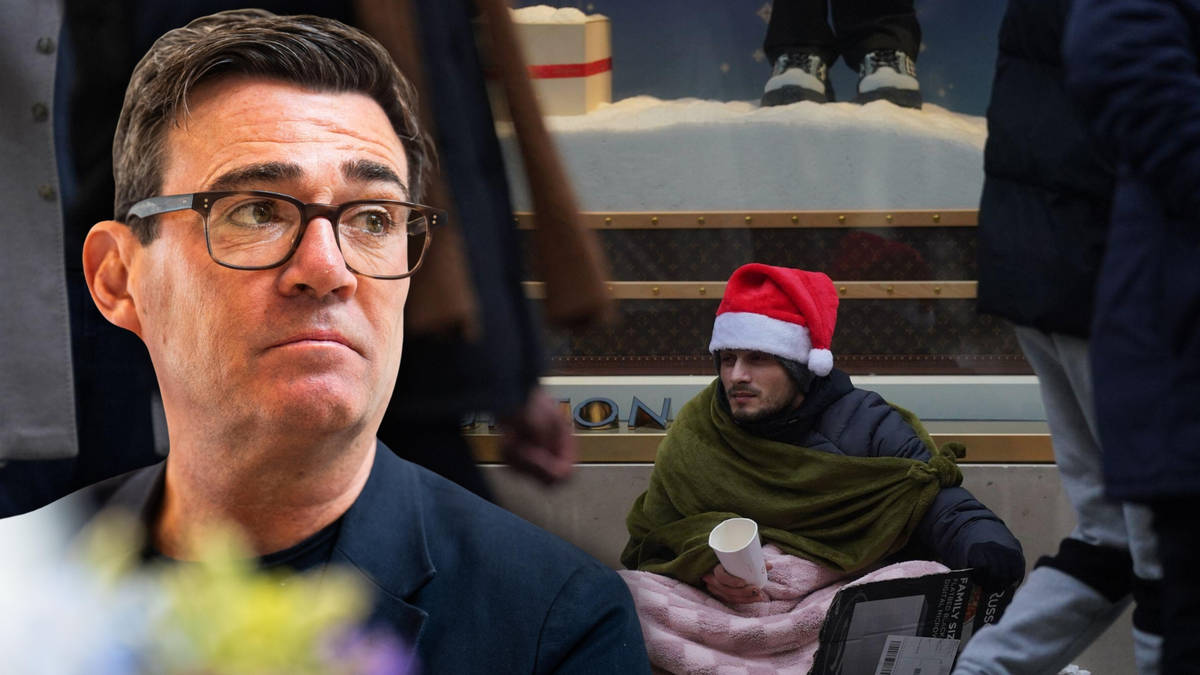
Andy Burnham launches national drive to end rough sleeping with £442m funding
A new £442 million national initiative aims to tackle rough sleeping, granting local leaders funding and discretion to design community-led housing solutions.

- Core Development: A new £442 million national initiative aims to tackle rough sleeping, granting local leaders funding and discretion to design community-led housing solutions.
- Beat Context: Categorized under Politics with independent corroboration.
- Reporting Depth: 3 minute analytical read synthesized from verified newsroom sources.
The £340 million component, announced last month, was intended for settled accommodation for rough sleepers. The new £102 million add‑on includes an £8.4 million boost to the Ending Homelessness in Communities Fund, earmarked for charities, faith groups and community organisations that already operate on the front line.
He added that his “first instruction” on day one in No 10 was “to end rough sleeping”, and that the new drive will give every local leader the discretion to design routes off the street that suit their communities. “Gone are the days of Westminster dictating solutions to the local people who face these issues every day,” he said.
Media additions
Official government figures published in February estimated 4,793 people slept rough on a single night in autumn 2025 in England – a record high and the fourth consecutive annual increase. London and the South East accounted for 43 % of that total. By contrast, research from the Combined Homelessness and Information Network (Chain) released last month showed a 10 % year‑on‑year drop in London, with 3,959 people sleeping rough between April and June 2026, down from 4,392 in the same period of 2025.
MHCLG guidance accompanying the funding emphasises “adequate and accessible provision” for female rough sleepers, who are often under‑represented in statistics and face higher risks of violence and exploitation. The department also urges local areas to consider “single‑sex accommodation with specialist, intensive and trauma‑informed support” for victims of domestic abuse and sexual violence.
Housing secretary Angela Rayner, writing for Lbc, said: “Working alongside councils, mayors and charities, we're backing local areas to tackle rough sleeping at its roots, giving people the security, dignity and opportunity they deserve, and restoring hope to those who have been let down for far too long.” She added, “Be in no doubt, we will do what it takes to get people off the streets for good, rebuild lives and give everyone the security and dignity of a roof over their heads.”
Shelter chief executive Sarah Elliott described the commitment as “a game‑changing move and exactly the kind of bold leadership needed to end the housing emergency”. She warned that the focus must also extend to “the almost 178 000 children hidden away in grim temporary accommodation”.
Lord John Bird, cross‑bench peer and co‑founder of the Big Issue, praised the “wraparound support” funded for long‑term rough sleepers but cautioned, “It’s important that people are not just brought in from the cold for a few weeks, only to be sent back out again.” He echoed the pandemic lesson that decisive action can deliver rapid change.
Crisis chief executive Matt Downie called the announcement “a clear statement that in the 21st century, we will not tolerate a situation where people are having to bed down on our streets”. He stressed that “where access to a home isn’t possible straight away, providing good‑quality accommodation with a clear plan to support people into settled housing is a vital first step”.
Opposition voices challenged the plan’s detail and funding sources. Shadow housing secretary Sir James Cleverly argued that Burnham “failed to eradicate rough sleeping in Manchester” and that the national pledge “lacks a clear delivery plan”. He demanded Labour “come clean on what other programmes they are cutting to pay for this project”. Deputy Reform UK leader Richard Tice dismissed the pledge as “yet another vague announcement with no substance”, noting a steady rise in homelessness in Greater Manchester since 2021.
The rollout will see mayors and councils expected to “play a leading role in driving local action to end rough sleeping”, according to MHCLG. Areas under the greatest pressure will receive the largest share of support, and local authorities will be encouraged to tailor provisions for women, victims of abuse and other vulnerable groups.
What to watch next
- The national summit this autumn, where business, charity and faith leaders will be asked to outline concrete actions.
- Local authorities’ publication of winter‑time accommodation plans, including single‑sex, trauma‑informed units for female rough sleepers.
- Follow‑up reporting on how the £442 million is allocated, especially the £8.4 million boost to the Ending Homelessness in Communities Fund.
- Parliamentary scrutiny of the funding source and any offsets to other social programmes, as highlighted by opposition critics.
How significant is this development?
Contribute your assessment to the aggregated reader sentiment ledger.
Frequently Asked Questions
Key questions answered in this reportWhat is the key development in: Andy Burnham launches national drive to end rough sleeping with £442m funding?
A new £442 million national initiative aims to tackle rough sleeping, granting local leaders funding and discretion to design community-led housing solutions.
Why is this Politics development significant for the UK?
This report covers critical events in our Politics beat. Independent reporting monitors related UK statements, regulatory shifts, and public responses as further verified details emerge.
How was this reporting corroborated and verified?
Newsarchy UK compiles and cross-references reporting from primary reporting from mirror.co.uk and cross-checked wire reports. All coverage adheres to published editorial standards.
When was this report published?
This briefing was published on August 19, 2026 and is permanently cataloged in the Newsarchy UK Politics archives.