UK and EU sign deals in Brussels as Burnham leaves rejoining on table
Prime Minister Andy Burnham has signed a package of agreements with the EU in Brussels covering food exports, carbon trading and youth mobility, while keeping future rejoining talks on the table.
Britain and the European Union have signed a package of agreements in Brussels covering food exports, carbon trading and youth mobility, while Prime Minister Andy Burnham has left the door open to a future debate on rejoining the bloc.
The summit on Friday 20 November 2026 marks the first time a British prime minister has travelled to Brussels to reset relations with the EU since the 2016 referendum. Burnham met European Commission President Ursula von der Leyen and European Council President António Costa to sign agreements that Downing Street says could remove Brexit red tape for farmers, students and businesses on both sides of the Channel.
Media additions


The deals still require final approval in the UK and EU parliaments. A food agreement will slash paperwork and remove routine border checks for farmers and retailers exporting to the continent. A third agreement on carbon will link UK and EU emissions trading schemes. A youth mobility arrangement would allow 100,000 Europeans aged under 32 to travel, work and study in the UK each year, with the same number of Britons receiving equivalent rights in Europe, though sticking points remain around tuition fees charged to European students in the UK.
Burnham told a news conference in Brussels that most Britons wanted closer ties with the EU. “People can see the status quo is not working. It’s not good enough for Britain,” he said, describing the past decade since the Brexit referendum as “a decade of drift”. He added: “This is a good day for Britain, and this is a good day for Europe.”
Costa told reporters that Burnham was “always welcome” in the EU, a deliberately vague remark that drew laughter in the room for its dual meaning — that Burnham is welcome on the continent, and that his country is welcome to rejoin the bloc.
The deals and what they cover
| Agreement | What it covers | Status |
|---|---|---|
| Food and farming | Slashes paperwork and removes routine border checks for farmers and retailers exporting to the continent | Signed, requires parliamentary approval |
| Carbon trading | Links UK and EU emissions trading schemes | Signed, requires parliamentary approval |
| Youth mobility | 100,000 Europeans aged under 32 can travel, work and study in the UK each year; same number of Britons receive equivalent rights in Europe | Signed, sticking points remain on tuition fees |
Burnham claimed the deals could add 0.5 per cent to UK GDP, while an initial Treasury projection cited by City AM put the figure at 0.4 per cent. The new agreements are expected to be in place by March 2028, and some legislation linked to them could be introduced to the UK parliament as early as next week.
The summit took place ten years after the UK’s Brexit referendum and more than six years after Britain actually left the EU.
Rejoining remains on the table
Burnham has become the first leader since the Brexit vote to reopen debate about a possible return to the union. He said his country needed to consider what the right long-term relationship with the EU was, and that he would seek “informal brainstorming” about what that could look like with colleagues in Europe in the next year.
The agreements remain within the so-called “red lines” set by Burnham’s predecessor, Sir Keir Starmer — things the UK can do to change its relationship with the EU without putting it to a referendum. But Burnham has made it clear that rejoining the bloc one day is not off the table.
Analysts see the meeting as an important step to Britain strengthening ties with its closest neighbours, and it is entirely plausible Burnham could be back in Brussels before long negotiating further deals or even discussing what a return to the EU looks like. That pathway will be complicated and will test just how much the UK wants it and whether it is willing to accept the terms Europeans offer to bring the UK back into the fold.
EU demands clarity before further talks
Diplomats told The Guardian that European nations wish for an end to piecemeal “reset” summits with the UK and want the prime minister to decide his next steps domestically before they go further. Member nations said future negotiations will only take place once the UK has a fully fledged strategy set out.
“Clarity is what we need more than anything from the UK. Don’t come back until you know what you want. Work out what your options really are and then come to negotiate,” one EU diplomat told the newspaper. “The prime minister needs to bring the public with him. We can’t have another negotiation based on just half the country. We’ll only put the effort in if we know it’s not going to change down the line.”
Burnham promised in his Labour conference speech in September that he would lay out different options to the country around the time of the UK-EU summit. But with the Brussels meeting taking place on Friday, he appeared to prolong the timeline, saying in a speech on Monday that he would start a discussion with the bloc on options after the summit, before presenting options to the public at a later date.
One EU source said the “piecemeal approach is coming to an end” and another said: “It is like a buffet: you can choose to nibble on one or two dishes to start, but at a certain point you have to go for the whole of the buffet.” Another EU diplomat said there would be a “pause for reflection” after this week’s summit.
Opposition and domestic divisions
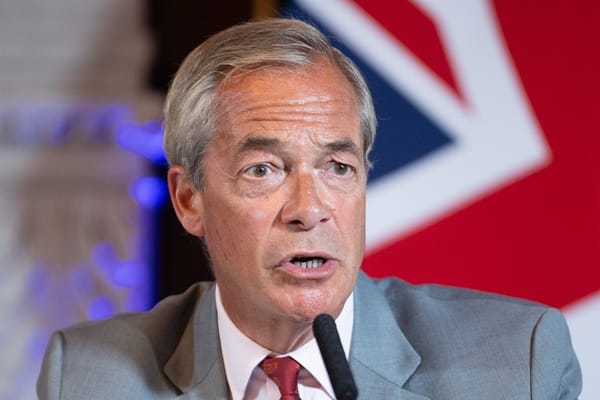
Nigel Farage, the Reform UK leader and MP, held a press conference in Brussels shortly after Burnham’s remarks with EU leaders. On Friday he told LBC the deal was “not a reset, it’s a reverse” and told GB News that Burnham had “no mandate whatsoever” to align Britain more closely with the bloc.
Farage warned that the deal would drag Britain back towards the European Union, claiming it amounted to a creeping return to the single market and would leave British businesses increasingly bound by rules made in Brussels. Speaking on Nick Ferrari at Breakfast, he said: “This is all political. He wants us incrementally to go back into the European Union.”
Farage also accused Business Secretary Jonathan Reynolds of lying after Reynolds rejected claims that the agreement’s dynamic alignment provisions could allow EU rules to take effect in Britain without parliamentary approval. Reynolds had insisted the claims were false when questioned by Nick Ferrari.
“Dynamic alignment means, it’s very simple, that the European Union makes a regulation or a directive, and the entirety of the British economy has to abide by it,” Farage said. “Even if your local baker, who does no business with Europe at all, even he or she will have to abide by that rule. And if all 650 MPs voted against it, it wouldn’t matter because that legally means that European law is supreme and the only arbiter of that is the European Court.”
Farage warned that the wider agreement could prove particularly damaging for Labour in constituencies that backed Brexit, accusing Burnham of abandoning voters who had supported leaving the EU. He said Labour MPs in Brexit-supporting seats would be “doomed”, arguing that the deal would alienate traditional working-class voters concerned about immigration and the pace of demographic change in their communities.
“I mean, you know, this goes completely against the patriotic Old Labour vote and people who are very concerned about their communities, very concerned about the speed of demographic change that is happening within their communities, and they are fully justified in having those fears,” Farage said. “He’s going to try and get a few more Lib Dem votes, get a few more Green votes, but I think this strategy in the Red Wall just won’t pass. In fact, he may find he has to stand somewhere other than Makerfield next time round.”
Burnham has defended the agreement, insisting it would be “good for working people, good for Britain and good for Europe”.
Kemi Badenoch, the UK’s opposition leader and head of the centre-right Conservative Party, has previously said rejoining the EU would not “solve all our problems”. Writing in The Daily Mail, she warned that closer ties with the EU would not provide a significant enough boost to economic growth and would risk Britain’s sovereignty. “The three central purposes of Brexit were control over our money, over our laws and over our borders. On each of those, Burnham is moving us backwards,” she said.
The Telegraph’s letters page carried criticism of Burnham’s approach, with one correspondent arguing that if the Labour Government wishes to go against the majority who voted to leave the EU, it requires a mandate to do so, either through a general election with the proposal in its manifesto or another referendum. Another letter writer said Burnham had been Prime Minister for only four months and was already abdicating responsibility for running the country to “the unelected, unaccountable bureaucrats of Brussels”.
Tuition fees remain unresolved
The European Union is demanding that students from member states studying in Britain pay the same fees as domestic undergraduates, potentially forcing universities to reduce charges from as much as £38,000 a year to £9,970. The Government has resisted the demand because of the potential financial consequences for universities, leaving a major disagreement unresolved.
Negotiators have been given six months to reach an agreement on tuition fees, with the possibility that other parts of the wider package could be delayed until the dispute is settled.
What happens next
- Some legislation linked to the new deals could be introduced to the UK parliament as early as next week.
- The agreements are expected to be in place by March 2028.
- Negotiators have six months to resolve the dispute over EU student tuition fees.
- Burnham plans to seek “informal brainstorming” with European colleagues in the next year about the UK’s long-term relationship with the EU.
- The next general election is expected in 2029, and Burnham has said any changes beyond Labour’s manifesto red lines would require a mandate at that election.
Burnham’s personal popularity as the only major party leader with a positive net approval rating, and his sizeable parliamentary majority, make him the best-placed prime minister in years to conduct such a debate. But he faces a political minefield, with opponents having little strategic incentive in the short term to give him a free pass on this divisive topic.
For now, a straight in-or-out question, recreating a binary situation like in the 2016 referendum campaign, seems improbable. But having deliberately opened Pandora’s box, Burnham must now navigate the obstacles in front of him, keeping a sceptical public and his European counterparts convinced, while managing divisions inside his own Cabinet and party.