Ed Davey urges Andy Burnham to introduce proportional representation now
Sir Ed Davey is pressuring incoming Prime Minister Andy Burnham to overhaul the UK's first-past-the-post voting system immediately. The demand sets up an early legislative challenge as Labour navigates internal divisions over electoral reform.
- Core Development: Sir Ed Davey is pressuring incoming Prime Minister Andy Burnham to overhaul the UK's first-past-the-post voting system immediately. The demand sets up an early legislative challenge as Labour navigates internal divisions over electoral reform.
- Beat Context: Categorized under Politics with independent corroboration.
- Reporting Depth: 4 minute analytical read synthesized from verified newsroom sources.
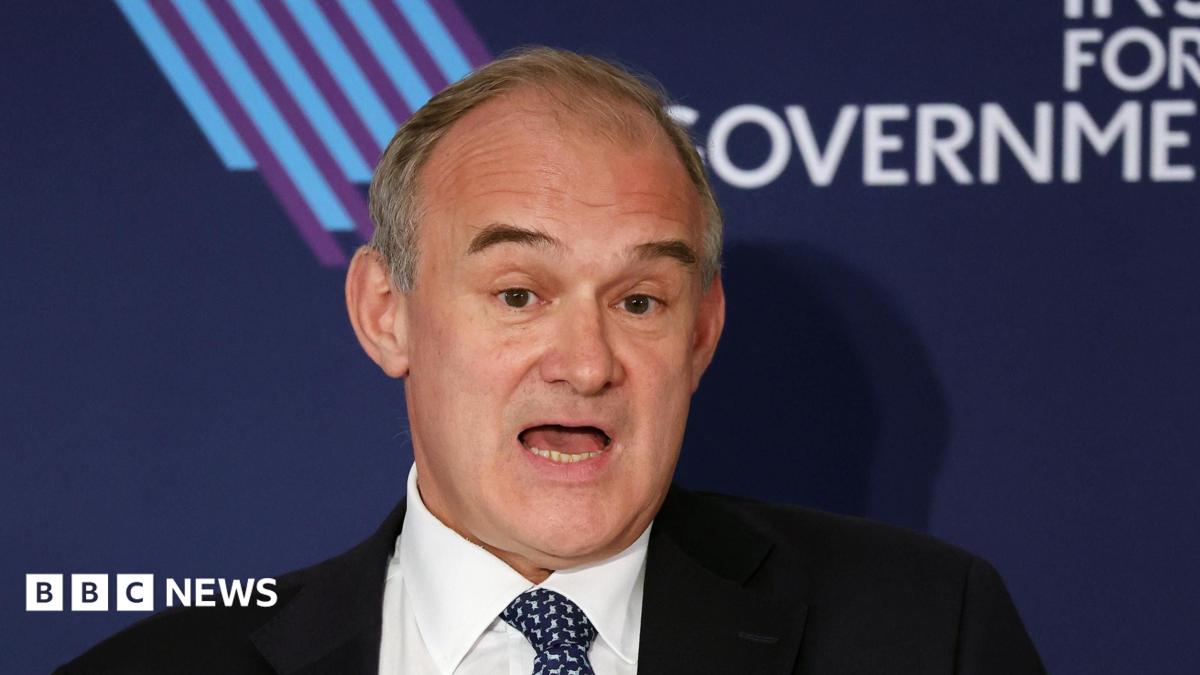
As the United Kingdom approaches a change in leadership, the Liberal Democrat leader has issued a direct challenge to the incoming prime minister regarding the future of the nation’s democratic architecture. On Tuesday, Sir Ed Davey used a platform at the Institute for Government to insist that proportional representation be adopted immediately, arguing that the incoming Labour administration must act before the next general election or risk losing the opportunity to reform the system entirely.
The call for reform creates an immediate tension for Andy Burnham, who is set to be confirmed as Labour leader on Friday and prime minister on Monday. While Mr. Burnham has previously described his support for electoral reform as a belief in an idea whose time has come
, his recent political maneuvering suggests a more cautious approach to implementation.
Media additions

The Case for Immediate Reform
Sir Ed Davey’s address emphasized that electoral reform is not merely a theoretical preference but a functional necessity for governance. He characterized the existing first-past-the-post system as the underlying cause of long-standing systemic failures in the country. According to Sir Ed, the current Westminster voting model prevents effective problem-solving by prioritizing political point-scoring over collaborative governance.
"Fix the broken electoral system by introducing proportional representation. To give everyone an equal vote and an equal voice in our democracy, and make sure no politician or political party can afford to take them for granted. And do it now. Don't wait until it is too late. Don't wait until after the next election – when you might be powerless to do anything about it."
The Liberal Democrat leader further argued that a national referendum on the matter is unnecessary. He suggested that Labour’s existing manifesto commitment to resetting politics provides sufficient mandate for the change, pointing out that previous administrations had altered local electoral structures without seeking explicit public approval through referendums.
Labour’s Conflicted Path
The incoming prime minister’s stance on the issue has shifted as he has transitioned from his role in regional government to the national stage. While Mr. Burnham expressed support for a more collaborative politics
during his time as mayor of Greater Manchester — where he utilized a supplementary vote system — his more recent statements show an intent to manage internal party expectations rather than force an immediate overhaul.
During his recent campaign in Makerfield, Mr. Burnham indicated he would not move to change the voting system immediately upon taking office. Instead, he has suggested he would aim to build internal consensus to include a commitment for reform in a future Labour election manifesto. This approach stands in contrast to the urgency demanded by the Liberal Democrats, who seek to leverage Mr. Burnham’s stated pledge to rewire
the British state to force a cross-party alliance on electoral reform.
Legislative Hurdles and Parliamentary Testing
The debate is set to move from the think-tank circuit to the floor of the House of Commons this autumn. An amendment to the Representation of the People Bill, tabled by Labour MP Alex Sobel, calls for the establishment of an official commission to investigate how the voting system can be made more representative and trustworthy. The amendment has garnered support from more than 80 Labour MPs and has the backing of the Liberal Democrats.
This upcoming debate represents a potential early test for Mr. Burnham’s leadership, as it will force a public accounting of where his administration stands on the issue versus the pressures exerted by backbenchers and opposition parties.
Context of the Debate
- Historical Stance: The Liberal Democrats have campaigned for proportional representation for over a century.
- 2011 Precedent: A national referendum on the alternative vote system was rejected by voters, though supporters of proportional representation, including Sir Ed, distinguish that system from the proportional models currently under discussion.
- Party Divergence: While Labour's 2022 conference supported moving toward proportional representation, the 2024 manifesto focused instead on House of Lords reform and lowering the voting age.
As the transfer of power approaches, the question remains whether the incoming prime minister will prioritize the collaborative political model he has championed or adhere to the more conventional legislative path favored by his party leadership. For now, the Liberal Democrat leader has explicitly stated that his door is open
should Mr. Burnham decide to pursue a collaborative path to reform.
How significant is this development?
Contribute your assessment to the aggregated reader sentiment ledger.
Frequently Asked Questions
Key questions answered in this reportWhat is the key development in: Ed Davey urges Andy Burnham to introduce proportional representation now?
Sir Ed Davey is pressuring incoming Prime Minister Andy Burnham to overhaul the UK's first-past-the-post voting system immediately. The demand sets up an early legislative challenge as Labour navigates internal divisions over electoral reform.
Why is this Politics development significant for the UK?
This report covers critical events in our Politics beat. Independent reporting monitors related UK statements, regulatory shifts, and public responses as further verified details emerge.
How was this reporting corroborated and verified?
Newsarchy UK compiles and cross-references reporting from primary reporting from bbc.co.uk and cross-checked wire reports. All coverage adheres to published editorial standards.
When was this report published?
This briefing was published on July 16, 2026 and is permanently cataloged in the Newsarchy UK Politics archives.