SpaceX shares slip below IPO price for first time as rally fizzles
SpaceX stock has slipped below its initial public offering price, marking a shift for the company following its market debut. Analysts are now closely watching upcoming earnings and insider lock-up expirations for signs of volatility.
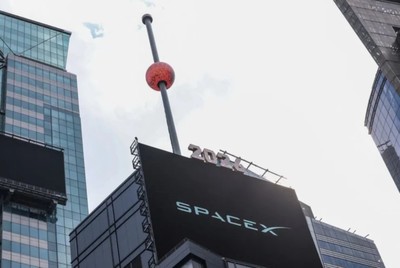
- Core Development: SpaceX stock has slipped below its initial public offering price, marking a shift for the company following its market debut. Analysts are now closely watching upcoming earnings and insider lock-up expirations for signs of volatility.
- Beat Context: Categorized under Business with independent corroboration.
- Reporting Depth: 4 minute analytical read synthesized from verified newsroom sources.
On 15 July 2026 SpaceX’s stock fell beneath its $135 per‑share offering price for the first time since the company debuted on the Nasdaq, a reversal that has turned the spotlight from the meteoric debut to looming earnings and a looming lock‑up expiry.
At the open of New York trading on Wednesday the shares were quoted at $132.15, down 2.88 % from the previous close of $136.08 and below the IPO floor. By the close the price had recovered to $135.27, still 0.6 % under the initial price.
Media additions


The dip ends a brief rally that saw the stock climb to a record $225.64, a level that briefly lifted SpaceX’s market value above Microsoft and Amazon. That rally helped Elon Musk become the world’s first trillion‑dollar‑net‑worth individual, but the recent slide has reignited doubts about whether the valuation was sustainable.
Why the slip matters now
- Investors who bought at the IPO now hold paper losses, testing confidence in a company that raised roughly $85.7 billion and was valued at around $2.1 trillion at the end of its first trading day.
- The fall coincides with the first phase of the IPO lock‑up expiring in early August, when eligible employees and early shareholders may sell shares, potentially adding further pressure.
- Analysts link the pullback to profit‑taking, valuation reassessment and concerns over SpaceX’s debt‑funded AI spend.
“The fact that a stock has fallen a couple of dollars below its IPO price in itself is not a tragedy, but SpaceX is heavily watched and has an important role in investor psyche,”
“There hasn’t been anything lately to remind people of some of the catalysts for why they bought SpaceX.”
Steve Sosnick, chief market analyst at Interactive Brokers, via The Guardian
Capital.com’s senior market analyst Daniela Hathorn added that the decline “seems to be a combination of profit‑taking, valuation reassessment and the unwinding of extremely bullish positioning following one of the most anticipated listings in recent years.”
Justus Parmar, CEO of investor firm Fortuna Investments, warned that “the elephant in the room is there’s a lot of folks that are in the stock and maybe some of them … are wanting to take some liquidity, which is essentially putting a lot of pressure on the stock.”
Market context and divergent views
Since its inclusion in the Nasdaq‑100 index, SpaceX shares have fallen roughly 13 % according to both Yahoo Finance and KFGO. The Nasdaq‑100 addition sparked a brief wave of passive‑fund buying but failed to reverse the downward trend.
Analyst consensus remains split. FactSet data cited by Forbes shows 80 % of 21 analysts rating the stock as “buy” or “overweight,” with a median price target near $247. By contrast, Morningstar’s Nicolas Owens had valued the company at $780 billion ahead of the IPO.
Raymond James’s bull case envisions the share price reaching $1,000, while Morgan Stanley’s Adam Jonas sees upside to $600, highlighting the wide range of expectations.
Critics, including CFRA’s Keith Snyder, argue that the valuation was “overstretched” before the listing, pointing to a $4.9 billion net loss recorded last year and the fact that many of SpaceX’s long‑term ambitions—such as orbital data centers and lunar missions—remain untested.
Key upcoming catalysts
- First post‑listing earnings – analysts expect the report in the first week of August, with the company saying results will be posted on its website and X rather than via wire services.
- Lock‑up phase 1 expiry – early August could see up to 1.37 billion Class A shares from insiders become tradable, adding to public float and potential volatility.
- 13th Starship test flight – the launch will be the first since a booster failure in May; the flight will intentionally end with a Gulf‑of‑Mexico splash‑down, testing recovery procedures.
- Bond market dynamics – SpaceX sold $25 billion in bonds last month to fund AI infrastructure, and bond prices have also softened, reflecting broader market doubts about debt‑financed growth.
What to watch next
- August earnings release – the first quarterly report will reveal whether AI‑related capital spending is translating into revenue.
- Insider sell‑off window – the scale of share sales after the lock‑up expires could test market depth.
- Starship flight outcome – success or failure will influence confidence in SpaceX’s long‑term cost‑reduction strategy.
- Bond market reaction – yields on SpaceX’s newly issued debt will signal investor appetite for high‑growth, high‑debt tech firms.
As the stock steadies just above its IPO price, the coming weeks will decide whether the rally that vaulted SpaceX into the trillion‑dollar club was a fleeting surge of narrative‑driven optimism or the start of a new normal for a company that blends rockets, AI and ambitious infrastructure projects.
How significant is this development?
Contribute your assessment to the aggregated reader sentiment ledger.
Frequently Asked Questions
Key questions answered in this reportWhat is the key development in: SpaceX shares slip below IPO price for first time as rally fizzles?
SpaceX stock has slipped below its initial public offering price, marking a shift for the company following its market debut. Analysts are now closely watching upcoming earnings and insider lock-up expirations for signs of volatility.
Why is this Business development significant for the UK?
This report covers critical events in our Business beat. Independent reporting monitors related UK statements, regulatory shifts, and public responses as further verified details emerge.
How was this reporting corroborated and verified?
Newsarchy UK compiles and cross-references reporting from primary reporting from kfgo.com and cross-checked wire reports. All coverage adheres to published editorial standards.
When was this report published?
This briefing was published on July 16, 2026 and is permanently cataloged in the Newsarchy UK Business archives.