UK minister pushes public utility control to business leaders
First Secretary Louise Haigh has defended government stewardship of essential utilities at the CBI conference, insisting increased oversight protects growth.

First Secretary of State Louise Haigh has urged corporate leaders to embrace greater government stewardship of essential utilities, arguing that increased oversight will protect growth rather than stifle enterprise.
Addressing the annual conference of the Confederation of British Industry (CBI), Ms Haigh argued that the existing privatised system had left firms facing soaring energy bills, sluggish grid connections, and unreliable services that impede wider politics and economic expansion. According to advance extracts released by the Cabinet Office, she insisted that public control is not anti-business, framing it instead as a pragmatic measure to secure proper foundations so that private enterprise can thrive.
Media additions


The intervention forms a key pillar of Prime Minister Andy Burnham's broader strategy to reshape the British economy, which includes a forthcoming 10-year plan detailing tighter controls across water, transport, housing, and energy sectors. However, the proposal immediately triggered a fierce backlash from business representatives.
"To some, 'public control' sounds like code for renationalisation. That is kryptonite to investment."
Rain Newton-Smith, Chief Executive of the CBI, via Finance
Ms Newton-Smith warned the Prime Minister that investors need reassurance that private capital remains welcome at the table rather than being driven toward the exit. While acknowledging that wholesale nationalization may not be imminent, she demanded greater clarity from ministers over how the proposed public control models will operate alongside private investment.
Political opponents echoed these commercial anxieties. Conservative shadow chancellor Andrew Griffith accused the administration of treating state ownership as a universal remedy, asserting that ministers are simply relying on taxpayer funds and increased borrowing. Meanwhile, Reform UK leader Nigel Farage and Conservative leader Kemi Badenoch used their own conference addresses to attack the government's separate efforts to forge closer ties with the European Union.
Ms Haigh countered by criticizing previous generations of politicians for ducking difficult decisions and delegating authority to a sprawling web of regulators and arm's-length bodies. She drew particular attention to foreign government ownership of UK utility networks, pointing out that foreign states hold substantial stakes in domestic water, electricity, and gas networks while siphoning returns back to their own taxpayers.
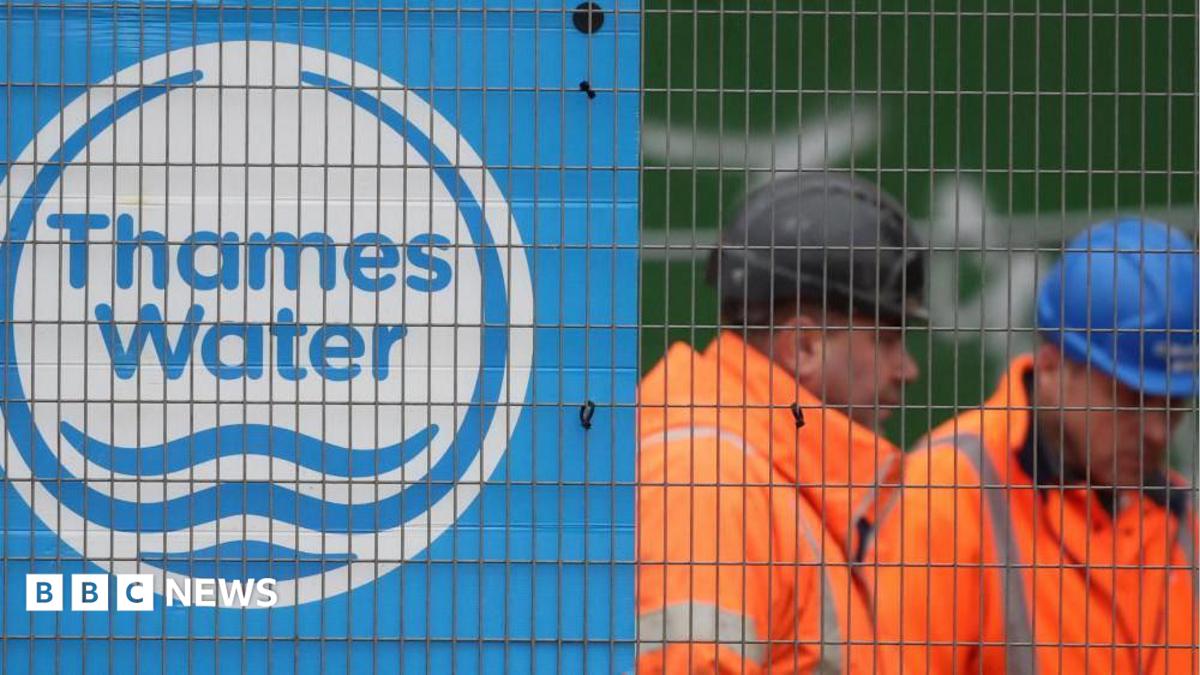
The administration insists its approach avoids wholesale state acquisition, drawing inspiration from alternative frameworks such as Greater Manchester’s franchised bus network. Under that model, private operators bid to run services while local authorities retain control over fares, timetables, and routes. Yet actual implementation remains fraught with financial tension, as illustrated by the ongoing uncertainties surrounding debt-laden entities like Thames Water lenders, whose potential restructuring continues to pose major fiscal questions for Whitehall.
Wider Economic Pressures and Policy Responses
| Economic Indicator / Policy | Current Status / Forecast |
|---|---|
| Bank Rate | Raised to 4% by the Bank of England |
| UK Inflation | Forecast by the OBR to reach approximately 5% by mid-2027 |
| Household Energy Support | £100 energy payment for council tax bands A–D |
| Industrial Support | British Industrial Competitiveness Scheme cutting 25% off electricity for qualifying firms |
The debate over utility control unfolds against a volatile backdrop of international trade tensions and shifting domestic fiscal rules. According to the official Budget 2026 speech delivered by the Chancellor, global disruptions—including ongoing conflicts in the Middle East—have pushed oil prices above $100 a barrel and nearly tripled gas prices, adding severe pressure to household and corporate balance sheets.
In response, the Treasury announced targeted interventions, including an extension of electricity VAT cuts and the launch of the British Industrial Competitiveness Scheme, designed to alleviate cost pressures on energy-intensive firms. Despite these measures, businesses continue to navigate rising borrowing costs following the Bank of England's decision to increase benchmark interest rates.
What to Watch Next
- Prime Minister Andy Burnham is scheduled to unveil his comprehensive 10-year plan detailing the operational mechanics of the public control model.
- Policymakers at the Bank of England will reconvene on December 17 to review inflation data and determine whether further interest rate adjustments are necessary.
- Legal and financial negotiations regarding the future structure of critical utility infrastructure, including debt-laden water companies, are expected to intensify.