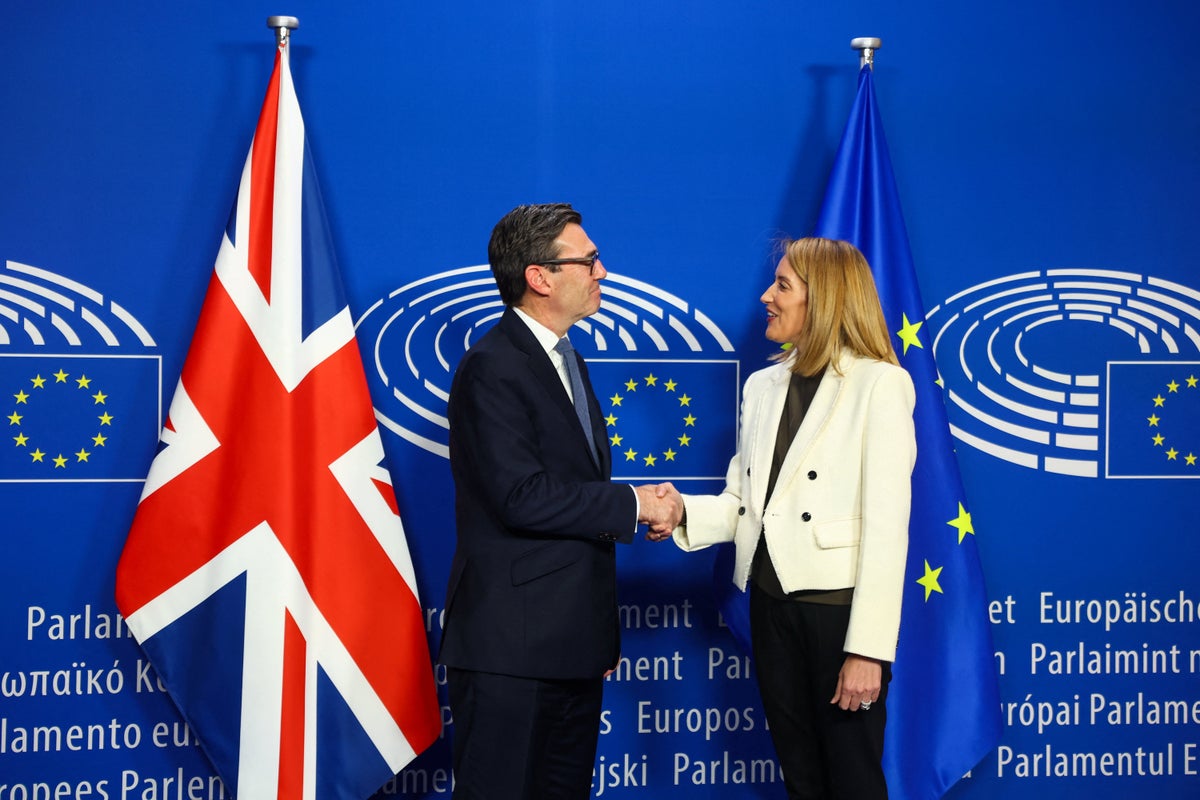
Andy Burnham faces mounting political hurdles as populist wave threatens EU
Prime Minister Andy Burnham is advancing plans for a long-term UK-EU reset, but his ambitions collide with domestic sovereignty concerns and a rising populist wave across Europe.

Andy Burnham faces mounting political hurdles as populist wave threatens EU. Prime Minister Andy Burnham is advancing plans for a long-term reset with Europe, yet his ambitions collide with a rising populist tide across the continent and fierce domestic opposition to rule-taking.
The UK-EU reset deal was signed in Brussels on Friday following months of negotiations, according to primary reporting from Yahoo News. Despite last-ditch British concessions and tortuous wrangling over the fine print, the Prime Minister signalled a desire to go much further. In a Mansion House speech, Mr Burnham initiated discussions with EU partners regarding options for a long-term relationship, describing the 27-country bloc as a club of democracies on our doorstep
. He noted that incremental steps take the nation only so far and argued that Brexit has inflicted a heavy toll on Britain's gross domestic product, echoing the Remainer focus on economic costs from the 2016 referendum.
Media additions

The Changing Face of Brussels
The European Union that Mr Burnham seeks to draw closer to has transformed significantly since Britain's departure, according to geopolitical experts. The bloc has grown economically weaker, geopolitically insecure, more protectionist on trade, interventionist on industry, and isolationist on security. Mujtaba Rahman of the Eurasia Group observed that the EU has absorbed a more French DNA in its worldview, adopting dirigiste and statist politics that both Tory and past Labour governments would have opposed.
This evolving institutional character coincides with an impending wave of continental elections that could install populist leadership across several heavyweights. In Spain, Pedro Sánchez faces a projected defeat to conservative rival Alberto Núñez Feijóo in coalition with the Right-wing populist party Vox. Meanwhile, Marine Le Pen leads opinion polls in France ahead of the presidential race, promising to claw back powers over immigration and climate policy while slashing France's net financial contributions to Brussels. Additional political tests loom in Poland and Italy, where Prime Minister Giorgia Meloni faces a new populist rival, as well as in Germany, where the Alternative für Deutschland (AfD) party continues to make significant electoral gains.
Domestic Backlash and Sovereignty Concerns
Domestically, the Prime Minister's European overtures have reanimated familiar battle lines from the Brexit referendum. Former prime ministers and Leave campaign leaders have mobilized a fresh initiative dubbed "Stay Out," releasing video material citing substantial Brussels price tags and warning against the loss of national control over money and priorities. Michael Gove told reporters that every EU leader has made clear that the price of British membership is financial contribution, questioning whether the government intends to pay over the odds for schemes bringing minimal benefits.
Critics also argue that aligning with Brussels rules risks turning Britain into an EU rule-taker without a voice in shaping legislation, according to commentary published by the Daily Express. Observers point out that remaining outside the bloc allows the UK the freedom to issue grants, loans, tax breaks, and support domestic industries without securing approval from European authorities, a liberty that would be constrained by single-market alignment.
| Political Figure / Party | Country | Current Stance / Polling Position |
|---|---|---|
| Marine Le Pen (Rassemblement National) | France | Leading presidential polls; proposes slashing EU contributions. |
| Alternative für Deutschland (AfD) | Germany | Polling strongly in state elections; advocates radical decentralisation or "Dexit". |
| Giorgia Meloni (Brothers of Italy) | Italy | Facing pressure from newer populist rivals amid cost-of-living protests. |
Even within government ranks, caution persists. Business and Trade Secretary Jonathan Reynolds expressed uncertainty regarding how the EU might develop given the upcoming electoral calendar, stating that any future closer relationship would require a Europe willing to operate cooperatively.
What to Watch Next
- The outcome of the upcoming general election in Spain and subsequent regional ballots across France, Germany, Poland, and Italy.
- Further developments from the newly formed "Stay Out" campaign and parliamentary debates regarding future UK-EU alignment.
- Official responses from Downing Street as cabinet ministers weigh economic integration against domestic sovereignty concerns.
For more updates and analysis, consult our broader Politics coverage.