NYC voters to decide on five government efficiency ballot questions
New York City voters will decide on five separate government efficiency ballot questions designed to accelerate municipal operations and dismantle administrative delays.
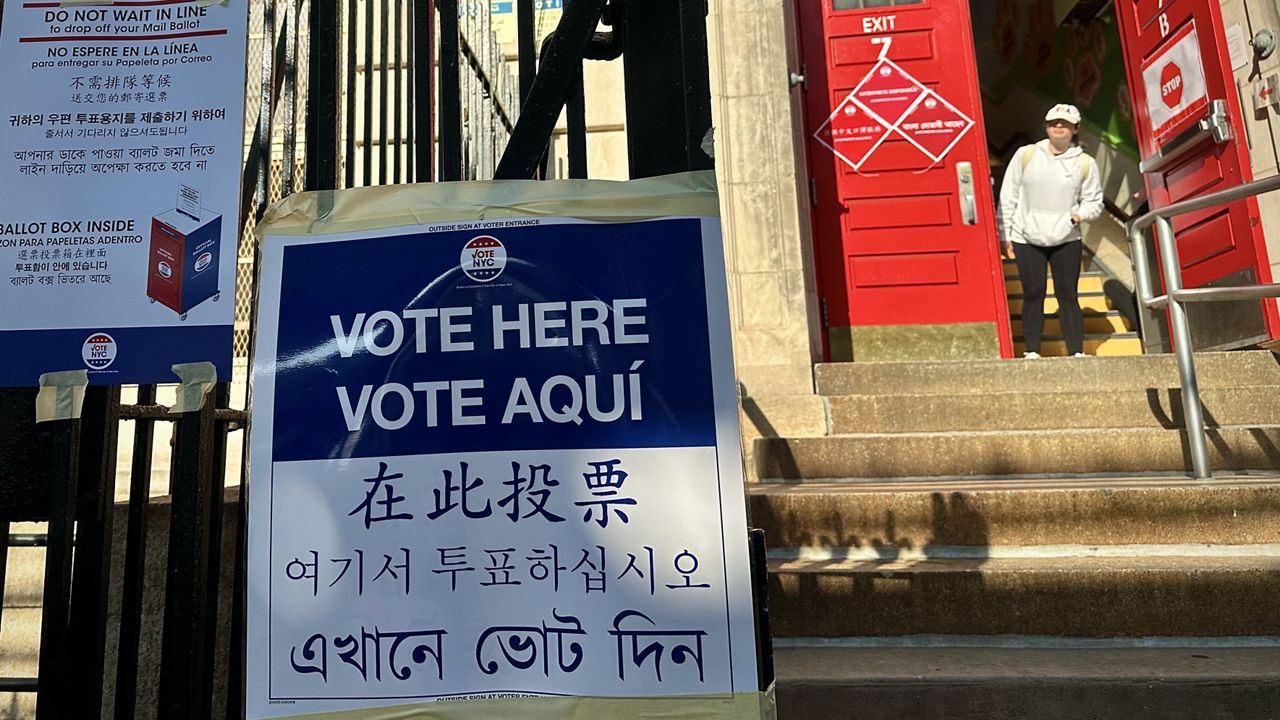
New York City voters will decide on five separate government efficiency ballot questions designed to accelerate municipal operations and dismantle administrative delays. Good-government organizations and civic advocates argue that these measures are urgently needed to remove cumbersome bureaucratic hurdles that leave local residents feeling disconnected from municipal authority. The proposals stem from an empaneled city commission tasked with examining municipal efficiency.
Voters must physically flip their ballots over to access the five distinct efficiency questions, each of which requires a simple majority to secure approval, according to reporting from Ny1. Patrick Gaspard, the chair of the Charter Commission on Government Efficiency, or COGE, which was empaneled by Mayor Zohran Mamdani earlier this year, spoke about the initiative's core intent.
Media additions


"Despite the best intentions, things were not moving as smoothly as they should, and New Yorkers were feeling left outside of their government"
Patrick Gaspard, Chair of the Charter Commission on Government Efficiency, via Ny1
Gaspard added that residents will now have the chance to vote on measures specifically intended to make local government function more rapidly.
The Five Efficiency Ballot Proposals
- Curb space usage: Streamlining the process for local businesses to utilize curb space for outdoor dining.
- Contracting speed: Accelerating municipal procurement and contracting timelines.
- Street safety projects: Fast-tracking infrastructure such as dedicated bike and bus lanes.
- Construction permitting: Centralizing the city's construction permitting workflow.
- Rainy-day fund target: Establishing specific budgetary targets for the city's fiscal reserves.
Supporters and Advocates
Proponents of the efficiency package maintain that the reforms are measured, practical, and designed explicitly to eliminate red tape, making municipal government far more responsive to everyday needs. Grace Rauh, the executive director of the good-government group Citizens Union, expressed support for the proposals.
"These reforms are important. They are measured. They're practical and real. They are designed to simply cut red tape. These are all reforms that are designed to make New York City government work better, and ultimately be more responsive to the needs of New Yorkers."
Grace Rauh, Executive Director of Citizens Union, via Ny1
Street safety advocates emphasize that question number three addresses an urgent public health crisis by bypassing overly bureaucratic processes that currently delay dangerous street redesigns. Charlie Baker of the advocacy group Transportation Alternatives highlighted the human toll of traffic crashes.
"Every year, more than 200 New Yorkers are killed in preventable traffic crashes. This is a public health crisis, but it is taking way too long to solve. Why is that? Because of overly bureaucratic processes that keep our streets dangerous"
Charlie Baker, Transportation Alternatives, via Ny1
Criticism and Community Concerns
Conversely, community representatives have raised concerns regarding the fast-tracked street safety measures. Under question three, the city's Department of Transportation would be permitted to start work on street projects simultaneously with notifying other agencies and the public, marking a major change from the current system that requires prior consultation. Ken Brown, a member of Community Board 5 in the Bronx, cautioned that these changes risk sidelining local residents.
"It's done with these good intentions to get people out of cars, things like that, but one of the consequences is that people who are residents there that do have cars are pushed to the side, and they feel like their concerns are not as weighted"
Ken Brown, Community Board 5 in the Bronx, via Ny1
Fiscal watchdogs have similarly scrutinized the financial parameters outlined in the final ballot question. Independent budgetary analysts at the Citizens Budget Commission argued that the proposed rainy-day savings target does not go far enough. Andrew Rein, the president of the Citizens Budget Commission, critiqued the target.
"Right now, we could adopt a policy to require deposits when revenues are strong, we could adopt a policy to limit withdrawals to a recession or severe emergency and you define what that is and we should cap it at 16%"
Andrew Rein, President of Citizens Budget Commission, via Ny1
Voters will need to flip over their ballot to vote on the questions. Each one will need a simple majority to pass.


