Finland Joins French-Led European Nuclear Deterrence Initiative
Finland has officially joined France's European nuclear deterrence initiative as its tenth partner, strengthening bilateral defense ties outside of NATO.
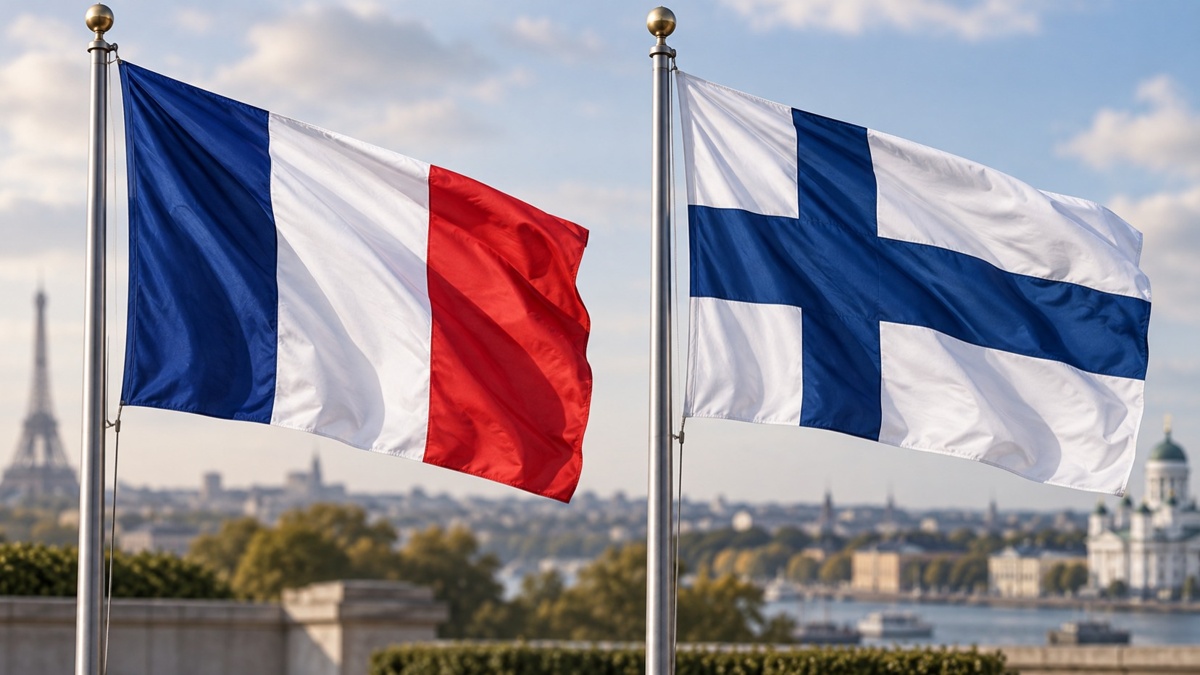
- Core Development: Finland has officially joined France's European nuclear deterrence initiative as its tenth partner, strengthening bilateral defense ties outside of NATO.
- Beat Context: Categorized under Transport with independent corroboration.
- Reporting Depth: 4 minute analytical read synthesized from verified newsroom sources.
Finland has officially aligned itself with a French-led European nuclear deterrence initiative, marking a substantial expansion of bilateral defence cooperation between Helsinki and Paris. The announcement follows confidential political and official-level discussions that culminated in a joint statement confirming Finland's participation as the tenth European partner in the framework.
The framework itself stems from an initiative unveiled by French President Emmanuel Macron in March 2026. Designed to establish a European dimension to France's sovereign nuclear posture, the plan involves close dialogue on nuclear doctrine, possible participation in joint military exercises either as observers or through conventional forces, and the prospective temporary deployment of French strategic air forces in allied partner nations. French authorities have consistently referred to the concept as forward deterrence, or *dissuasion avancée*. Despite opening these avenues for consultation, Paris retains exclusive command and control over its nuclear arsenal and reserves sole authority over decisions concerning vital national interests.
Media additions



Both Finnish and French officials have been careful to demarcate the boundaries between this bilateral arrangement and existing security structures. According to the Qazinform News Agency, the initiative is entirely separate from NATO's nuclear deterrence policy. NATO's framework relies on nuclear-sharing arrangements and American extended deterrence, which Finnish leadership describes as the ultimate security guarantee for the transatlantic alliance. Unlike the mutual defence clauses embedded within the North Atlantic Treaty, participation in the French scheme does not create collective defence commitments. Furthermore, Paris is not asking participating nations to contribute financially to the upkeep of its nuclear arsenal, and the architecture remains fully compliant with international agreements such as the Treaty on the Non-Proliferation of Nuclear Weapons and the Comprehensive Nuclear-Test-Ban Treaty.
| Participant / Aspect | French Forward Deterrence Initiative | NATO Nuclear Framework |
|---|---|---|
| Command Authority | Exclusive control retained by the French President | Shared planning and collective alliance consultation |
| Collective Defence Obligations | None; participation is flexible without mutual defence mandates | Enforced via collective defence commitments |
| Financial Contribution | No cost-sharing required for French nuclear maintenance | Shared alliance burdens and defence spending targets |
Finnish President Alexander Stubb emphasized via social media and public statements that his country's foremost priority remains its role within NATO and the European Union, stressing that the new partnership does not replace or overlap with existing alliance structures. Crucially, Stubb affirmed that Finland does not intend to station nuclear weapons on its territory in peacetime, noting that such a step would serve little purpose under current conditions, though he declined to speculate on wartime scenarios. This builds upon legislative adjustments made earlier in the year when the Finnish parliament repealed a long-standing domestic ban on the transit and storage of nuclear materials for defensive purposes, a move Prime Minister Petteri Orpo explained was intended simply to remove legislative barriers not found elsewhere in the Nordic region.
The accession of Helsinki follows a wave of regional adoptions. Other Nordic neighbours, including Norway, Sweden, and Denmark, have previously entered the diplomatic fold. In Norway's case, Prime Minister Jonas Gahr Støre framed the alignment alongside a broader bilateral defence pact known as the Narvik Agreement, which covers operational coordination in the Arctic, maritime security, and cybersecurity as part of a deliberate hedging strategy. Alongside the Nordic states, countries such as Germany, the United Kingdom, Poland, the Netherlands, Belgium, and Greece are already signed up to the French framework.
Meanwhile, expansion discussions continue elsewhere in the Baltic region. Estonian Prime Minister Kristen Michal confirmed to international media outlets on the sidelines of the European Arctic Summit in northern Finland that Tallinn is similarly engaged in discussions with Paris regarding potential nuclear cooperation. Michal noted, however, that such integration requires specific military capabilities and high levels of readiness, observing that Estonia is already sheltered under NATO's nuclear umbrella alongside a persistent French conventional troop presence.
Political reception within Finland has been largely positive, securing broad parliamentary backing despite vocal opposition from factions such as the Left Alliance. Moscow has historically expressed opposition to such strategic realignments, though Stubb urged calm, stating that there was no need to overstate diplomatic friction with Russia over the decision. The shared 1,340-kilometer land border nonetheless underscores the strategic sensitivity of Helsinki's evolving defence posture.
Practical implementation will now shift to a joint working group and a dedicated Nuclear Steering Group slated to convene over the coming months. These bodies will outline the exact mechanics of future operational cooperation, information-sharing channels, and potential exercise schedules. Concurrently, high-level diplomatic engagements continue in Helsinki, where Foreign Minister Elina Valtonen and her French counterpart are scheduled to sign a comprehensive strategic partnership document, cementing a deeper institutional axis between the two capitals well into the next decade.
How significant is this development?
Contribute your assessment to the aggregated reader sentiment ledger.
Frequently Asked Questions
Key questions answered in this reportWhat is the key development in: Finland Joins French-Led European Nuclear Deterrence Initiative?
Finland has officially joined France's European nuclear deterrence initiative as its tenth partner, strengthening bilateral defense ties outside of NATO.
Why is this Transport development significant for the UK?
This report covers critical events in our Transport beat. Independent reporting monitors related UK statements, regulatory shifts, and public responses as further verified details emerge.
How was this reporting corroborated and verified?
Newsarchy UK compiles and cross-references reporting from primary reporting from Qazinform and cross-checked wire reports. All coverage adheres to published editorial standards.
When was this report published?
This briefing was published on September 16, 2026 and is permanently cataloged in the Newsarchy UK Transport archives.