COP31 Climate Summit Draft Omits Fossil Fuels to Outrage of Activists
Activists and delegates expressed profound frustration and outrage as the COP31 draft agreement in Turkey omitted any mention of fossil fuels.
The COP31 climate summit draft agreement omits any mention of fossil fuels, sparking intense outrage from global leaders and activists as negotiators push discussions into overtime.
The two-week summit in Antalya, Turkey, reached its scheduled conclusion on Friday, 20 November 2026, with negotiations extending into Saturday following an all-night session running from Thursday into Friday. Reporting via The Inquirer highlights that nearly 200 nations frequently adopt these voluntary and nonbinding agreements, yet the complete absence of the term "fossil fuels" has alienated vulnerable nations and environmental defenders alike.
Media additions


This year's gathering follows a tumultuous period of climate-related disasters, including devastating floods in Nepal and deadly heat waves across Europe. Observers note that the summit takes place amid urgent warnings that the planet is virtually certain to overshoot the 2015 Paris Agreement target of limiting global warming to 1.5 degrees Celsius above pre-industrial temperatures.
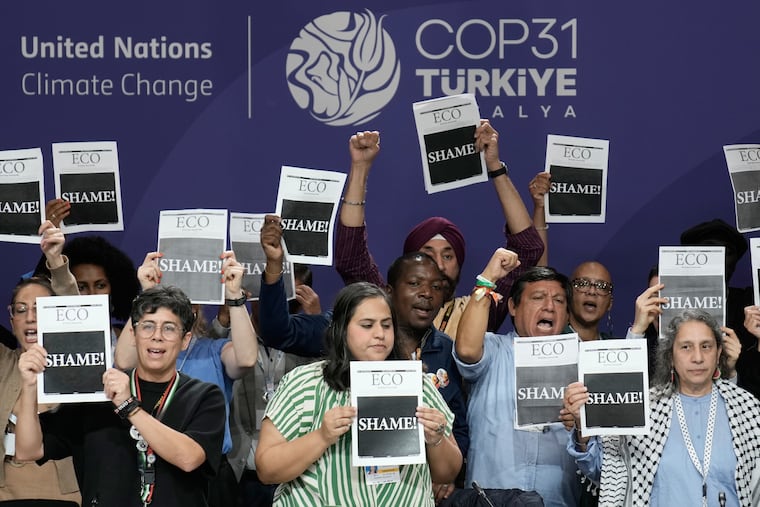
Activists and delegates expressed profound frustration on the final scheduled day of the conference. Attendees staged demonstrations, chanting slogans and hoisting signs bearing the word "SHAME!"
"There is nothing on the table that protects people, or addresses the priorities of the Global South"
Tasneem Essop, executive director of Climate Action Network International, via The Inquirer
Criticism also targeted the ambiguous language surrounding clean energy targets. A central proposal on the agenda aims to elevate electricity's share of total global energy consumption from approximately 21% up to 35% by 2035. However, the current draft text fails to mandate that this electricity generation rely strictly on renewable sources like wind and solar, leaving a loophole for fossil-fueled power plants to qualify under the electrification initiative.
"At a time when the climate crisis demands decisive action, weakening commitments on fossil fuel phase-out risks undermining progress"
Ghiwa Nakat, executive director of Greenpeace in the Middle East and North Africa, via The Inquirer
Historical context reveals a slow institutional awakening within United Nations climate forums. The UN hosted climate summits for more than three decades before first acknowledging the contribution of fossil fuels to climate change at the 2021 summit in Glasgow, Scotland. It took another two years, at the Dubai summit in the United Arab Emirates, for countries to explicitly call for a transition away from fossil fuels.
Defending the current text, Turkey's environment minister and COP31 oversight lead Murat Kurum, speaking during a news conference on Thursday, 19 November 2026, maintained that the electrification push inherently implies a transition away from fossil fuels. Kurum remarked that officials were assembled to address current agreements rather than rehash previous summits.
Resistance to the draft extended to formal diplomatic protests. In an unusual move, Panama announced plans to formally object unless the final text incorporates specific demands, including oil production caps, acknowledgements of failing climate goals, and enhanced climate finance.
"The COPs have become an exercise in hypocrisy and futility. What we have here is a contest to see who speaks the most, who blows the most hot air"
Juan Carlos Navarro, Panama's Environment Minister, via The Inquirer
Navarro further characterized the ongoing negotiations as being held hostage by a petroleum mafia. Financial provisions within the draft have also drawn sharp division. While the document suggests tripling a fund dedicated to compensating countries devastated by climate change, it neglects to state a specific monetary figure. A prior draft iteration estimated a requirement of at least $120 billion annually to assist poorer, vulnerable nations that bear the brunt of climate disasters despite contributing minimally to global emissions.
Wealthy historical emitters are falling short of delivering previously promised funds, according to summit reports. Compounding these structural challenges, several of the world's highest-emitting nations did not participate directly in the Antalya talks, most notably the United States—the second-biggest polluter behind China and the largest historical emitter.
Summit Demands and Draft Controversies
| Proposal or Issue | Draft Status / Target | Stakeholder Response |
|---|---|---|
| Fossil Fuel Phase-Out | Term omitted entirely from draft agreement | Outrage from activists; Panama threatens formal objection |
| Global Electrification | Increase electricity share from 21% to 35% by 2035 | Criticized for omitting mandatory renewable energy requirements |
| Climate Compensation Fund | Suggested to be tripled without a specified monetary total | Prior drafts cited a need for at least $120 billion annually |
Further details regarding the local setting and proceedings are documented by Chronicleonline and The Register-Herald, noting the backdrop of industrial infrastructure and ongoing daily demonstrations outside negotiating halls.
As negotiators push past the scheduled Friday deadline into Saturday, regional advisers warn that the trajectory of the summit threatens long-term climate ambitions. Iskander Erzini Vernoit, an adviser to African negotiators, summarized the prevailing mood among developing delegations, stating that disappointment is widespread.
Attention will soon pivot toward future diplomatic venues. The next annual UN climate summit is scheduled to take place in Ethiopia's capital, Addis Ababa, in November 2027.