Great American State Fair closes as extreme US heatwave hits holiday events
Extreme heat has led to the closure of the Great American State Fair and the cancellation of Philadelphia's independence parade as temperatures soar.
- Core Development: Extreme heat has led to the closure of the Great American State Fair and the cancellation of Philadelphia's independence parade as temperatures soar.
- Beat Context: Categorized under Weather with independent corroboration.
- Reporting Depth: 3 minute analytical read synthesized from verified newsroom sources.
Extreme heat has disrupted 4 July celebrations across the United States as a record-breaking heatwave forces the closure of public events and impacts infrastructure. More than 165 million people were sweltering on Friday under record temperatures along the US East Coast and Midwest, according to the US National Weather Service.
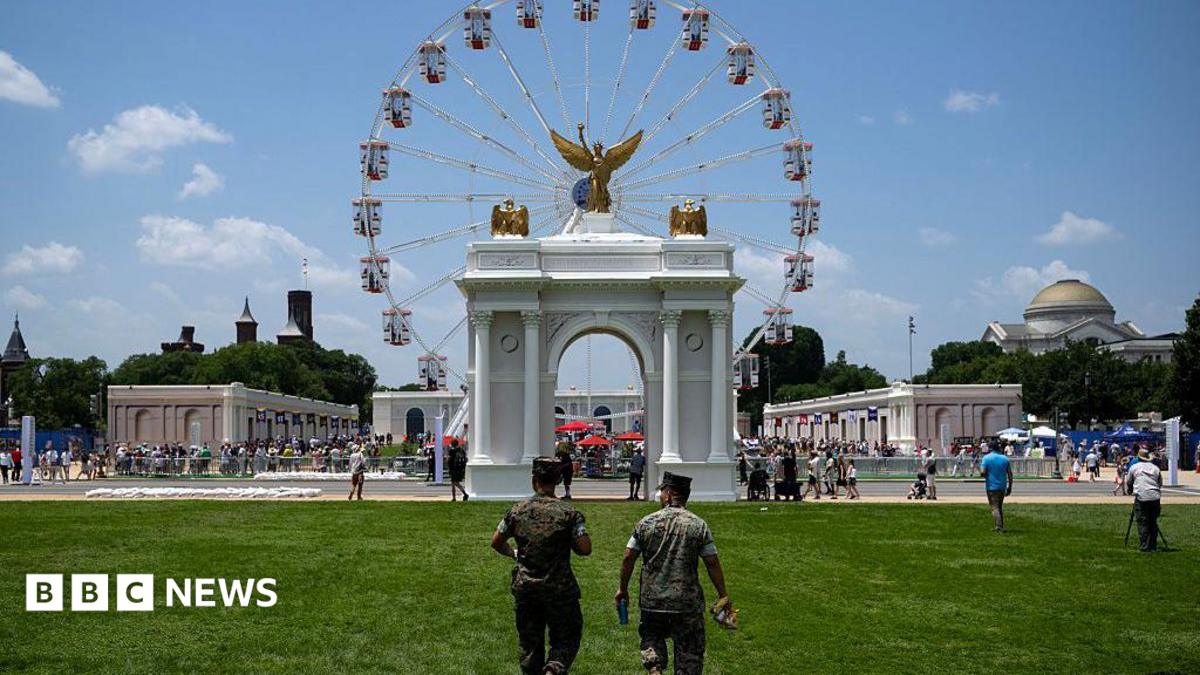
The Great American State Fair, located on the National Mall in Washington, DC, shuttered its operations on Friday to ensure the safety of staff, performers, vendors, and guests. According to the event organiser, Freedom 250, the closure was temporary, with plans to reopen at 17:00 local time as conditions improved. This disruption occurred amid a series of holiday festivities.
In Philadelphia, organizers at Wawa Welcome America cancelled the scheduled Salute to Independence Semiquincentennial Parade.
DelBene described the late-notice cancellation as"As much as this decision pains everyone inside our organisation, we simply cannot host an event of this size and scale under these dangerous heat conditions,"
Michael DelBene, CEO of Wawa Welcome America, via BBC
heartbreaking for all of usand emphasized that the organization's primary responsibility remains the safety of participants and guests.
Washington, DC, also saw significant adjustments to its holiday programming. US Capitol Police delayed public entry for the A Capitol Fourth
concert from 15:00 to 19:00, anticipating that temperatures would exceed 100F (38C). Despite the heat, America 250, the non-partisan commission managing the federal festivities, stated that while it was "closely monitoring" weather forecasts "events are currently expected to proceed as planned". President Donald Trump is expected to speak at an outdoor celebration on Saturday, despite the predicted high temperatures.
The intensity of the heatwave is significant, with cities like Philadelphia and Washington, DC, forecast to reach temperatures near 106F (41C). Experts are tracking multiple consecutive days of triple-digit temperatures, a phenomenon not seen in some regions for decades. New York City, which reached 100F (38C) on Thursday, remains under an alert.
The impact extends into Canada, where heat warnings are in effect for Montreal and Quebec City, and temperatures in Ontario are expected to reach the mid-30s Celsius (over 90F). In Quebec, power infrastructure suffered following severe thunderstorms. Utility spokesperson Audrey St-Pierre confirmed that at the peak of the disruption on Thursday, more than 137,000 customers in the province were without power due to wind and lightning damage. By Friday morning, over 51,000 Hydro-Québec customers remained without power.
Meteorologists warn that while parts of the central US may see a break in temperatures on Saturday, the Southeast—including Virginia and the Carolinas—will experience intensifying heat throughout the weekend. The northern plains, Midwest, and Great Lakes region face a different threat: severe thunderstorms capable of producing damaging hail, destructive winds, flash flooding, and tornadoes.
Future Forecasting Capabilities
The Aeolus-2 satellite, currently under development by Airbus in Stevenage, is designed to use ultraviolet lasers to measure wind behavior in the lowest 18 miles (30 km) of the atmosphere. By utilizing the Doppler effect to analyze light scattered by aerosols and cloud droplets, the technology aims to provide real-time global wind data. Martin Davidson, the program lead at Airbus, noted that current forecasting models struggle with heat domes moving between continents because of missing real-time wind data.
The satellite is intended to increase warning times for heatwaves, volcanic ash plumes, and storms by 24 hours."Scientists and forecasters are really crying out for this to be launched to get this wind data, as it is totally missing at the moment,"
Martin Davidson, program lead at Airbus, via AOL
What to Watch Next
- Holiday Schedule: Fireworks on the National Mall in Washington, DC, are expected to begin at 22:30, with public entry to the National Mall for this year's fireworks show already had been pushed to 17:00 local time.
- Temperature Trends: Northeastern regions may see a slight decline in temperatures on 4 July, though they will remain above historical averages. A more significant cooling shift is expected by Sunday and Monday as air moves from the north.
- Infrastructure Recovery: Hydro-Québec crews continue efforts to restore power to thousands of residents across the Laurentians, Lanaudière, and Laval regions.
How significant is this development?
Contribute your assessment to the aggregated reader sentiment ledger.
Frequently Asked Questions
Key questions answered in this reportWhat is the key development in: Great American State Fair closes as extreme US heatwave hits holiday events?
Extreme heat has led to the closure of the Great American State Fair and the cancellation of Philadelphia's independence parade as temperatures soar.
Why is this Weather development significant for the UK?
This report covers critical events in our Weather beat. Independent reporting monitors related UK statements, regulatory shifts, and public responses as further verified details emerge.
How was this reporting corroborated and verified?
Newsarchy UK compiles and cross-references reporting from primary reporting from bbc.co.uk and cross-checked wire reports. All coverage adheres to published editorial standards.
When was this report published?
This briefing was published on July 3, 2026 and is permanently cataloged in the Newsarchy UK Weather archives.