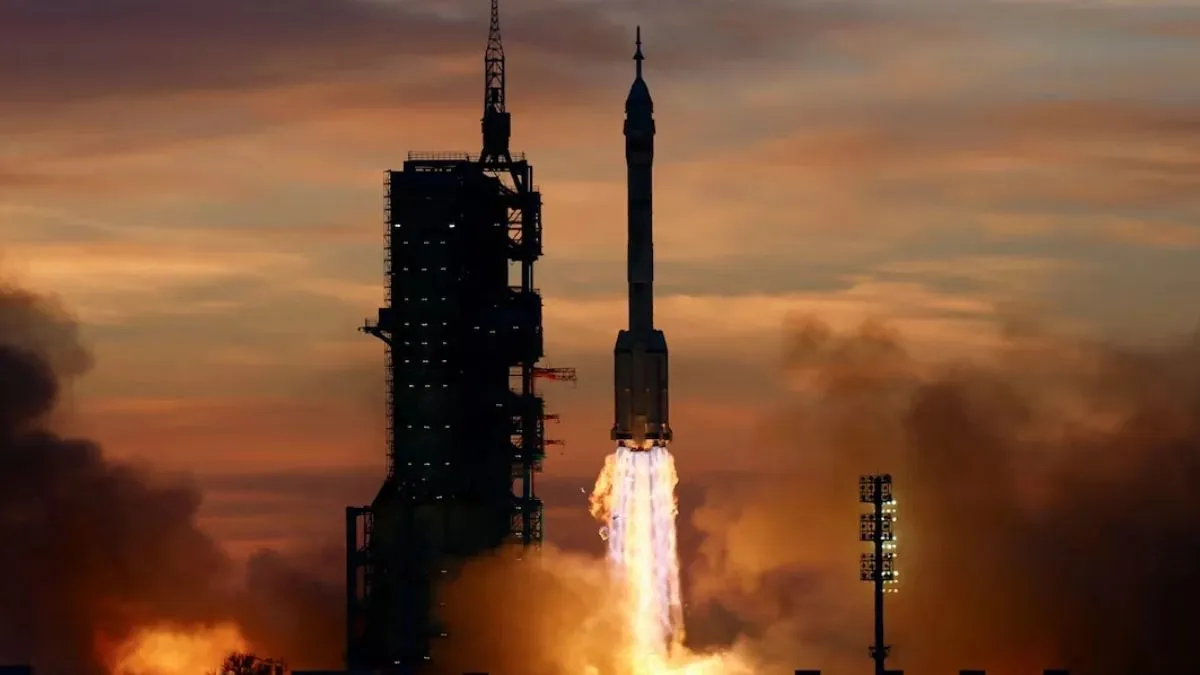
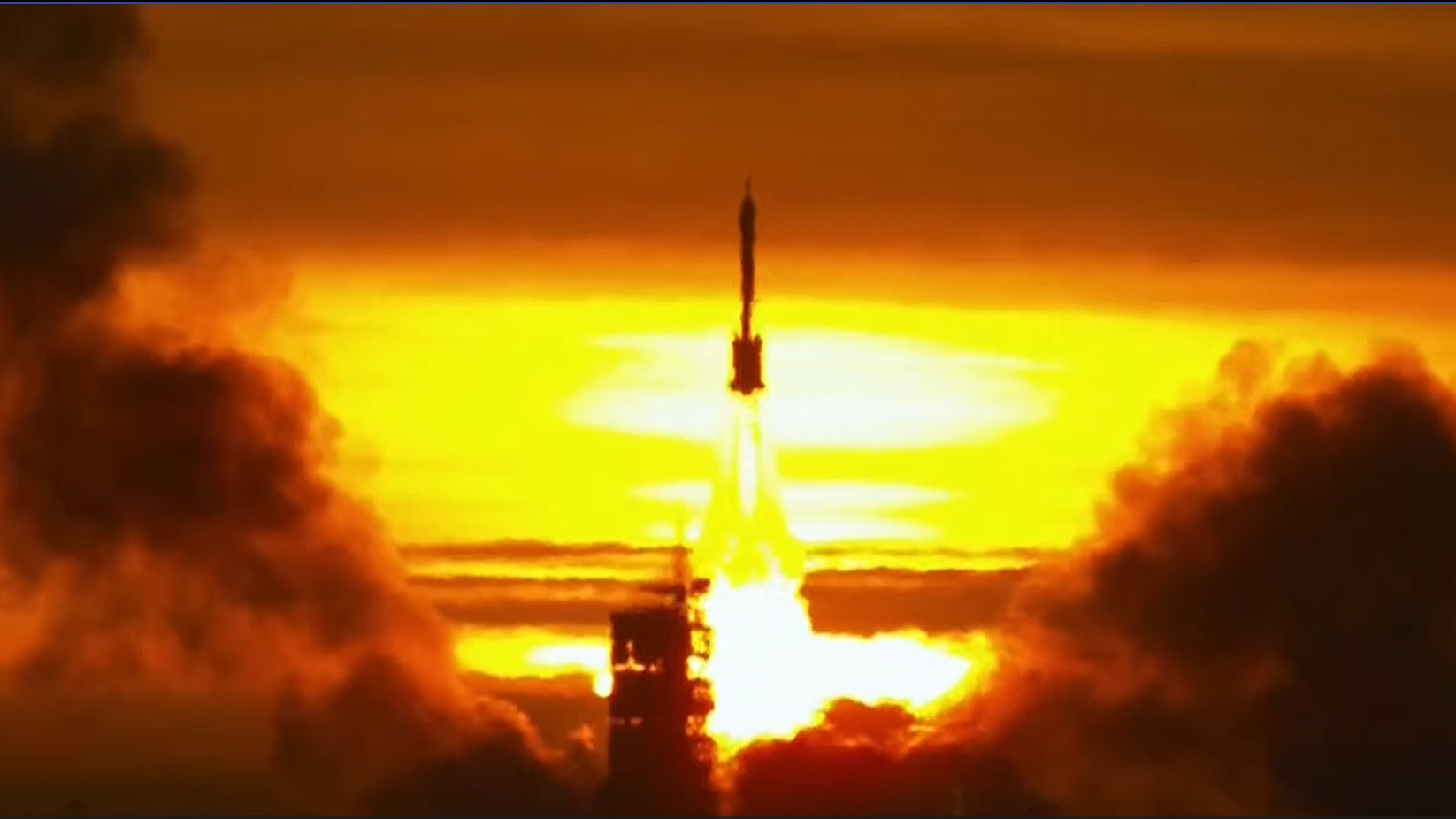
China launches first Pakistani astronaut to Tiangong space station
Pakistani payload specialist Muhammad Zeeshan Ali is participating in a space mission to China's Tiangong space station following a cooperation agreement.
China launches first Pakistani astronaut to Tiangong space station
"I'm not flying for myself. I carry the name of Pakistan on my shoulder,"
Muhammad Zeeshan Ali, payload specialist, via Reuters
Ali, a 40-year-old pilot, will serve as a payload specialist during a stay of 5 to 10 days — far shorter than the standard six-month rotation for Chinese crew members. He is scheduled to return to Earth aboard the Shenzhou-23 spacecraft. The mission's Chinese commander, Tang Hongbo, 51, becomes the first astronaut to visit Tiangong three times, having flown previously on the Shenzhou-12 and Shenzhou-17 missions. Flight engineer Wu Yi, 39, is making his first spaceflight.
Crew Member
Role
Age
Mission Duration
Previous Flights
Tang Hongbo
Commander
51
~6 months
Shenzhou-12, Shenzhou-17
Wu Yi
Flight Engineer
39
~6 months
None
Muhammad Zeeshan Ali
Payload Specialist
40
5–10 days
None
The flight stems from a space cooperation agreement signed by China and Pakistan in February 2025. Ali trained for seven months in Beijing, where he undertook intensive Mandarin lessons, studied Chinese poetry, practised calligraphy and played table tennis to build rapport with his crewmates. China typically announces Shenzhou crews only the day before launch.
"It's like my daily training. Day after day, reaching new heights,"
Media additions
Image via thedailyjagran.comImage via space.comImage via timesnownews.com
Muhammad Zeeshan Ali, speaking in Mandarin at pre-launch press conference, via CBS News
Tang acknowledged at a Tuesday press conference that differences in language, culture and psychology had made joint training more challenging, but said both sides' efforts were paying off. Ali demonstrated his Mandarin proficiency by quoting a line of classical poetry about climbing higher to see farther, then switched to English to express hope that cooperation would expand "from one astronaut on one flight to multiple joint flights and to the moon, Mars and beyond."
The crew will conduct more than 90 scientific experiments and technology tests spanning space life sciences, materials science, microgravity fluid physics, combustion science, fundamental physics, space medicine and new space technologies. Ali's specific tasks include a photosynthetic cyanobacteria experiment and research on self-healing carbon fiber composites that could automatically repair small cracks in spacecraft structures.
Pakistan's Prime Minister Shehbaz Sharif called the mission "not just one astronaut's journey, but the journey of 240 million Pakistanis," thanking Beijing for extending the countries' friendship into orbit. Planning Minister Ahsan Iqbal, speaking at the launch site, said the flight marked "a new era" for Pakistan's space programme and expressed hope for future joint lunar missions. "This shows the way forward how developing countries can cooperate to have capability in areas which are very critical for future economic development," he said.
China built Tiangong after being excluded from the International Space Station over U.S. Concerns about the People's Liberation Army's role in the Chinese space programme. The three-module station became fully operational in late 2022 and can host up to six astronauts during crew handovers. With the ISS facing possible retirement by 2030, China is promoting Tiangong as a hub for international cooperation.
The Shenzhou-24 mission is China's 18th crewed spaceflight. China aims to land astronauts on the moon by 2030 and establish a lunar research base with Russia by 2035. The U.S. Target is 2028 to return humans to the moon amid a tense race for a moon base buildup, a stepping stone to eventual human exploration of Mars. Washington has warned Beijing could seek to dominate access to resource-rich areas of the moon; Beijing rejects such allegations, saying it advocates peaceful use of outer space.
Meanwhile, Shenzhou-23 commander Zhu Yangzhu will stay on to support Beijing's study of how the human body copes in space — a crucial step towards a planned crewed mission to the moon and a potential journey to Mars. The Chang'e-7 lunar mission failed to meet launch conditions this year amid adverse weather linked to a tropical storm, but China's goal of human presence on the moon by 2030 remains unchanged.
What to watch next: Ali's return aboard Shenzhou-23; progress on China-Pakistan lunar cooperation talks; Chang'e-7 reschedule.
The launch drew crowds at Jiuquan and widespread television viewership in Pakistan, where scientists at the national space agency headquarters tracked the ascent live.