Egypt archaeologists uncover Byzantine city and ancient tombs
Archaeologists have unveiled a fourth-century Byzantine settlement in Dakhla Oasis and 18 additional tombs at the ancient site of Leukaspis. These findings are expected to contribute to the ongoing recovery of Egypt's tourism sector.
- Core Development: Archaeologists have unveiled a fourth-century Byzantine settlement in Dakhla Oasis and 18 additional tombs at the ancient site of Leukaspis. These findings are expected to contribute to the ongoing recovery of Egypt's tourism sector.
- Beat Context: Categorized under World with independent corroboration.
- Reporting Depth: 3 minute analytical read synthesized from verified newsroom sources.
Egypt unveiled two major archaeological discoveries on Saturday, 4 July 2026, showcasing significant remains from both the Byzantine and Greco-Roman periods. The findings, announced by the Ministry of Tourism and Antiquities, are situated in the Dakhla Oasis and the Marina el-Alamein archaeological site. Officials anticipate these historical assets will contribute to the ongoing recovery of the national tourism sector, which serves as a vital source of foreign currency for the country.
Recent official data highlights a consistent upward trend in the industry. The first four months of 2026 recorded 6.1 million visitors, an increase from the 5.7 million arrivals during the same timeframe in 2025. This follows a record-breaking performance in 2025, which saw a total of 19 million tourists visit the country.
Urban Life in the Dakhla Oasis
Located in the New Valley province within the western desert, the discovery at the Dakhla Oasis provides a comprehensive look at an urban center under Byzantine rule during the fourth century. The site currently holds a position on the UNESCO Tentative List, moving it closer to potential inclusion as a World Heritage site. According to Hisham el-Leithy, secretary general of the supreme council of antiquities, the site is organized with north-south thoroughfares intersecting with east-west streets, creating open squares and public spaces.
Mahmoud Massoud, who chairs the archaeological mission, noted that a mid-fourth-century basilica church serves as the focal point of the settlement. The area also features the remains of two watchtowers intended to secure the perimeter. Further excavations revealed a fortified structure with thick defensive walls, alongside houses constructed with vaulted roofs and reception halls.
Among the residential findings is the home of Tisous, a church deacon. Researchers believe this specific building served as a house church prior to the construction of the larger basilica. The presence of bread ovens, kitchens, and stone grinding tools suggests a self-sustaining settlement. Economic activity at the site is evidenced by the recovery of bronze coins bearing the portraits of Byzantine emperors, as well as gold coins issued during the reign of Constantius II, who ruled from 337 to 361. Diaa Zahran, head of the Islamic, Coptic and Jewish Antiquities department, confirmed the discovery of approximately 200 pottery fragments, or ostraca, which served as historical notepads for correspondence, commercial transactions, and daily records.
Excavations at Leukaspis
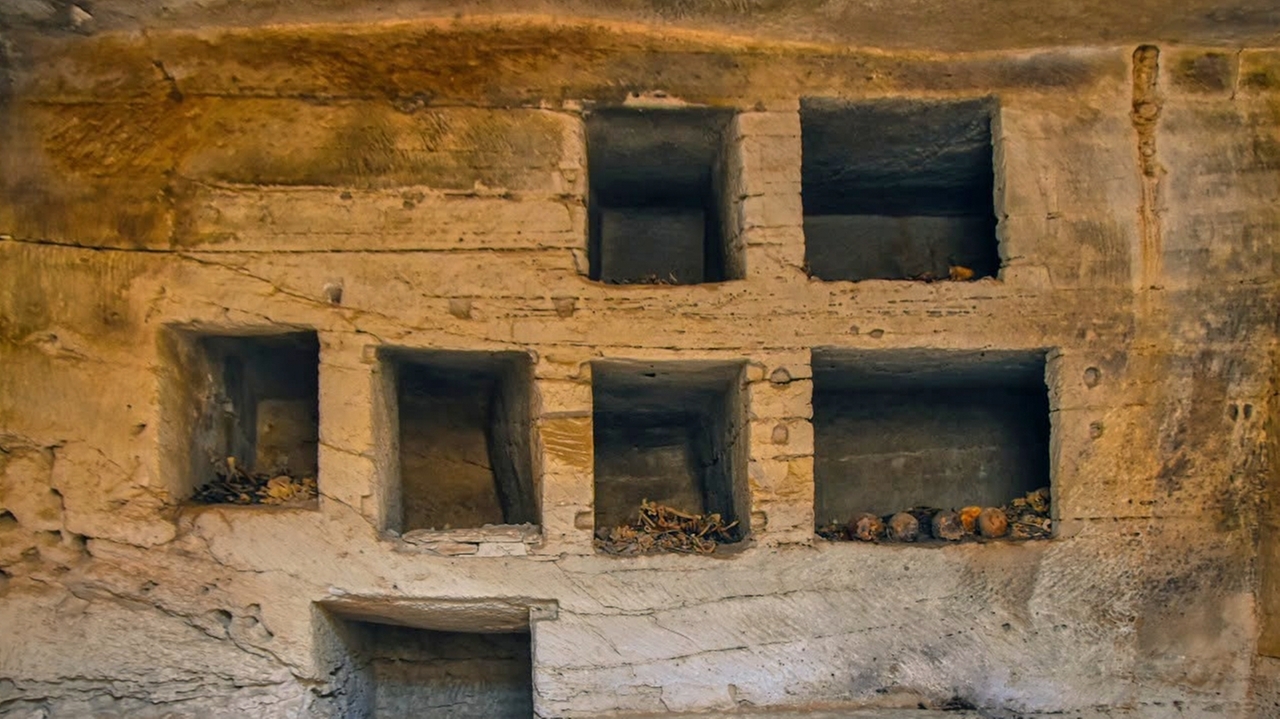
Simultaneously, work at the Marina el-Alamein archaeological site—located roughly 100 kilometers or 62 miles west of Alexandria—has uncovered 18 additional tombs. This addition brings the total number of identified tombs at this location to 48. The ministry reported that the new findings comprise 11 rock-cut tombs, averaging 8 meters or 26 feet in depth, and seven surface tombs constructed from limestone.
Archaeologists working at the site recovered a variety of funerary artifacts, including pottery vessels, amphorae, lamps, altars, and limestone basins. Mission chief Eman Abdel-Khaliq reported the discovery of a 2.5-meter or 8-foot-long granite sarcophagus, which contained human remains currently undergoing study. Near the sarcophagus, the team found the remains of a plaster sphinx statue.
Abdel-Khaliq further noted that several deceased individuals were found with gold pieces placed inside their mouths. This practice, often described as the “golden tongue,” was associated with the funerary beliefs of that era. Marina el-Alamein is considered the site of the ancient Greco-Roman port city of Leukaspis. Historically, the city functioned as a prominent hub for the grain and olive trade between the second and fourth centuries, before facing near-total destruction during a fourth-century tsunami.
Broader Archaeological Context
The Ministry of Tourism and Antiquities has also focused on other regions, recently investigating Greco-Roman cemetery zones that date back over 2,300 years. In addition to human remains, excavators recovered the complete skeletal remains of two wild boars. In the context of ancient Egyptian mythology, these animals were linked to the deity Seth, who represented chaos and violence.
How significant is this development?
Contribute your assessment to the aggregated reader sentiment ledger.
Frequently Asked Questions
Key questions answered in this reportWhat is the key development in: Egypt archaeologists uncover Byzantine city and ancient tombs?
Archaeologists have unveiled a fourth-century Byzantine settlement in Dakhla Oasis and 18 additional tombs at the ancient site of Leukaspis. These findings are expected to contribute to the ongoing recovery of Egypt's tourism sector.
Why is this World development significant for the UK?
This report covers critical events in our World beat. Independent reporting monitors related UK statements, regulatory shifts, and public responses as further verified details emerge.
How was this reporting corroborated and verified?
Newsarchy UK compiles and cross-references reporting from primary reporting from cbsnews.com and cross-checked wire reports. All coverage adheres to published editorial standards.
When was this report published?
This briefing was published on July 4, 2026 and is permanently cataloged in the Newsarchy UK World archives.