Mass protests in France spiral into worst riots in years
Mass demonstrations over surging living costs and energy prices in France have erupted into severe street violence, resulting in over 1,200 arrests and mounting pressure on President Emmanuel Macron's administration.

- Core Development: Mass demonstrations over surging living costs and energy prices in France have erupted into severe street violence, resulting in over 1,200 arrests and mounting pressure on President Emmanuel Macron's administration.
- Beat Context: Categorized under World with independent corroboration.
- Reporting Depth: 5 minute analytical read synthesized from verified newsroom sources.
A nationwide wave of demonstrations over surging living costs, energy prices, and declining public services spiraled into some of the worst street violence France has witnessed in decades. While hundreds of thousands of citizens marched peacefully in scores of cities, violent fringe elements hijacked the demonstrations, targeting government buildings, setting fires, and clashing directly with police officers. The unrest, which evolved out of student-led school blockades that began the previous month in working-class neighborhoods, has severely compounded the economic pressure on President Emmanuel Macron's administration as borrowing costs scale decades-high peaks.
The demonstrations kicked off around midday, drawing crowds that featured trade unionists, pensioners, and participants wearing the fluorescent yellow vests reminiscent of previous anti-government movements. Peaceful participants carried flags and banners denouncing the rising cost of living, high fuel prices, and wealth inequality. Many expressed solidarity with students who had spent weeks organizing school blockades over teacher shortages and deteriorating facilities. We are fighting because the cost of living is too harsh, because the price of fuel is too high, because high school pupils are being violently attacked and hurt all over the country just for trying to protest and ask for more teachers and decent learning conditions,
said Lola, a 19-year-old protester in Paris, as reported by Cnbc.
Media additions

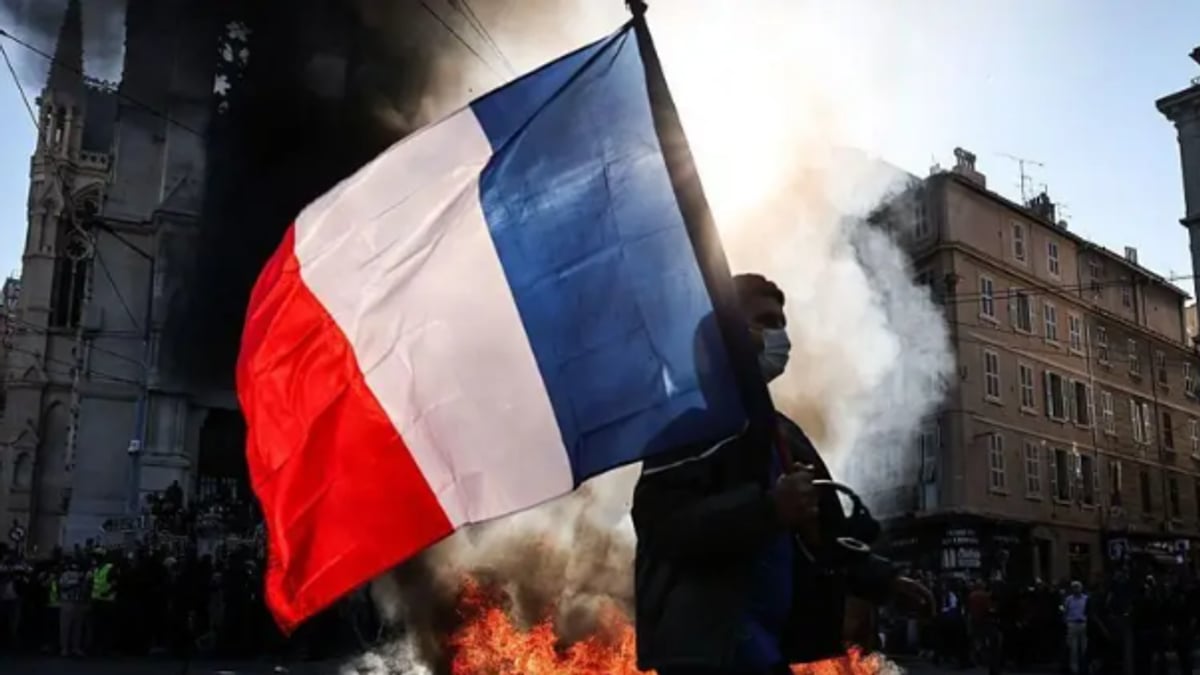

However, the demonstrations quickly fractured in major urban centers as masked, black-clad groups converged on the fringes. In Paris, police deployed tear gas and water cannons in the Place de la République as rioters hurled paving stones, fireworks, and other objects at security forces. Protesters torched vehicles, bicycles, trash bins, and a newspaper kiosk, while several shops, banks, a Lacoste store, and an SFR mobile phone shop were ransacked or looted. An attempt was made to breach the Galeries Lafayette department store.
The violence extended far beyond the capital. In Limoges, the city hall was set ablaze; in Marseille, black-clad protesters broke into City Hall and defaced the building with anarchic graffiti; and in Lyon, protesters torched the city's tourist office.
French Prime Minister Sebastien Lecornu said the government would not be "intimidated" by violence, and blamed the unrest on the "far-left" and criminals just months before a presidential election next year. English Ajel reported his remarks on social media warning that authorities would not tolerate any political agenda imposed through violence. President Emmanuel Macron echoed this stance on X, formerly Twitter, vowing that anyone who attacked public institutions or looted businesses would be prosecuted and punished.
Official figures regarding the scale of the mobilization and subsequent fallout varied between government assessments and organizers. Interior Minister Laurent Nunez told reporters that about 400 people had been arrested after violent incidents, most of whom were adults. He said around 550,000 people had participated in the demonstrations across the country. The CGT union told Reuters it estimated the protesters at 800,000. By late evening, Prime Minister Lecornu updated the arrest total to approximately 1,200 individuals, noting that more than 150 police officers had sustained injuries.
| Metric / Estimator | Government Figure | Union / Organizer Figure |
|---|---|---|
| Total National Turnout | ~550,000 | ~800,000 |
| Total Arrests (Preliminary to Late Update) | ~400 to ~1,200 | Not provided |
| Police Injuries Reported | 150+ | Not provided |
Tactics employed by law enforcement drew intense scrutiny and criticism following severe injuries among demonstrators. Nunez said one person lost his hand in clashes with police on Saturday. French media reported he tried to pick up a stun grenade. The incident prompted an immediate investigation by the police watchdog. Meanwhile, the UNSA police union posted a video on X showing crowds attacking police vans with clubs and bricks in multiple locations. The union warned the government police forces were at breaking point.
The domestic friction in France reflects a broader wave of economic discontent rippling across Europe. In Portugal, tens of thousands took to the streets of Lisbon following days of unrest to protest against housing and other living costs. Housing prices in Portugal have doubled since 2017, fuelling one of Europe's worst affordability crises, as Ground News sources note. In Italy, a march against high costs of living in Milan degenerated into disorder, with police clearing the central cathedral square with tear gas. Police in Bologna used water cannons to try to disperse crowds and made seven arrests after another protest turned violent, the ANSA news agency reported. Belgium, Portugal and Italy also saw smaller-scale protests on Saturday as living costs rise in Europe, while protesters in Albania again rallied against perceived government corruption, job shortages and poor education standards.
These social pressures coincide with a precarious financial backdrop for the French state. France's efforts to reduce public debt have failed to reassure investors, pushing government borrowing costs to their highest levels in over two decades.
As the nation digests the property destruction and injuries from the weekend, attention shifts toward the political and legislative arena. The government faces the immediate task of passing a credible budget through a fragmented parliament ahead of the presidential election next year, even as labour unions and student groups weigh further industrial action. Observers note that additional updates on the police conduct investigations and potential emergency fiscal measures are expected in the coming days.
How significant is this development?
Contribute your assessment to the aggregated reader sentiment ledger.
Frequently Asked Questions
Key questions answered in this reportWhat is the key development in: Mass protests in France spiral into worst riots in years?
Mass demonstrations over surging living costs and energy prices in France have erupted into severe street violence, resulting in over 1,200 arrests and mounting pressure on President Emmanuel Macron's administration.
Why is this World development significant for the UK?
This report covers critical events in our World beat. Independent reporting monitors related UK statements, regulatory shifts, and public responses as further verified details emerge.
How was this reporting corroborated and verified?
Newsarchy UK compiles and cross-references reporting from primary reporting from cnbc.com and cross-checked wire reports. All coverage adheres to published editorial standards.
When was this report published?
This briefing was published on October 18, 2026 and is permanently cataloged in the Newsarchy UK World archives.