Kenya confirms 4 new Ebola cases, including 3 health workers, raising total to 7
Kenya's Ministry of Health has confirmed four new Ebola virus cases, including three medical personnel, bringing the country's total caseload to seven.
- Core Development: Kenya's Ministry of Health has confirmed four new Ebola virus cases, including three medical personnel, bringing the country's total caseload to seven.
- Beat Context: Categorized under World with independent corroboration.
- Reporting Depth: 3 minute analytical read synthesized from verified newsroom sources.
Kenya confirmed four new cases of Ebola on Saturday, October 17, 2026, marking a critical escalation in the country's first-encounter with the virus and shifting the total caseload to seven. The latest infections include three medical personnel who treated the nation's inaugural patient, alongside a close male relative of the deceased. Health officials emphasized that all four individuals were already confined in quarantine when they developed symptoms, a development that containment teams credit with averting a wider outbreak.
The Ministry of Health released a formal statement detailing the new diagnoses. According to the ministry, The Ministry of Health confirms four new cases of Ebola (Bundibugyo Virus Disease). This brings the total number of confirmed cases to seven including the deceased first case
(Anadolu Agency). The health workers involved include two men aged 29 and 35 and a 32-year-old woman, who provided direct care to the index patient between October 3 and October 4, 2026, at a hospital in Nairobi. These clinicians had entered quarantine on October 9, 2026. Meanwhile, the fourth newly diagnosed patient — a male relative of the index patient — had been quarantined since October 6, 2026.
Media additions
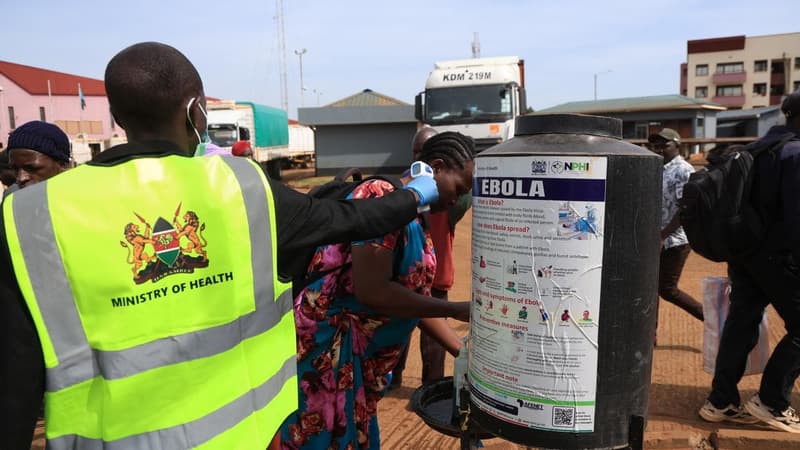
According to Director-General for Health Patrick Amoth, every patient manifested a fever as their primary warning sign, prompting immediate isolation and sample collection. Diagnostic assays performed at both the National Virology Reference Laboratory and the Kenya Medical Research Institute confirmed the presence of the Bundibugyo strain. Supportive care is underway at designated treatment facilities, where clinicians report that earlier patients are in stable condition.
The transmission chain traces back to an initial patient who had lived in the Democratic Republic of Congo. After falling ill abroad, the man traveled overland through Uganda before flying into Nairobi on October 3, 2026, ultimately dying two days later. That index case sparked a flurry of contact tracing that identified approximately 130 individuals. Of those, 98.5%, or 128 people, have been successfully located and placed under surveillance, exceeding international benchmarks for epidemic control.
| Case Category | Total Recorded | Status / Notes |
|---|---|---|
| Total Confirmed Cases | 7 | Includes the deceased index patient and subsequent infections. |
| Healthcare Workers Affected | 3 | Aged 29, 35, and 32; treated the index patient Oct. 3–4. |
| Contacts Traced & Quarantined | 128 | Out of 130 total identified contacts (98.5% tracing rate). |
Observers tracking the world coverage note that the current crisis stems from a massive regional epidemic in the Democratic Republic of Congo. European and African health agencies report that the Congolese outbreak has generated more than 9,000 cases and upwards of 4,000 deaths, making it among the most aggressive epidemics on record. Because the Bundibugyo strain lacks any approved vaccine or specific pharmaceutical treatment, Kenyan authorities are relying entirely on rigid isolation protocols, rapid diagnostic screening, and supportive clinical care.
Despite the addition of medical personnel to the infection roster, Kenyan authorities maintain that the threat level to the broader population is low. Officials have implemented no restrictions on travel, commerce, or public gatherings, encouraging citizens to continue daily routines.
What happens next depends heavily on the remaining two untraced contacts and the health status of those currently sequestered. Because the incubation period for the virus spans up to 21 days, health officials warn that additional positive tests could emerge among quarantined individuals before the monitoring window closes. Surveillance teams continue scouring the region to find the last two missing contacts and prevent any secondary spread.
How significant is this development?
Contribute your assessment to the aggregated reader sentiment ledger.
Frequently Asked Questions
Key questions answered in this reportWhat is the key development in: Kenya confirms 4 new Ebola cases, including 3 health workers, raising total to 7?
Kenya's Ministry of Health has confirmed four new Ebola virus cases, including three medical personnel, bringing the country's total caseload to seven.
Why is this World development significant for the UK?
This report covers critical events in our World beat. Independent reporting monitors related UK statements, regulatory shifts, and public responses as further verified details emerge.
How was this reporting corroborated and verified?
Newsarchy UK compiles and cross-references reporting from primary reporting from eastleighvoice.co.ke and cross-checked wire reports. All coverage adheres to published editorial standards.
When was this report published?
This briefing was published on October 18, 2026 and is permanently cataloged in the Newsarchy UK World archives.