Iran security chief warns neighbours against joining US economic pressure
Iran's security chief warned neighbouring states that cooperating with Washington's new economic pressure campaign will result in retaliation.

- Core Development: Iran's security chief warned neighbouring states that cooperating with Washington's new economic pressure campaign will result in retaliation.
- Beat Context: Categorized under World with independent corroboration.
- Reporting Depth: 3 minute analytical read synthesized from verified newsroom sources.
Tensions in the Middle East escalated sharply as Tehran issued a direct warning to neighbouring states, declaring that any nation joining Washington's new campaign of economic pressure will be treated as a hostile actor. According to reporting detailed by Business Standard, the hard-line new leader of Iran's Supreme National Security Council laid out the hardline stance during an interview with the state broadcaster that aired Saturday.
The security official, Mohsen Rezaei, was named this month as part of senior appointments widely seen as hardening Tehran’s political and military stance. In his interview with IRIB, Rezaei threatened that if United States President Donald Trump wants to do something, Iran will retaliate in a seismic manner. He explicitly warned that neighbouring countries choosing to align with what he described as the economic war against Iran would have their interests targeted and be considered enemies.
Media additions
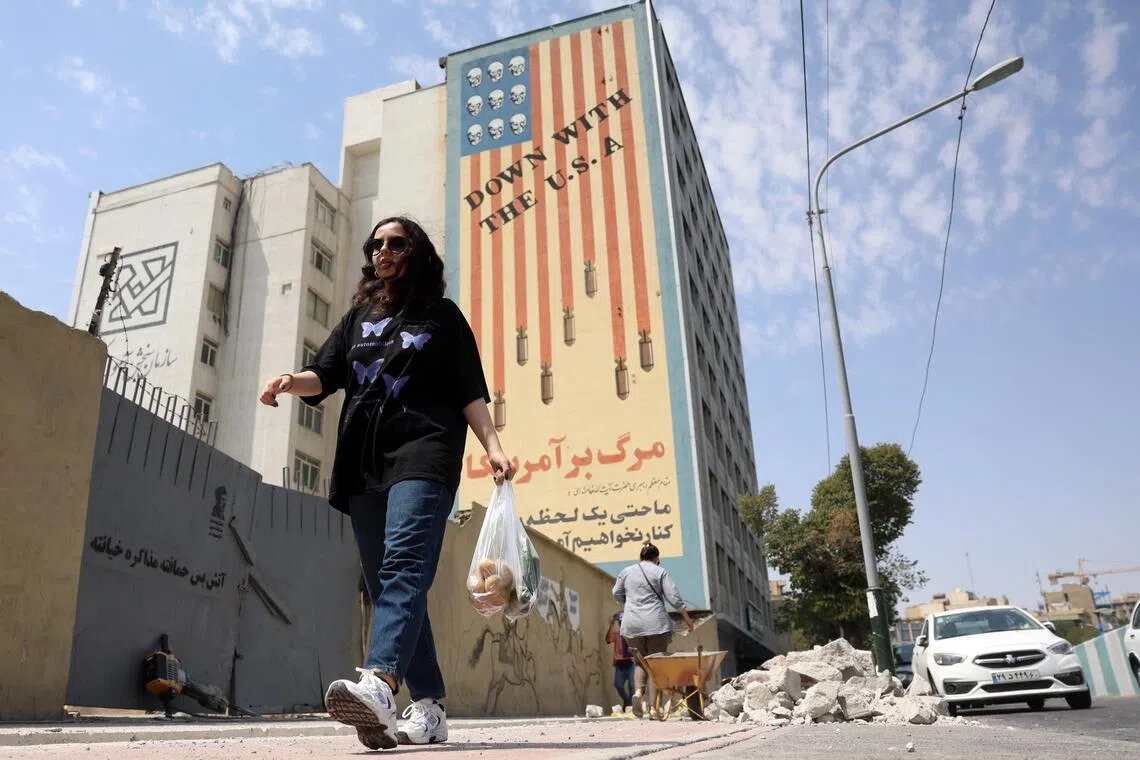
The Straitstimes noted that these warnings arrived as the war drags towards the six-month mark. Washington has pushed its allies to jump aboard Donald Trump’s new campaign to isolate the Iranian economy. Yet the strategy faces varied international reception. While the United Arab Emirates announced on Aug 18 that it was suspending all trade and financial transactions with Tehran until further notice, major powers such as China have openly criticised the initiative, arguing that American sanctions would not resolve the conflict in the Middle East.
Amid the mounting economic friction, diplomatic channels remain active. Egypt is trying to revive Iran-US negotiations. Egypt's foreign ministry confirmed that its foreign minister, Badr Abdelatty, held discussions with Iranian counterpart Abbas Araghchi regarding the course of ongoing talks and their challenges. Separately, Araghchi said he had a call with Pakistan's army chief, Field Marshal Asim Munir.
Meanwhile, regional infrastructure and trade routes are undergoing intense realigned pressures. Iran asserted control over what was seen as an international waterway shortly after the US and Israel attacked on February 28, though governments in Iraq and Iran said Tehran has helped some ships carrying Iraqi oil to transit the Strait of Hormuz. Simultaneously, European and regional powers are plotting alternative transit corridors. Officials revealed that French President Emmanuel Macron and Saudi Crown Prince Mohammed bin Salman are expected to discuss plans to bypass the waterway during the Saudi leader's two-day visit to Paris that starts on Sunday, with a task force scheduled to meet at the ministerial level Monday.
The wider geopolitical canvas continues to fracture across multiple fronts. In Syria, an Israeli drone strike wounded one person on Saturday in the southwestern Syrian village of Beit Jin, drawing condemnation from Syria's foreign ministry over sovereignty violations, while the Israeli military maintained it targeted a terrorist who advanced terror attacks in final stages of preparation. Separately, remarks by US Ambassador Tom Barrack regarding the Golan Heights drew sharp pushback from Israeli Defence Minister Israel Katz, who called Barrack's remarks full of inaccuracies and positions that contradict Trump's own position. In Gaza, an Israeli strike on the backyard of a house in central Gaza killed one Palestinian and wounded another Saturday.
As the standoff intensifies, analysts and international observers are closely tracking several key developments across the region:
- The ministerial-level meeting between France and Saudi Arabia focusing on alternative energy routes and logistical pipelines bypassing the Strait of Hormuz.
- The ongoing diplomatic maneuvers led by Egypt to broker renewed talks between Tehran and Washington.
- The implementation and economic impact of the sweeping restrictions urged by Washington, and how regional trading partners respond to Tehran's threats of retaliation against foreign economic interests.
How significant is this development?
Contribute your assessment to the aggregated reader sentiment ledger.
Frequently Asked Questions
Key questions answered in this reportWhat is the key development in: Iran security chief warns neighbours against joining US economic pressure?
Iran's security chief warned neighbouring states that cooperating with Washington's new economic pressure campaign will result in retaliation.
Why is this World development significant for the UK?
This report covers critical events in our World beat. Independent reporting monitors related UK statements, regulatory shifts, and public responses as further verified details emerge.
How was this reporting corroborated and verified?
Newsarchy UK compiles and cross-references reporting from primary reporting from business-standard.com and cross-checked wire reports. All coverage adheres to published editorial standards.
When was this report published?
This briefing was published on August 23, 2026 and is permanently cataloged in the Newsarchy UK World archives.