Israel strikes Lebanon after two soldiers killed, Rome talks pause
An explosion in a Lebanese border village killed two Israeli soldiers and prompted retaliatory airstrikes, briefly halting US-mediated talks in Rome.
- Core Development: An explosion in a Lebanese border village killed two Israeli soldiers and prompted retaliatory airstrikes, briefly halting US-mediated talks in Rome.
- Beat Context: Categorized under World with independent corroboration.
- Reporting Depth: 6 minute analytical read synthesized from verified newsroom sources.
Two Israeli soldiers were killed in an explosion in the Lebanese border village of Majdal Zoun on Wednesday, prompting the Israeli Defence Forces (IDF) to launch a series of air and artillery strikes across southern Lebanon. The violence erupted as Lebanese and Israeli delegations met in Rome to implement a June 26 agreement that envisions the phased withdrawal of Israeli forces from occupied areas in exchange for Hezbollah’s disarmament. The escalation forced the talks to halt on Wednesday and only resume briefly on Thursday, raising questions about the durability of the fragile cease‑fire that has held since late June.
The IDF confirmed the deaths on Thursday, identifying the fallen as Major Harel Birenstock and Sergeant‑Major Tamir Vaknin. Four other Israeli soldiers were seriously wounded, the military said. Israeli media had reported the casualties a day earlier, but the official acknowledgement underscored the seriousness of the breach.
In response, the Israeli army struck multiple sites the next day, describing the operation as a retaliation to a Hezbollah‑led violation of the cease‑fire. The strikes targeted what the IDF called “weapon storage facilities, a command centre and additional terror infrastructure.” Residents of the village of Mansouri received Israel’s first evacuation warning in weeks, a move the army said was intended to protect civilians amid the renewed hostilities.
Lebanese authorities reported civilian casualties of their own. The Health Ministry said one person was killed and 12 wounded in the town of Tebnine, while eight more were wounded in the village of Burj al‑Shemali. The National News Agency (NNA) added that artillery shelling also hit the areas of Mansouri and Majdal Zoun. UN‑linked peacekeepers from UNIFIL recorded 113 projectiles launched by Israel on Wednesday – the highest daily tally since 21 June.
The violence unfolded against the backdrop of U.S.‑mediated talks in Rome. Delegates from Lebanon, Israel and the United States were working to flesh out “pilot zones” – limited areas where Israeli forces would pull back and the Lebanese army would assume security responsibilities. The trilateral agreement, signed in late June, stipulates that these zones can expand only if Hezbollah disarms, a condition Israel has repeatedly stressed.
U.S. State Department officials described the three‑day talks as “productive on the technical and expert levels,” noting that both sides moved closer to advancing the pilot‑zone process. However, a State Department spokesperson also acknowledged that the negotiations were cut short on Wednesday after the escalation in Lebanon, before resuming on Thursday.
U.S. Ambassador to Lebanon Michel Issa warned that “moving too quickly risks jeopardising the very civilians this process is meant to protect,” a sentiment echoed by UNIFIL’s observation that daily violations of Lebanese airspace persisted despite the cease‑fire. Hezbollah, which was not a party to the negotiations, has not issued an immediate statement on the recent Israeli strikes.
The June 20 truce, which followed a surge of cross‑border exchanges after the March 2 flare‑up that began with Hezbollah rockets and U.S.–Israeli strikes on Iran, has been described as “shaky.” Since its inception, Israel has continued to occupy swaths of southern Lebanon, conducting periodic airstrikes and shelling that have claimed more than 4,000 Lebanese lives, according to the Cbc report. Israeli casualties total roughly 40 soldiers and three civilians, including a military contractor, since the war’s resurgence.
While the Lebanon‑Israel track dominates the headlines, the broader Middle East remains on edge. In parallel, Iran and Oman have been negotiating a new arrangement to manage traffic through the Strait of Hormuz. The CBS News live‑updates and Yahoo article note that Tehran insists the framework is a “new model” distinct from the historic free‑pass navigation, and that a full reopening would only follow the end of the U.S. Naval blockade.
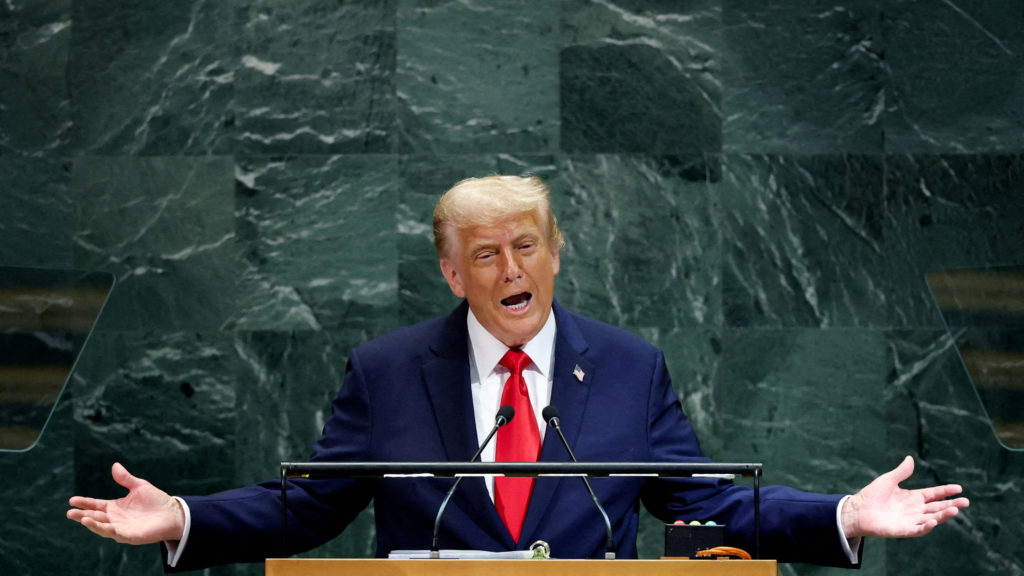
U.S. President Donald Trump, meanwhile, has been juggling the Middle East’s multiple flashpoints. He announced a phone call with Saudi Crown Prince Mohammed bin Salman to discuss the Iran situation and hinted that a deal on the Hormuz Strait could be announced “as soon as Thursday.” Trump also used his social platform to refute reports of U.S. Long‑range missile shortages, claiming “massive amounts of munitions” are being produced.
The American arms inventory question has relevance to the Lebanese escalation. CBS reporting indicates that the United States has “used virtually all” of its global stockpile of long‑range precision missiles, a claim that aligns with other outlets reporting dwindling interceptor reserves. While the United States has not publicly linked its missile stockpile status to the Israeli‑Lebanese clashes, the broader context of American‑led pressure on Iran adds a layer of strategic calculation for both Israel and Tehran.
In the Gulf, Houthi rebels in Yemen have continued their maritime campaign, striking Saudi‑flagged tankers in the Bab el‑Mandeb Strait and firing at energy facilities. These actions compound the regional volatility that has spilled over into diplomatic channels, underscoring the interconnectedness of the Lebanon‑Israel cease‑fire, the Hormuz negotiations, and broader anti‑U.S. Sentiment.
Timeline of key events
- 21 June – UNIFIL records its highest daily projectile count since the start of the truce.
- 20 June – “Shaky” cease‑fire between Israel and Hezbollah takes effect.
- 26 June – Lebanon and Israel sign a deal outlining pilot zones and phased Israeli withdrawal.
- Wednesday, 5 August – Explosion in Majdal Zoun kills two Israeli soldiers; four wounded.
- Wednesday, 5 August – Israel conducts airstrikes on Tebnine, Burj al‑Shemali, Mansouri and Majdal Zoun; issues evacuation warning for Mansouri.
- Wednesday, 5 August – Rome talks are halted after the escalation.
- Thursday, 6 August – Talks resume briefly; State Department declares them “productive.”
- Thursday, 6 August – Iran and Oman move toward a new Strait of Hormuz traffic model; Trump hints at a near‑term announcement.
What to watch next
- Whether the Rome delegation will reconvene to negotiate additional pilot zones or adjust the withdrawal timetable.
- Statements from Hezbollah on the Israeli strikes and any potential retaliation.
- Progress of the Iran‑Oman talks and any formal announcement by the Trump administration regarding the Strait of Hormuz.
- U.S. Military logistics reports on long‑range missile availability, which could influence future Israeli operations.
- Further developments in the Gulf, especially Houthi attacks on Saudi maritime assets, that could destabilise oil markets.
The confluence of a localized flare‑up on the Israeli‑Lebanese border with high‑level negotiations in Rome, alongside parallel diplomatic manoeuvres on the Strait of Hormuz, illustrates how fragile cease‑fires can be snapped by a single incident. As both sides brace for the next round of talks, the region’s security architecture hangs in a delicate balance, with civilian safety, regional power dynamics and global energy markets all at stake.
How significant is this development?
Contribute your assessment to the aggregated reader sentiment ledger.
Frequently Asked Questions
Key questions answered in this reportWhat is the key development in: Israel strikes Lebanon after two soldiers killed, Rome talks pause?
An explosion in a Lebanese border village killed two Israeli soldiers and prompted retaliatory airstrikes, briefly halting US-mediated talks in Rome.
Why is this World development significant for the UK?
This report covers critical events in our World beat. Independent reporting monitors related UK statements, regulatory shifts, and public responses as further verified details emerge.
How was this reporting corroborated and verified?
Newsarchy UK compiles and cross-references reporting from primary reporting from cbsnews.com and cross-checked wire reports. All coverage adheres to published editorial standards.
When was this report published?
This briefing was published on August 6, 2026 and is permanently cataloged in the Newsarchy UK World archives.