Two Italians killed in Iranian drone attack in Kuwait
Two Italian civilian technicians were killed when a drone strike hit a military installation in Kuwait, escalating regional tensions and drawing sharp international condemnation.
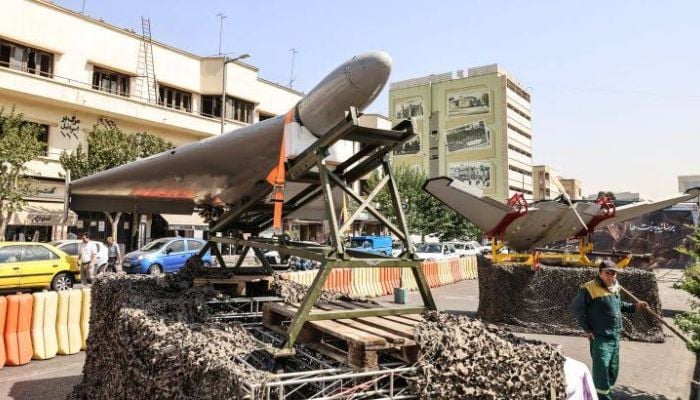
Two Italian civilian technicians died on Thursday, 26 November 2026, when an Iranian drone strike targeted a critical military installation in Kuwait, underscoring the severe risks facing foreign civilian personnel supporting defense infrastructure across the Gulf.
The incident occurred around 2:00 PM local time as Kuwaiti military forces detected and intercepted hostile drones entering the nation's airspace, according to reports by Jang. While air-defense units shot down the incoming aircraft, falling shrapnel and debris struck a vital facility where the technicians were stationed, as detailed in reporting by Newscord.
Media additions

Italian Foreign Minister Antonio Tajani confirmed to the Senate in Rome that the victims were employed by Rheinmetall Italia, the Italian branch of the German defense contractor Rheinmetall. The two men were working at an air-defense surveillance and detection station, maintaining antennas utilized in Kuwait's Skyguard air-defense system. Tajani told lawmakers that a powerful explosion shook the site, resulting in fatal wounds for the two compatriots.
Kuwait's Defense Ministry initially reported four injuries following the interception, including a Kuwaiti military captain and a Pakistani national, before confirming that the two Italian citizens had succumbed to their wounds. Italian Prime Minister Giorgia Meloni, attending a European Council meeting, expressed deep sorrow and extended condolences to the victims' families, as reported by Yahoo News.
The strike immediately drew sharp international condemnation alongside fierce diplomatic denials. Kuwait's Foreign Ministry denounced the attack as a dangerous escalation and a blatant violation of national sovereignty, lodging a formal protest. European Commission President Ursula von der Leyen urged increased international pressure on Tehran to cease attacks against Gulf neighbors, noting that regional security directly impacts Europe. Meanwhile, Israel's Foreign Minister Gideon Sa'ar asserted that the incident demonstrated Tehran's wider threat to stability, according to The Rio Times.
Conversely, Iranian officials categorically rejected responsibility for the strike. Abolfazl Shekarchi, senior spokesman for Iran's armed forces, denied that any offensive or military operations were conducted by Iranian forces in the region, characterizing the accusations as an attempt to increase insecurity. Iranian Foreign Minister Abbas Araqchi similarly denied involvement, offering instead to undertake a joint investigation with Kuwait to determine the origin of the incident.
The confrontation unfolds against a volatile backdrop of regional hostilities that erupted earlier in the year. Following previous engagements involving US and Israeli actions against Iran, Tehran has repeatedly targeted Gulf Arab states hosting military assets. Earlier in November, Iranian forces targeted US drone and missile sites in Kuwait following a strike on Qeshm Island in the Strait of Hormuz. The wider conflict has severely disrupted commercial shipping lanes and energy infrastructure across the Persian Gulf, intersecting with simultaneous Houthi strikes on oil facilities in Saudi Arabia, as documented by ABC News.
| Official Source / Institution | Position on Incident | Reported Casualties & Details |
|---|---|---|
| Kuwaiti Ministry of Defense | Blamed Iran for hostile drone attack on a vital facility | Four initial injuries from falling debris; two Italian technicians later died of wounds, alongside injuries to a Kuwaiti captain and a Pakistani national |
| Italian Foreign Ministry (Antonio Tajani) | Confirmed deaths of Rheinmetall Italia workers from a powerful explosion at a detection station | Two Italian civilian technicians killed; two others injured (one Pakistani national, one Kuwaiti army captain) |
| Iranian Armed Forces (Abolfazl Shekarchi) | Denied all responsibility, stating no offensive operations occurred | Rejected accusations of targeting a vital Kuwaiti site |
The tragedy highlights the vulnerable position of commercial defense contractors and foreign technical personnel stationed alongside military installations in active theater zones. As diplomatic fallout mounts, further developments are anticipated regarding Italy's formal complaint to the Iranian embassy and potential security adjustments by defense contractors operating in the region.
What to Watch Next
- Formal diplomatic complaints and potential retaliatory diplomatic measures lodged by Rome against the Iranian embassy.
- Any joint investigative findings or evidence published by Kuwaiti authorities regarding drone flight paths and origins.
- Potential policy shifts by European defense contractors regarding the deployment and safety of technical personnel in Gulf nations.
- Broader diplomatic maneuvers within the European Council and Gulf Cooperation Council concerning security guarantees for regional infrastructure.
For related developments, consult World coverage or review past incidents involving regional aerial assaults.