Joshua Wong sentenced to ten years in Hong Kong national security case
Pro-democracy activist Joshua Wong has received a ten-year prison sentence under Hong Kong's national security law, drawing international condemnation.
- Core Development: Pro-democracy activist Joshua Wong has received a ten-year prison sentence under Hong Kong's national security law, drawing international condemnation.
- Beat Context: Categorized under World with independent corroboration.
- Reporting Depth: 5 minute analytical read synthesized from verified newsroom sources.
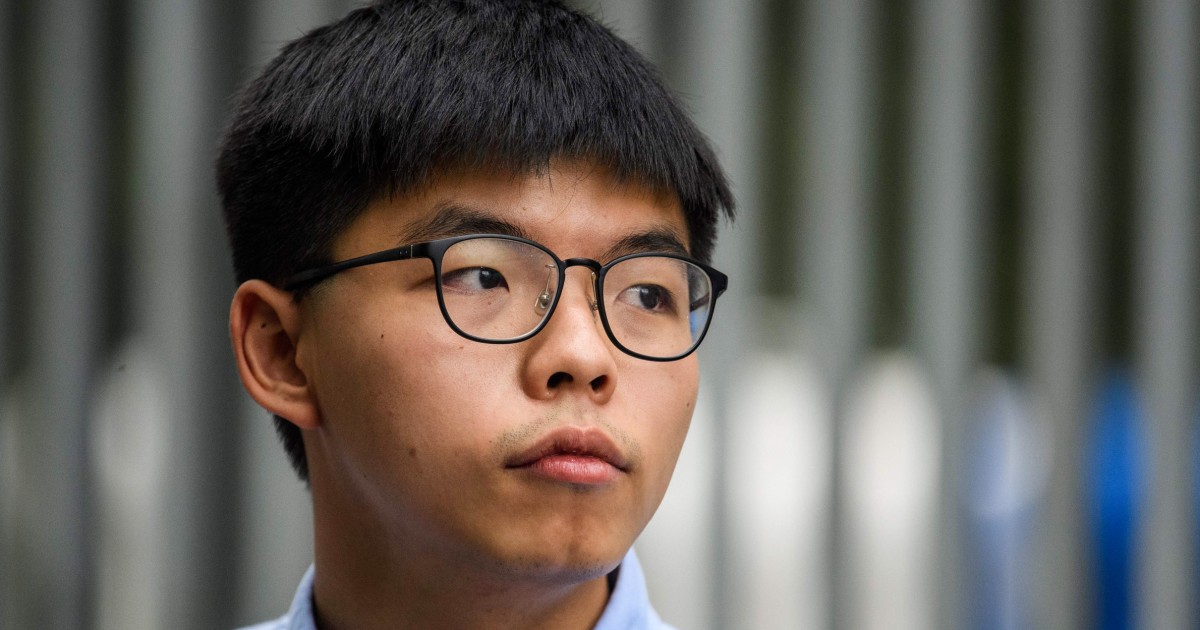
On Thursday, November 5, 2026, Hong Kong’s High Court handed pro‑democracy activist Joshua Wong a further ten‑year prison term for colluding with foreign forces under the Beijing‑imposed national security law. Wong’s new conviction follows a guilty plea in September, and has drawn condemnation from human‑rights groups and Western lawmakers who see the move as part of a systematic crackdown on dissent.
The court, led by Judge William Tam, described Wong’s conduct as “grave in nature” and noted that the prosecution had linked him to former lawmaker Nathan Law and other activists in a campaign that began before the national security law (NSL) took effect in 2020. Prosecutors said Wong and his associates sought to pressure the United States and other countries to impose sanctions or other hostile measures against Hong Kong and mainland China. They highlighted his social‑media posts and media appearances that urged foreign governments to act, arguing that such advocacy constituted “foreign collusion.”
Media additions


Wong, 30, had already been serving a four‑year, eight‑month sentence for conspiracy to commit subversion in the so‑called “Hong Kong 47” case, which stemmed from an unofficial primary election organised by pro‑democracy figures in 2020. That trial, widely covered by the NBC News and the The Epoch Times, saw Wong’s release originally slated for January 2027. The new sentence, however, will keep him in custody until the end of 2036, with only two months and two days of the new term running concurrently with the existing one.
Judge Tam said he had initially considered a 13‑year term but reduced it because Wong pleaded guilty. The court’s sentencing statement emphasised that “the punishment must fit the gravity of the crime committed” and that the sentence serves a deterrent function. The judge also noted that, while Wong’s actions followed the NSL’s enactment, the court could take into account his pre‑NSL activities.
Reactions to the verdict have been sharply divided. Hong Kong officials, represented by Chief Inspector Li Guihua of the National Security Bureau, welcomed the sentence and urged Wong to reflect on his “wrongdoings” and to respect the law. Beijing, on the other hand, continues to view Wong as a pro‑independence figure whose actions cross a “red line.” This stance was echoed by the city’s police, who highlighted the “imperative of deterrence” in the court’s reasoning.
International observers have condemned the conviction. The Human Rights Watch report described the sentence as “cruel and unjust,” calling for the unconditional release of Wong and for targeted sanctions on officials responsible for the crackdown. The U.S. Congressional‑Executive Commission on China (CECC) issued a statement that the sentence “should be globally condemned,” while the U.K. Member of Parliament Alicia Kearns urged the “international partners to act together” against the sentencing. The Hong Kong Democracy Council has asked the White House and State Department to raise Wong’s case in its upcoming bilateral talks with Chinese leaders.
Wong’s story is not new. He first rose to prominence as a teenager in 2012, leading protests against a government curriculum deemed to be political indoctrination. He later became a leading figure in the 2014 Umbrella Movement, which sought universal suffrage for Hong Kong’s chief executive. In 2016, he co‑founded the political party Demosisto, advocating self‑determination for Hong Kong. The party dissolved on June 30, 2020, hours before the NSL was enacted. Since then, Hong Kong’s civil society has been systematically dismantled: independent media outlets shut down, political organisations disbanded, and thousands of activists arrested or forced into exile.
Wong’s case illustrates the legal strategy employed by Hong Kong authorities: stacking charges to keep influential dissenters behind bars. Human Rights Watch notes that other prominent figures, such as Jimmy Lai, Lee Cheuk‑yan, and Albert Ho, have faced similar tactics. The court’s decision to treat the collusion charge as “grave” and to impose a 10‑year term — well above the statutory minimum — underscores the regime’s willingness to use the NSL to silence political opposition.
While the court’s statement emphasised the “harsh” nature of the offense, it also acknowledged the mitigating effect of Wong’s guilty plea. However, the reduction could not bring the sentence below the statutory minimum for foreign collusion, which is three years.
For Wong’s supporters, the verdict is a stark reminder of the fragility of civil liberties in Hong Kong. The case has rallied activists worldwide, who are calling for a global response. In the wake of the sentencing, several NGOs have organised campaigns urging governments to impose sanctions on officials involved in the crackdown. The Hong Kong Democracy Council has also launched a petition demanding “immediate and unconditional release” for Wong.
As Hong Kong’s legal system continues to clamp down on dissent, Joshua Wong’s case remains a focal point for activists and human‑rights advocates worldwide.
| Event | Date | Sentence | Concurrent |
|---|---|---|---|
| Guilty plea to collusion charge | September 2026 | 10 years | , |
| High Court sentencing | November 5 2026 | 10 years | Two months, two days of previous 4 years 8 months |
| Original release date from 47 case | January 2027 | , | , |
| Projected release after new sentence | Late 2036 | , | , |
Below is a concise timeline of Joshua Wong’s legal journey, summarising the key dates and outcomes that have led to his current imprisonment.
- 2012 – Leads protests against national education in Hong Kong.
- 2014 – Becomes a prominent figure in the Umbrella Movement.
- 2016 – Co‑founds Demosisto, advocating self‑determination.
- 2020 – Demosisto dissolves as the NSL is enacted.
- 2020 – Arrested for organising protests; pleads guilty to subversion.
- 2024 – Sentenced to 4 years 8 months for the “Hong Kong 47” case.
- June 2025 – Charged with collusion with foreign forces.
- September 2026 – Pleads guilty to collusion.
- November 5 2026 – Sentenced to 10 years; concurrent with remaining 4 years 8 months.
As Hong Kong’s legal system continues to clamp down on dissent, Joshua Wong’s case remains a focal point for activists and human‑rights advocates worldwide. The international community’s response in the coming months will determine whether the regime’s strategy of prolonged imprisonment succeeds in silencing a generation that once demanded democratic reform.
How significant is this development?
Contribute your assessment to the aggregated reader sentiment ledger.
Frequently Asked Questions
Key questions answered in this reportWhat is the key development in: Joshua Wong sentenced to ten years in Hong Kong national security case?
Pro-democracy activist Joshua Wong has received a ten-year prison sentence under Hong Kong's national security law, drawing international condemnation.
Why is this World development significant for the UK?
This report covers critical events in our World beat. Independent reporting monitors related UK statements, regulatory shifts, and public responses as further verified details emerge.
How was this reporting corroborated and verified?
Newsarchy UK compiles and cross-references reporting from primary reporting from nbcnews.com and cross-checked wire reports. All coverage adheres to published editorial standards.
When was this report published?
This briefing was published on November 5, 2026 and is permanently cataloged in the Newsarchy UK World archives.