Top UN court finds Myanmar committed genocide against Muslim Rohingya
In a historic ruling, the International Court of Justice found Myanmar directly responsible for genocide against its Muslim Rohingya minority during military clearance operations.
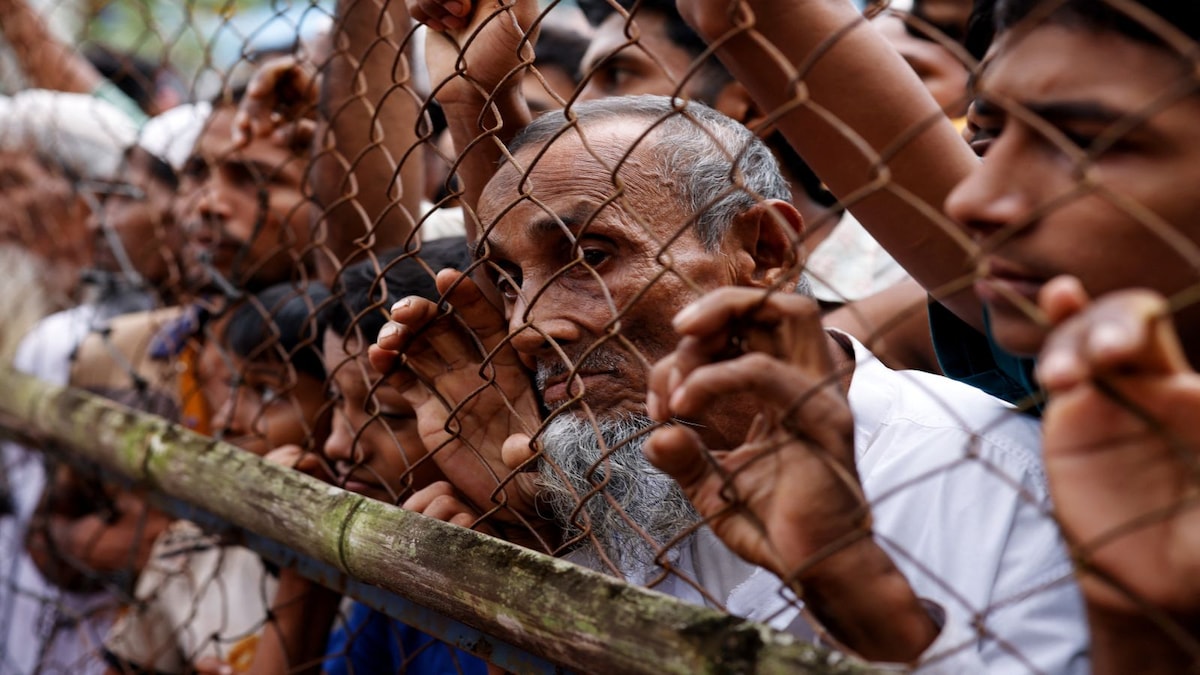
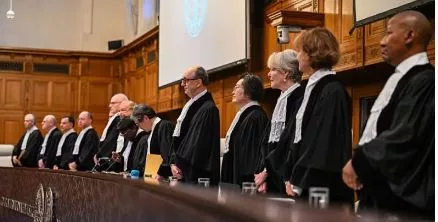
Myanmar committed genocide against its Muslim Rohingya minority during military clearance operations, the International Court of Justice ruled on Thursday, 19 November 2026, marking a historic first holding a sovereign state directly responsible for the crime.
The landmark judgment handed down in The Hague found that Myanmar security forces carried out mass killings, widespread sexual violence, and extreme brutality against children. Presiding Judge Yuji Iwasawa told a packed Great Hall of Justice that the panel determined Myanmar acted with the specific intent to destroy a substantial part of the Rohingya population in northern Rakhine state. The ruling was reached by a majority of nine votes to six among the fifteen-judge panel.
Media additions


The case dates back to 2019, when the predominantly Muslim West African nation of Gambia filed suit against Myanmar under the 1948 Genocide Convention. Gambia argued that the state breached its treaty obligations through a brutal military crackdown initiated in 2017. Myanmar consistently denied the allegations, maintaining that its security forces were engaged in a legitimate counterterrorism response following coordinated attacks on police posts by the Arakan Rohingya Salvation Army.
International legal experts have highlighted the exceptional difficulty of proving genocidal intent, which requires demonstrating an explicit design to destroy a protected group in whole or in part. The court concluded that genocidal intent was the only reasonable inference that could be drawn from the evidence. Judges noted that the military's actions included executing men and boys, systematic rape, destroying hundreds of villages, and attacking fleeing civilians as they sought refuge across the border.
| Metric / Detail | Reported Figure or Finding |
|---|---|
| Estimated deaths during military operations | At least 10,000 |
| Forced displacement into Bangladesh | Over 700,000 (with total displaced exceeding 1 million) |
| Current Rohingya population in Cox's Bazar camp | Approximately 1.2 million |
| ICJ judicial vote tally | 9 to 6 in favor of finding genocide |
For the hundreds of thousands of survivors, the verdict brought an emotional wave of vindication. Crowds gathered at the sprawling Cox’s Bazar refugee settlement in Bangladesh to watch the proceedings on public screens, cheering and weeping as the historic decision was read out. Campaigners and community representatives hailed the ruling as an overdue acknowledgement of decades of state-sponsored persecution. Wai Wai Nu, executive director of the Women’s Peace Network, stated that the court had permanently shattered the state-sponsored lie denying Rohingya existence and identity.
Human rights organizations and UN officials immediately welcomed the decision while stressing the urgent need for tangible enforcement. United Nations human rights chief Volker Türk described the suffering inflicted on the Rohingya as a stain on the conscience of humanity, demanding that the judicial findings translate into real action. Amnesty International Secretary General Agnes Callamard called the judgment a rare victory for survivors and a crucial wake-up call for the international community.
The ruling also carries profound legal implications beyond Southeast Asia. Legal analysts have noted that the ICJ’s clarification regarding genocidal intent will be closely scrutinized in connection with other high-profile proceedings before the world court, notably South Africa's accusation of genocide against Israel concerning the conflict in Gaza.
Despite the final and legally binding nature of ICJ judgments, the court possesses limited enforcement mechanisms. It cannot dispatch troops or imprison individuals, leaving enforcement dependent on political pressure and the UN Security Council. Complicating matters further, permanent Security Council members Russia and China maintain close ties with Myanmar's ruling military junta and supply military hardware.
Immediate diplomatic fallout began to materialize following the announcement. British Foreign Secretary Ed Miliband announced that the United Kingdom was expelling Myanmar’s defense attaché and summoning its charge d'affaires, while pushing for an urgent UN Security Council session to discuss enforcement measures and accountability.
What to watch next
- Further proceedings at the ICJ to determine exact financial compensation and formal reparations owed to displaced Rohingya.
- Potential UN Security Council debates regarding enforcement resolutions, arms embargoes, and referral options to the International Criminal Court.
- Potential impacts on other active ICJ state-responsibility proceedings, including the South Africa versus Israel case.