Oman Coast Hit by Massive Oil Spill as Conflict Disrupts Gulf Waters
A massive oil spill from the grounded tanker Caroline Bezengi threatens Oman's coastline, with cleanup efforts hampered by war and sanctions.
- Core Development: A massive oil spill from the grounded tanker Caroline Bezengi threatens Oman's coastline, with cleanup efforts hampered by war and sanctions.
- Beat Context: Categorized under World with independent corroboration.
- Reporting Depth: 4 minute analytical read synthesized from verified newsroom sources.
A vast oil spill from a leaking tanker has started to hit Oman’s coastline, its environment agency confirmed on Wednesday, in what threatens to become one of the world’s worst in years after spreading largely unchecked for weeks.
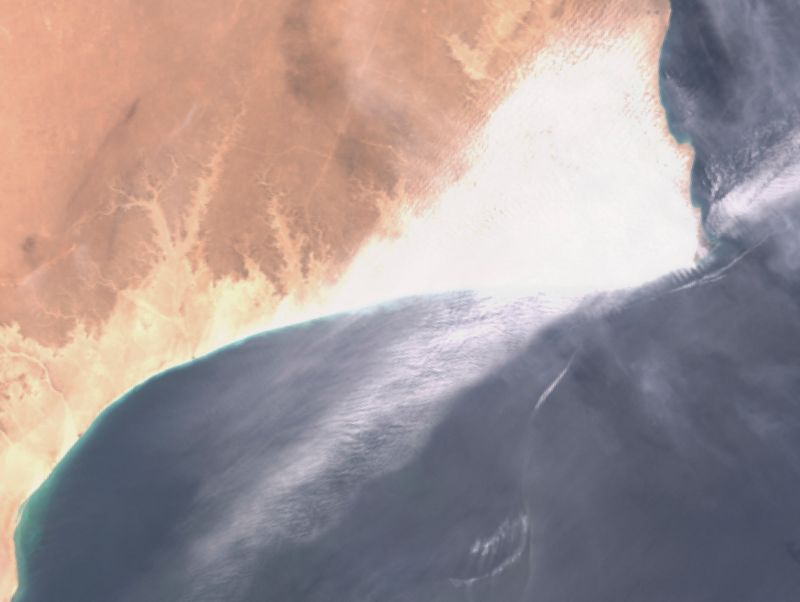
Oman’s environment agency confirmed on Wednesday that the creeping slick threatens to impact 40 km (25 miles) of coast near Ras Madraka as well as Masirah Island. Satellite imagery reviewed by oil spill specialist John Amos indicates the slick covers an area of more than 2,000 square km.
Media additions
The Stricken Vessel and Its Journey
The pollution stems from the Caroline Bezengi tanker, carrying an estimated 800,000 barrels of Russian oil and under international sanctions. The vessel ran aground on June 30. It first reported difficulties off Yemen on June 8 after what maritime sources said appeared to be a blast. No party has claimed an attack, but the vessel was navigating two separate wars on its journey from Russia to India.
In April it sailed from the Russian port of Novorossiysk on the Black Sea, a flashpoint in the Russia-Ukraine war. Ukraine has carried out assaults on a so-called shadow fleet carrying Russian oil, which the Caroline Bezengi is part of. It then passed through the Suez Canal at the end of May, ship-tracking data shows, before sailing past Yemen, where the Iran-aligned Houthi militants have entered a wider regional war between the United States, Israel and Iran. The tanker is leaking near an island that is part of an Omani marine nature reserve that is home to wildlife including Arabian Sea humpback whales and Socotra cormorants.
Geopolitical and Financial Obstacles to Cleanup
A web of complex war- and sanctions-related rules governing shipping and oil spills is already hampering efforts to respond and could yet get in the way of halting an impending disaster, insurers and analysts say. The IOPC Funds, an intergovernmental agency dealing with tanker spills compensation, told Reuters it would not be involved in clean-up costs because the incident was being treated as an "act of war" rather than a simple accident. The 25-year-old tanker is also not insured by any recognised Western insurance provider.
"A nightmare scenario is there's no adequate response to keep the worst from happening,"
John Amos, CEO of SkyTruth, via Aol
Amos said that in this case, the vessel would "continue to break up under the steady onslaught of wind and waves and to lose the entire cargo and that could be a spill upwards of 40 to 50 million gallons." Amos said this would rival the 1989 Exxon Valdez oil spill in sheer size. The U.N.'s International Maritime Organization said that seasonal monsoon conditions had limited access to the tanker and delayed salvage operations.
Oman said on Monday the slick covered almost 400 square km. Environmental agencies and oil spill specialists estimated its size as far larger, noting the spread has accelerated dramatically since the beginning of August. "The affected area went from around 45 square km by the end of July, to 150 at the beginning of August. And then within two days, it quadrupled to 600 by the 4th or 5th of August," said Hanen Keskes, political campaigns lead for Greenpeace in the Middle East.
Regional Conflict and Wider Maritime Disruption
US President Donald Trump said the United States has “total control” over the Strait of Hormuz, claiming Iran has “no Navy, no Air Force”. The Strait of Hormuz will remain closed unless the US changes its behaviour and accepts Tehran’s conditions, Iran’s Supreme National Security Council Secretary Mohsen Rezaei said on Tuesday, according to Reuters.
Simultaneously, separate environmental impacts are rippling through the region. Oil slicks along Qeshm’s southern coast have entered mangrove forests near the village of Naqasheh, prompting authorities to begin monitoring and cleanup operations, Iranian state news agency IRNA reported. The US Energy Information Administration has raised its 2026 oil price forecasts as disruptions to shipments through the Strait of Hormuz continue. The EIA now expects Brent crude to average $86.81 per barrel in 2026, up from $81.91, while its WTI forecast has risen to $80.88 from $76.26.
What to Watch Next
- Assessments from Omani environmental authorities regarding the full forty-kilometre stretch near Ras Madraka and Masirah Island.
- Potential international salvage attempts or crude transfer operations for the leaking Caroline Bezengi tanker amidst seasonal monsoon constraints.
- Developments in diplomatic talks between Iran and Oman concerning the Strait of Hormuz.
How significant is this development?
Contribute your assessment to the aggregated reader sentiment ledger.
Frequently Asked Questions
Key questions answered in this reportWhat is the key development in: Oman Coast Hit by Massive Oil Spill as Conflict Disrupts Gulf Waters?
A massive oil spill from the grounded tanker Caroline Bezengi threatens Oman's coastline, with cleanup efforts hampered by war and sanctions.
Why is this World development significant for the UK?
This report covers critical events in our World beat. Independent reporting monitors related UK statements, regulatory shifts, and public responses as further verified details emerge.
How was this reporting corroborated and verified?
Newsarchy UK compiles and cross-references reporting from primary reporting from cnbctv18.com and cross-checked wire reports. All coverage adheres to published editorial standards.
When was this report published?
This briefing was published on August 12, 2026 and is permanently cataloged in the Newsarchy UK World archives.