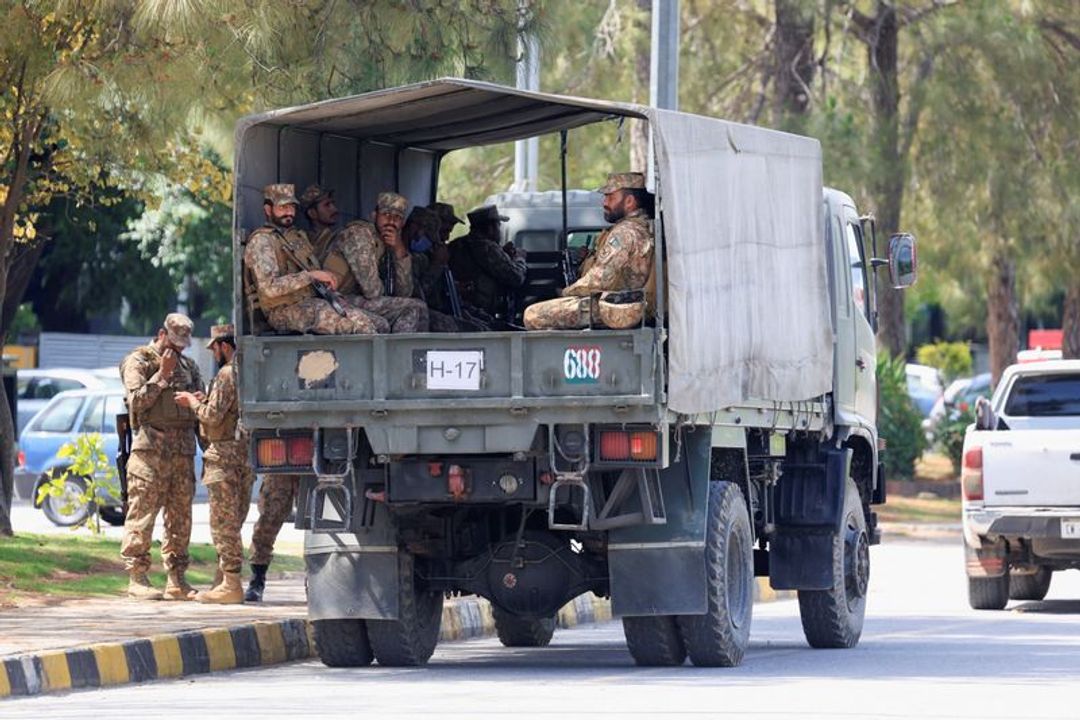
Pakistan sends troops to Saudi Arabia to bolster defences against Houthis
Pakistan is deploying troops to Saudi Arabia to bolster the kingdom's defences following escalating missile and drone strikes by Houthi rebels.
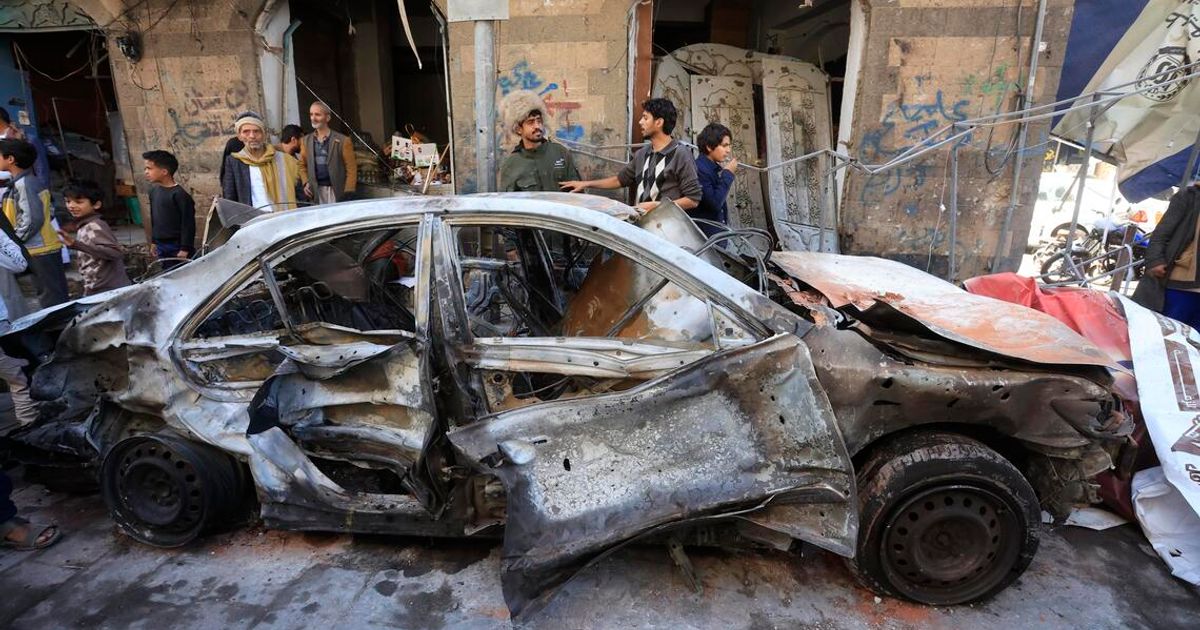
Pakistan is deploying troops to Saudi Arabia to strengthen the kingdom's defences following escalating missile and drone strikes by Yemen’s Iran-backed Houthi rebels.
According to announcements by Pakistan’s military media wing, the Inter-Services Public Relations (ISPR), a formal send-off ceremony for the departing contingent took place on Saturday, November 28, 2026. The deployment follows a meeting of top decision-makers in Islamabad under the Makkah Joint Defence Agreement (MJDA). Official statements emphasize that the mission is strictly defensive in nature. As reported by Moneycontrol, the troops will operate exclusively within Saudi territory under established frameworks of bilateral cooperation, such as the Strategic Mutual Defence Agreement (SMDA) and the trilateral Makkah pact.
Media additions

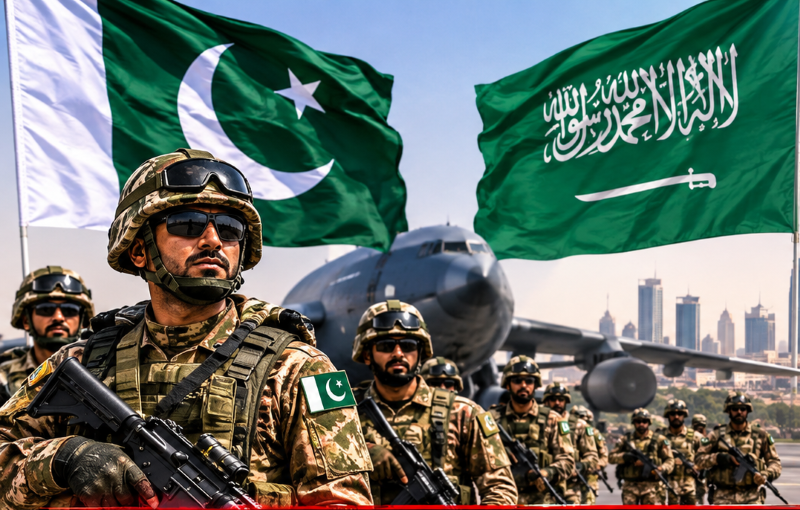
Neither military nor government spokespeople have disclosed the exact number of personnel deployed, their specific military assignments, where they will be stationed, or how long the mission will last, as noted by The Straits Times. The send-off ceremony in Islamabad was attended by high-ranking officials including Pakistani Defence Minister Khawaja Muhammad Asif, Saudi Ambassador Dr Rajeh Tami Albugamy, Chief of General Staff Lieutenant General Omer Ahmed Bokhari, and Lahore Corps Commander Lieutenant General Muhammad Umer Bashir, according to Oneindia.
The regional security situation has deteriorated sharply since the broader U.S.-Iran war erupted in February 2026 following U.S. And Israeli strikes on the Islamic Republic, creating severe spillover effects across the Gulf. Concurrently, Yemen's domestic civil war — which saw Saudi Arabia intervene in 2015 to back the internationally recognized government against the Houthi movement — witnessed a major escalation when a 2022 ceasefire collapsed in July 2026. Houthi forces subsequently seized Yemen’s Red Sea coast and Bab el-Mandeb chokepoint, launching sustained campaigns against Saudi energy infrastructure, airports, and shipping lanes.
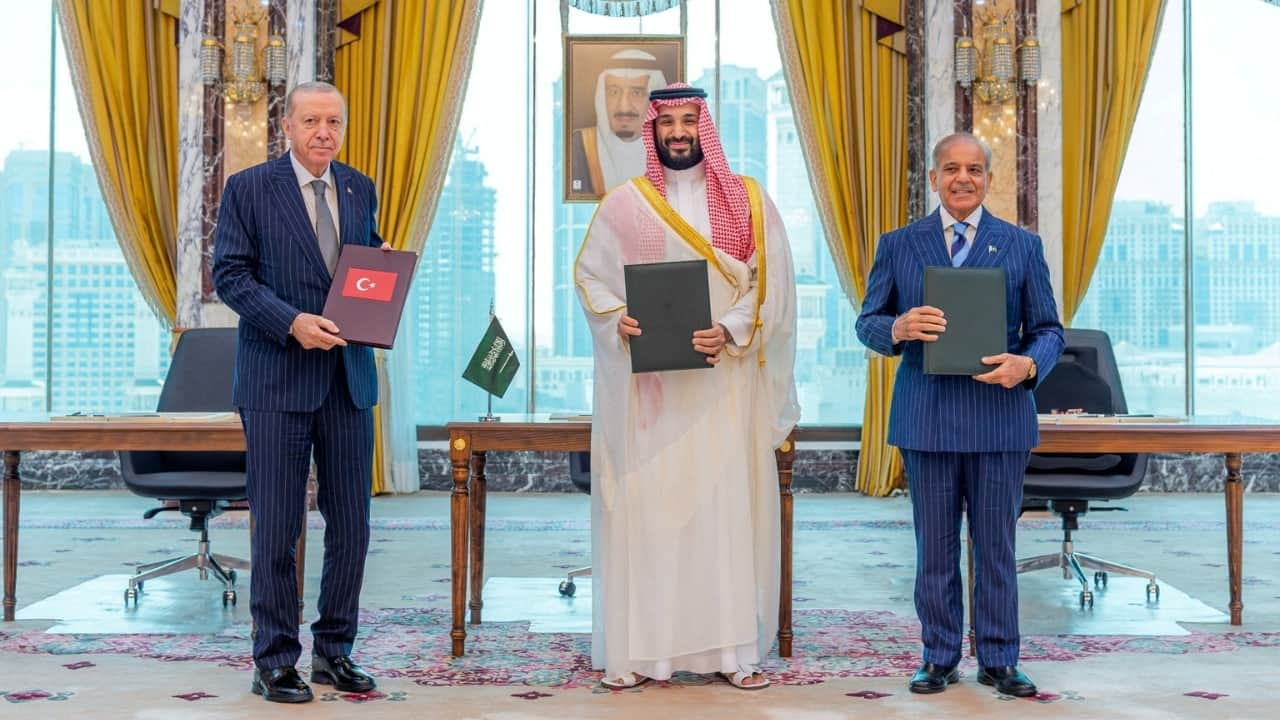
The intensifying conflict has drawn in multiple regional powers seeking to shield Riyadh from aerial bombardment. In addition to Pakistan's newly announced troop deployment, Egypt previously committed to dispatching air defence systems and aircraft to assist Saudi Arabia, while explicitly ruling out ground troop involvement inside Yemen. Turkey has also ratified the trilateral Makkah pact, which was signed in Mecca on August 7, 2026, by Pakistani Prime Minister Shehbaz Sharif, Saudi Crown Prince Mohammed bin Salman, and Turkish President Recep Tayyip Erdogan. Under the terms of the MJDA, an armed attack against any single member state is treated as an attack against all three.
| Partner Nation | Pact / Agreement | Key Commitments & Deployment Scope |
|---|---|---|
| Pakistan | Strategic Mutual Defence Agreement & Makkah Joint Defence Agreement | Troops deployed to Saudi territory for defensive operations; excludes ground combat inside Yemen. |
| Egypt | Bilateral Defence Arrangement | Air defence systems and aircraft dispatched to repel incoming missiles and drones. |
| Turkey | Makkah Joint Defence Agreement (MJDA) | Trilateral collective security framework ratifying mutual defence commitments. |
While Islamabad maintains that the alliance is purely defensive and not directed against any neighboring state, stressing that troops will not cross into Yemen, the pact has drawn sharp regional criticism. According to The Straits Times, Mohamed Ali al-Houthi, a member of the Houthi Supreme Political Council, condemned Pakistan and Turkey for aligning with Riyadh, accusing them of ignoring ongoing military actions and blockades in Yemen. Early in November, Houthi acting Information Minister Omar al-Bukhaiti also alleged that Pakistani fighter jets had participated in airstrikes against rebel-held areas.
The security partnership builds upon decades of historic military cooperation, during which an unspecified number of Pakistani personnel have remained stationed in the kingdom since the early 1980s to provide training and advisory support. Alongside military posturing, Islamabad has pursued parallel diplomatic channels, attempting to bridge divisions between Washington and Tehran through mediation efforts alongside nations such as Qatar.
What to watch next
- Implementation of rapid deployment mechanisms agreed upon during trilateral military committee talks.
- Further operational disclosures from the ISPR regarding the specific positioning and mandate of the deployed Pakistani contingent.
- Potential diplomatic breakthroughs or renewed ceasefire negotiations involving Pakistan, Qatar, and international stakeholders to de-escalate the wider Middle East conflict.
Explore broader international developments in our World coverage, or review previous milestones in the Pakistan deploys troops to Saudi Arabia amid escalating Houthi attacks report.