Putin warns Europe against sending troops to Ukraine: "That means a war with Russia
Russian President Vladimir Putin has warned European nations that deploying troops to Ukraine would trigger a direct war with Moscow, amid escalating airstrikes on civilian infrastructure.
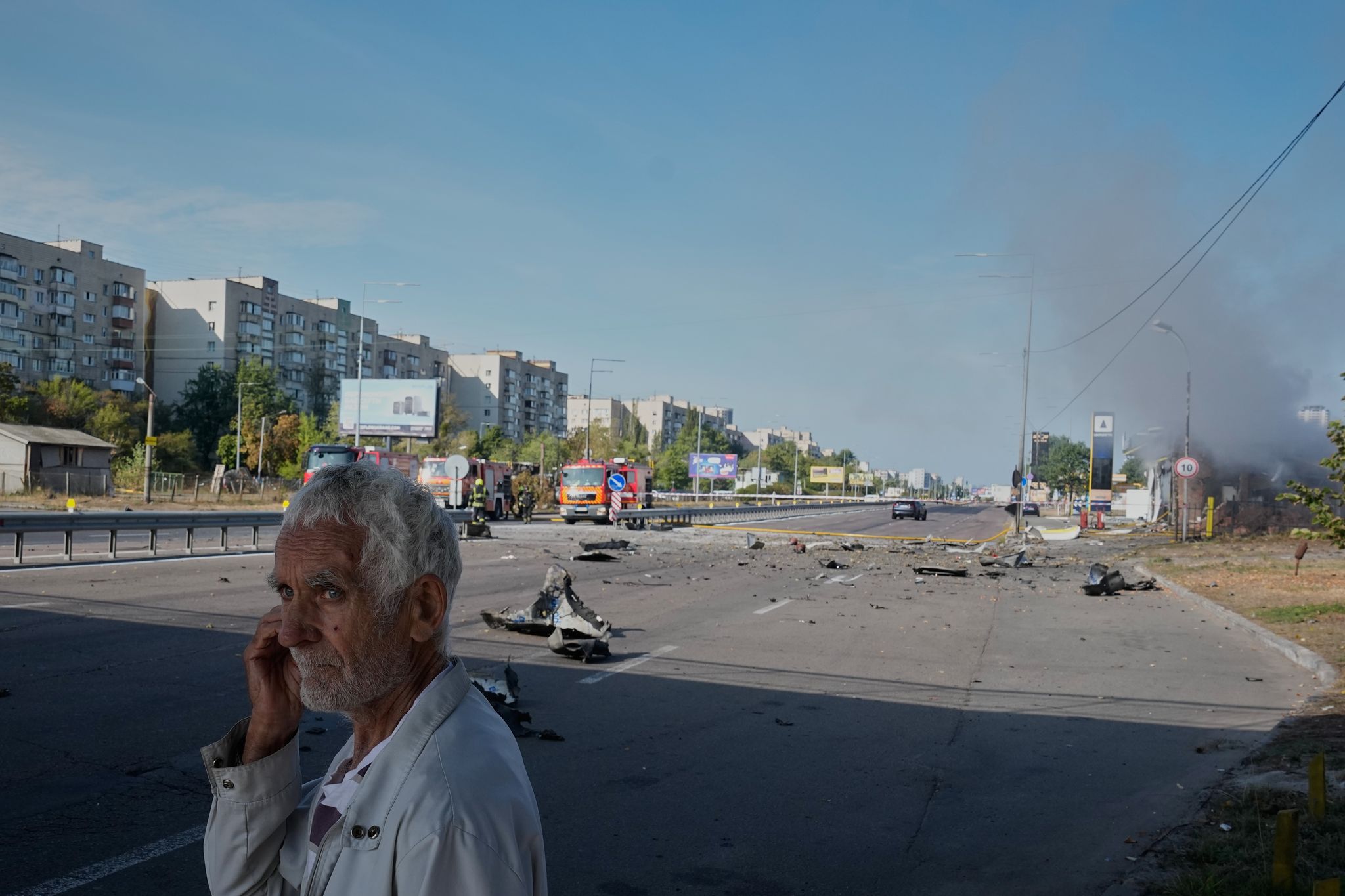
Russian President Vladimir Putin has issued a direct and severe warning to European governments, declaring that any deployment of European troops to Ukraine would amount to a direct war with Russia. Speaking to reporters on the sidelines of a BRICS summit, the Russian leader maintained that Moscow poses no threat to Europe itself, even as his military intensified a devastating aerial bombardment targeting Ukrainian infrastructure and civilian areas ahead of winter. The escalating rhetoric follows recent proposals from several Western capitals regarding potential peacekeeping or reassurance forces, setting off a fresh diplomatic and military confrontation across the continent.
The latest wave of hostilities has inflicted heavy civilian casualties across Ukraine. According to regional authorities, recent Russian strikes killed multiple people and wounded dozens more in cities including Zaporizhzhia, Kryvyi Rih, Kramatorsk, and Zhytomyr, while a massive attack in Odesa left dozens injured and destroyed the upper floors of a residential high-rise. Ukrainian officials report that Moscow's strategy explicitly targets the power grid and civilian morale as cold weather approaches. The relentless air campaign has severely disrupted heating and water supplies, leaving thousands of apartment buildings in Kyiv without heat while daytime temperatures plummet below freezing, as detailed in PBS reporting.
Media additions
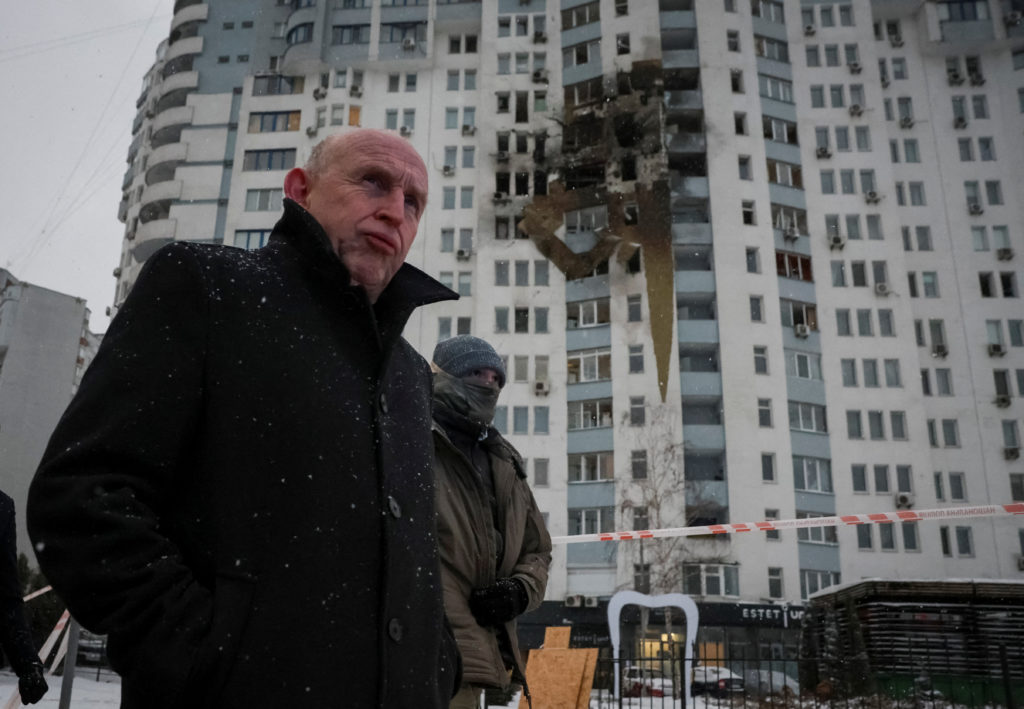


The aerial bombardments have also incorporated advanced weaponry. Ukrainian security services confirmed the identification of debris from a hypersonic missile system, which investigators noted was fired from a Russian test range and targeted infrastructure in western regions. While the Kremlin framed these strikes as retaliation, international leaders condemned the escalation. European Union foreign policy officials criticized the intensified missile barrages as a clear rejection of diplomacy, warning that such reckless actions pose a grave threat to continental security.
The friction over military deployments stems from intense discussions among Ukraine's Western supporters. Following a summit in Paris, French President Emmanuel Macron announced that a group of allied nations had formally committed to deploying forces by land, sea, or air to provide security the moment active fighting stops. This "Coalition of the Willing" aims to establish a reassurance force to patrol any future ceasefire and deter further aggression, a framework distinct from active front-line combat. However, CBS News notes that Putin dismissed these proposals outright, asserting that any foreign troops appearing on Ukrainian soil would be treated as legitimate military targets.
| Official / Nation | Stated Position on Foreign Troops / Security | Proposed Mechanism |
|---|---|---|
| Vladimir Putin (Russia) | Rejected; considers any foreign troops legitimate targets and a direct cause of war. | Demands neutral status and full capitulation to Russian security demands. |
| Emmanuel Macron (France) | Committed to deploying a reassurance force post-ceasefire to prevent future aggression. | Bilateral and allied commitments via a coalition of supporting nations. |
| Volodymyr Zelenskyy (Ukraine) | Welcomes foreign security guarantees and thousands of foreign troops to enforce peace. | Ceasefire agreement followed by robust international enforcement and air protection. |
Diplomatic channels remain deeply fractured despite various international actors attempting to broker dialogue. Ukrainian President Volodymyr Zelenskyy indicated willingness to engage in high-level talks, floating the possibility of a meeting if both leaders attend an upcoming global summit. Meanwhile, Kremlin representatives reiterated that any direct discussions would require Kyiv to send delegates to Moscow, a prerequisite that Ukrainian leadership has consistently refused. Russian Foreign Minister Sergey Lavrov affirmed that while Moscow remains open to negotiations, its military operations will continue unabated during any talks, reflecting a hardline stance that leaves little room for immediate compromise.
International reactions to the diplomatic stalemate reflect competing strategies. While some Western leaders emphasize the necessity of maintaining robust defense mechanisms and enforcing strict economic measures, others continue to navigate delicate communications regarding potential peace frameworks. As reported by Dallasnews, international observers remain focused on whether diplomatic pressure and proposed economic penalties can alter the Kremlin's calculus as the conflict grinds through another brutal season.
Developments in this arena will unfold rapidly in the coming weeks. Analysts and diplomats are closely watching for any definitive scheduling regarding international summits, formal announcements on European defense coalitions, and whether the United States or its allies will formalize concrete security enforcement mechanisms.


