Trump claims control of Strait of Hormuz as stalemate deepens
President Donald Trump asserted absolute U.S. control over the Strait of Hormuz amid a naval blockade that has severely restricted global oil shipping and spiked crude prices.
- Core Development: President Donald Trump asserted absolute U.S. control over the Strait of Hormuz amid a naval blockade that has severely restricted global oil shipping and spiked crude prices.
- Beat Context: Categorized under World with independent corroboration.
- Reporting Depth: 4 minute analytical read synthesized from verified newsroom sources.
The White House has asserted that the United States Navy exercises absolute authority over the Strait of Hormuz, declaring the naval blockade an infallible steel wall that has choked maritime transit and intensified a prolonged economic standoff. President Donald Trump made the remarks during an Oval Office briefing on Monday, telling reporters that American forces alone dictate passage through the vital waterway.
Prior to the conflict, approximately twenty percent of the global oil supply traversed the narrow maritime artery daily.
Media additions
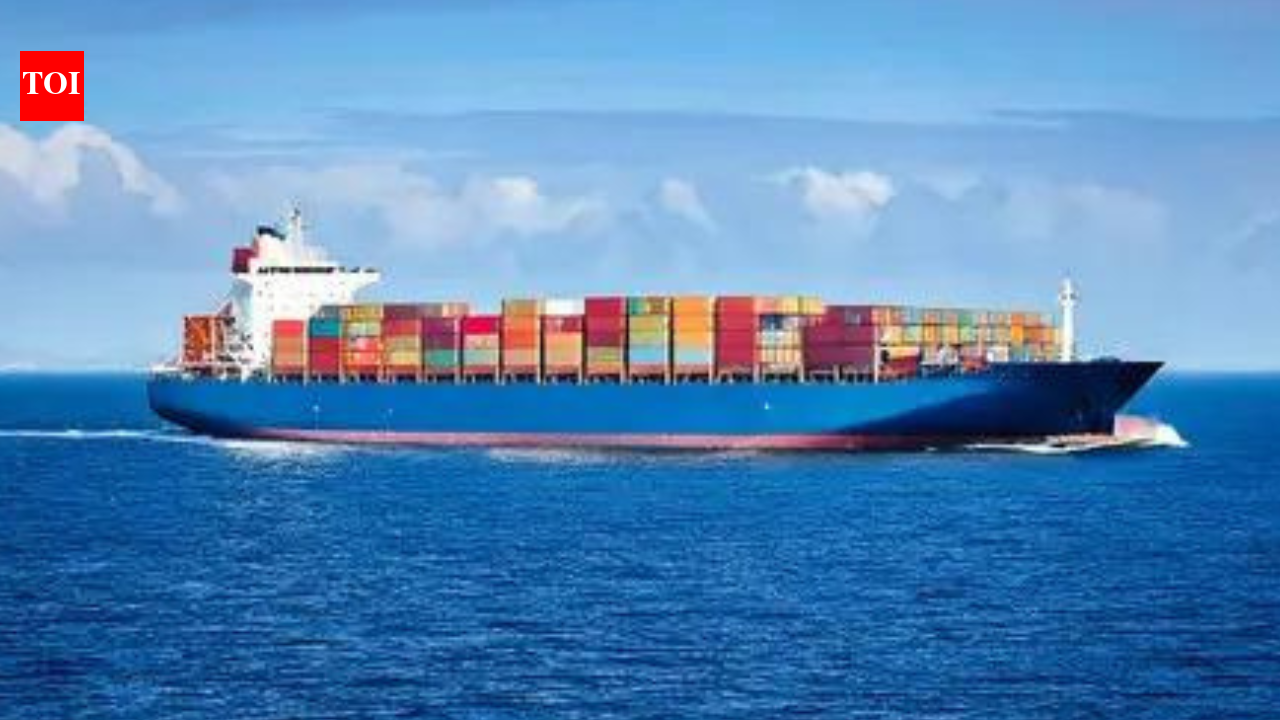
Material impacts on shipping have been severe. Data compiled by the ship-tracking firm Kpler and cited by Times of India revealed that only six vessels entered the strait on Monday, down from a ten-day average of about eleven. Before the war, between 130 and 140 ships typically passed through the waterway each day. Amid the closure, the United Kingdom Maritime Trade Operations reported that a tanker was involved in an incident with military forces in the Gulf of Oman on Tuesday south of Gwadar, Pakistan, with investigations currently underway.
Financial markets reacted swiftly to the ongoing blockade. Crude prices surged significantly, with both main contracts jumping around five percent on Monday. Brent crude hovered near the threshold of ninety dollars a barrel, while U.S. Benchmark crude settled at $82.13 a barrel following earlier fluctuations that saw prices swing between $72 and $102 over the previous month.
Market analysts weighed in on the economic friction.
wrote in a note."In the absence of any positive headlines on negotiations to reopen the strait, pressure on oil prices has been upward,"
Jason Wong, Bank of New Zealand, via CBS News and Yahoo News
Global strategist Stephen Innes of Quintex Intel offered further perspective on the strategy employed by both capitals.
observed."In effect, both sides are trying to weaponize the oil barrel without firing another shot. Washington is trying to choke Iran's ability to get its crude out while Tehran is squeezing the artery through which everybody else's crude gets through,"
Stephen Innes, Quintex Intel, via Yahoo News and CBS News
The sustained elevation in crude prices has fanned fresh inflation fears and bolstered expectations of upcoming interest rate hikes within the United States. Meanwhile, the economic pressure inside Iran has intensified. U.S. Treasury Secretary Scott Bessent stated that the country faces extreme food inflation and struggles to compensate its troops. Iranian Oil Minister Mohsen Paknejad announced that repair work continues on energy infrastructure damaged during the conflict, with plans to restore natural gas production capacity by late September. However, Majidreza Hariri, head of the Iran-China Chamber of Commerce, warned via KhabarOnline and Times of India that a U.S. Maritime blockade could add roughly eighteen billion dollars annually to Iran's trade costs.
Diplomatic efforts suffered further setbacks after Iran made compensation for war damage a condition for reopening the strait. President Trump responded on his Truth Social platform by reversing the premise and demanding substantial reparations from Tehran. The president insisted that Iran pay for historical casualties, including the families of the 17 U.S. Sailors killed in the 2000 bombing of the USS Cole in Yemen, combat fatalities, and protesters allegedly killed over the past half-century. Iranian Foreign Minister Abbas Araghchi defended Tehran's resilience during a televised press conference, asserting that Iran had proved itself a tough and invincible power.
Regional violence expanded beyond the Gulf as Iranian-backed Houthi rebels renewed missile and drone strikes on government-controlled areas in Yemen, targeting the Red Sea port city of Mokha and the central province of Marib. The Yemeni military reported that previous strikes killed numerous troops and civilians, threatening to shatter a four-year hiatus following the 2002 truce and open a dangerous new front. Simulating further regional friction, the UN peacekeeping force in Lebanon, UNIFIL, documented hundreds of projectile exchanges and airspace violations along the southern border involving Israeli forces.
Amid the heightened security climate, details emerged regarding presidential travel. Following intelligence warnings of a credible Iranian missile plot targeting Air Force One during the NATO summit, President Trump secretly departed Turkey last month by switching to an older aircraft with the assistance of an airport catering truck, as reported exclusively by CBS News and confirmed by The Washington Post.
As diplomatic channels remain stalled and trade costs mount, market observers and regional governments will monitor upcoming maritime security developments in the Gulf of Oman and potential shifts in Washington's negotiations regarding the blocked strait.
How significant is this development?
Contribute your assessment to the aggregated reader sentiment ledger.
Frequently Asked Questions
Key questions answered in this reportWhat is the key development in: Trump claims control of Strait of Hormuz as stalemate deepens?
President Donald Trump asserted absolute U.S. control over the Strait of Hormuz amid a naval blockade that has severely restricted global oil shipping and spiked crude prices.
Why is this World development significant for the UK?
This report covers critical events in our World beat. Independent reporting monitors related UK statements, regulatory shifts, and public responses as further verified details emerge.
How was this reporting corroborated and verified?
Newsarchy UK compiles and cross-references reporting from primary reporting from timesofindia.indiatimes.com and cross-checked wire reports. All coverage adheres to published editorial standards.
When was this report published?
This briefing was published on August 11, 2026 and is permanently cataloged in the Newsarchy UK World archives.