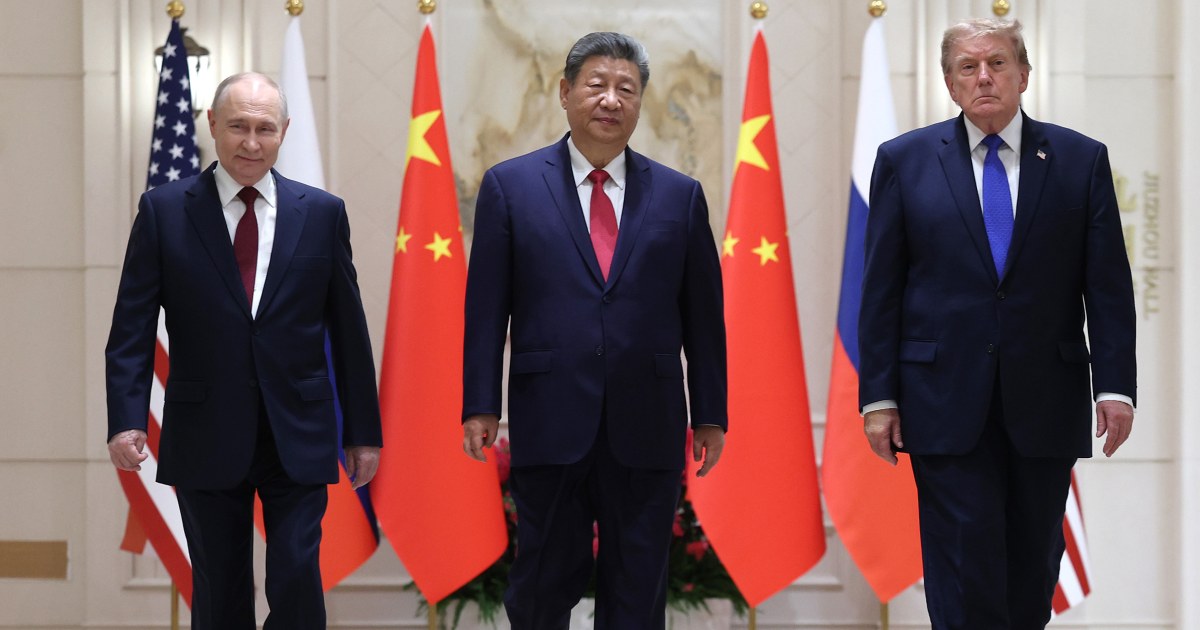
Trump, Xi and Putin hold landmark trilateral summit in China to discuss nuclear arms and Ukraine war
Leaders of the world's three largest nuclear powers gathered in Shenzhen for a historic trilateral summit to address nuclear weapons reduction.

Donald Trump and Xi Jinping met in China to discuss bilateral trade and artificial intelligence, while global attention focused on an unprecedented three-way summit involving Vladimir Putin. The historic gathering brought together the leaders of the world's three largest nuclear powers on Thursday, November 19, 2026, on the sidelines of the Asia-Pacific Economic Cooperation (APEC) summit in Shenzhen, Guangdong Province.
The meeting at the Kylin Villa resort marked the first time the three leaders have held a trilateral summit, according to reporting by The National. U.S. President Donald Trump remarked that the nations were uniquely positioned to address nuclear weapons reduction, according to BBC and The National reporting.
Media additions

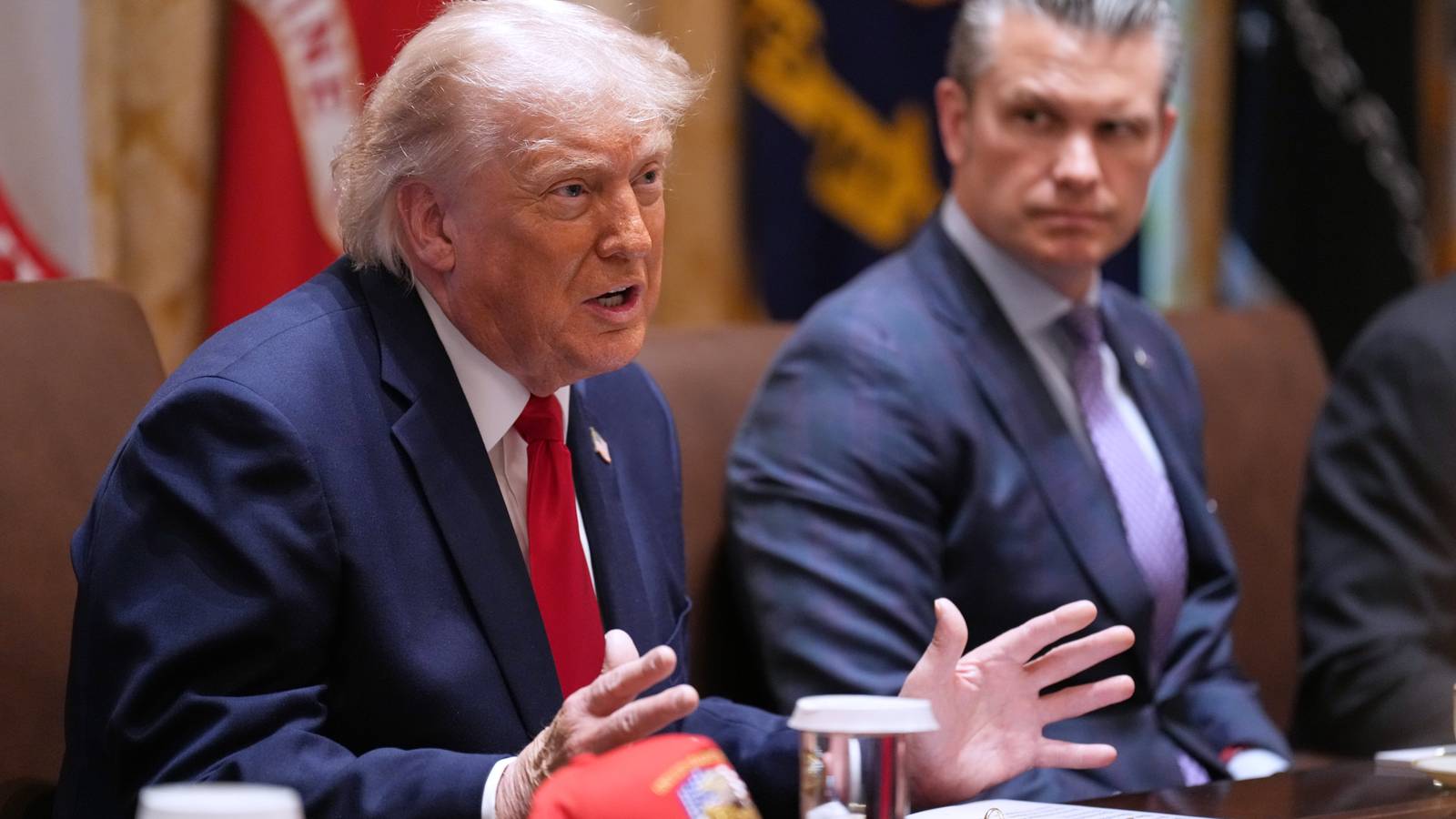
Security and protocol dominated much of the lead-up to the summit. As documented by NBC News, Chinese officials blocked a Bloomberg TV reporter from attending the opening of the trilateral session after she asked a question deemed rude regarding the resignation of Nvidia co-founder Jensen Huang. White House officials attempted to intervene but were unsuccessful, while Chinese security officials warned journalists that yelling questions could result in removal, per NBC News.
Discussions at the summit addressed multiple geopolitical flashpoints, most notably the war in Ukraine. According to BBC coverage, Trump stated that he and Putin had engaged in a long discussion regarding Ukraine, expressing his view that Putin and other parties would like to see the conflict end. U.S. Officials and external analysts, however, described the meeting as primarily exploratory and symbolic, playing down the likelihood of substantive outcomes on a Russia-Ukraine settlement or the West Asian crisis, as noted by The Hindu.
The timing of the diplomatic gathering coincided with escalating hostilities. Hours before the summit, Ukrainian forces struck the Kerch Bridge linking Russia to Crimea for the third time in a week, suspending rail traffic, according to The Hindu and NBC News. Russian authorities reported no casualties from that attack, while overnight strikes elsewhere saw Russia launch numerous drones and missiles that damaged energy facilities in the Odesa region and an apartment building in Chuhuiv, per NBC News.
Western commentators drew comparisons between the Shenzhen gathering and the 1945 Yalta conference, though Moscow and Beijing publicly downplayed such analogies, as reported by The Hindu.
Bilateral discussions between Trump and Xi also yielded specific policy positions. Xi told Trump that China and the United States should strengthen coordination to guard against artificial intelligence safety risks and ensure the technology remains under human control, according to The Hindu. Trump reiterated his opposition to robust or globalist regulation of what his administration terms "super intelligence," telling APEC leaders that the U.S. Would not allow the technology to be stifled, per The Hindu and NBC News.
Outside the main trilateral agenda, other diplomatic engagements unfolded on the sidelines of the APEC forum. Japanese Prime Minister Sanae Takaichi held her first face-to-face talks with Vladimir Putin, discussing the detention of a Japanese journalist in Russia and the seizure of Japan Tobacco International assets, according to The Hindu.
As the Shenzhen meetings conclude, international observers will monitor whether the exploratory talks translate into formal diplomatic frameworks. Attention is already turning toward upcoming international gatherings, with NBC News noting that Trump may host Xi and potentially Putin at next month's G20 meeting in Miami, where future discussions on nuclear arms control and regional conflicts are expected to continue.