Turkiye details mechanisms of defence pact with Pakistan and Saudi Arabia
Turkiye has detailed the operational frameworks of its new trilateral defence pact with Pakistan and Saudi Arabia, mirroring NATO's collective security model.

- Core Development: Turkiye has detailed the operational frameworks of its new trilateral defence pact with Pakistan and Saudi Arabia, mirroring NATO's collective security model.
- Beat Context: Categorized under World with independent corroboration.
- Reporting Depth: 3 minute analytical read synthesized from verified newsroom sources.
The agreement, signed on August 7, mirrors NATO’s Article 5 by treating any armed attack on one member as an attack on all. While the pact’s wording is familiar, Turkiye’s latest briefing clarified how the three powers – Turkiye, Pakistan and Saudi Arabia – intend to move from declaration to daily coordination.
Institutional architecture
According to the defence ministry, the pact will create “strategic political and military mechanisms” that bring together the defence ministers, foreign ministers and chiefs of staff of the three states. These bodies will meet at the highest level to plan and supervise:
Media additions
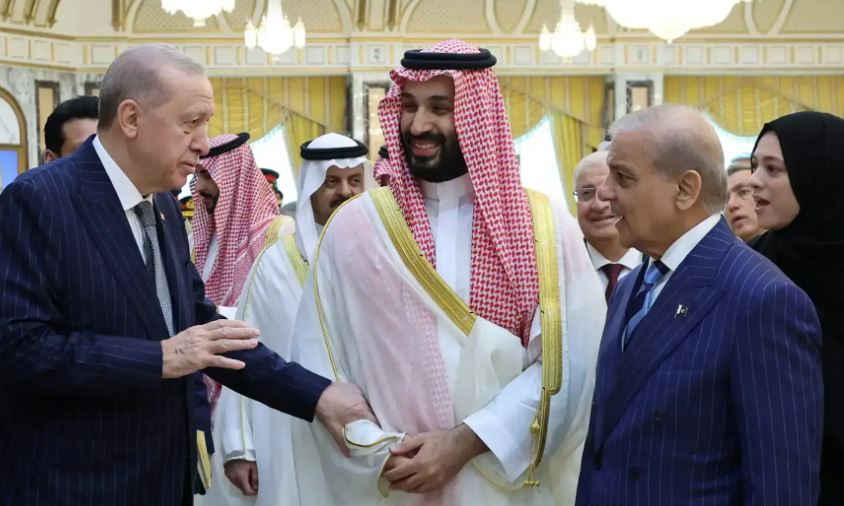
- Joint land, naval and air exercises, including air‑defence drills and unmanned‑system operations.
- Co‑development and joint production of weapons systems, with a focus on electronic warfare, artificial intelligence and autonomous platforms.
- Supply‑chain integration for “product and system supply, joint development and production, technology cooperation, and sustainable maintenance and logistics support.”
The ministry added that the cooperation will extend to “unmanned and autonomous systems, electronic warfare and artificial intelligence capabilities,” underscoring a technology‑heavy thrust.
From statement to practice
Turkey’s senior officials framed the pact as a defensive shield rather than a challenger to existing alliances. The defence ministry said Turkiye does not seek to replace NATO ties and is open to expanding the agreement, with Egypt floated as a possible future member.
President Recep Tayyip Erdoğan, speaking to Asharq Al‑Awsat, hinted at that ambition:
"Our vision for it is not limited to the three countries. Rather, we aspire for it to grow, and perhaps appropriate conditions will emerge one day for all countries of the region to gather under its umbrella."
Recep Tayyip Erdoğan, President of Turkiye, via Asharq Al‑Awsat
Foreign Minister Hakan Fidan later confirmed that “a few technical issues” remain before Egypt could join, and he is scheduled to discuss the matter during a Cairo visit this week.
Pakistani Prime Minister Shehbaz Sharif, in remarks reported by GNNHD, stressed that the pact is “entirely for defensive purposes” and not intended for aggression.
Regional backdrop
The timing of the agreement coincides with heightened turbulence. The US‑Israeli offensive against Iran has already pulled in regional actors and disrupted shipping lanes through the Strait of Hormuz and the Red Sea. Turkiye’s defence ministry said it is taking part in Jeddah talks aimed at forging an international coalition to protect Red Sea navigation.
Iran, despite being a traditional rival of Saudi Arabia, offered a cautiously positive reaction, saying it supports “security mechanisms based on cooperation between regional countries.” Kuwait, Bahrain and Somalia have also welcomed the pact, suggesting a broader appetite for collective defence beyond the original trio.
Key mechanisms at a glance
| Mechanism | Participants | Scope |
|---|---|---|
| Strategic coordination body | Defence Ministers, Foreign Ministers, Chiefs of Staff | Policy, planning and crisis response |
| Joint exercises | Armed forces of all three states | Land, naval, air, air‑defence, UAV operations |
| Defence industry collaboration | State‑run and private defence firms | Joint R&D, production, AI, electronic warfare, logistics |
What to watch next
- Egypt’s accession: Foreign Minister Fidan’s Cairo talks next Thursday and Friday will test whether “technical issues” can be resolved.
Further analysis of Turkey’s evolving defence posture can be followed in our dedicated coverage.
How significant is this development?
Contribute your assessment to the aggregated reader sentiment ledger.
Frequently Asked Questions
Key questions answered in this reportWhat is the key development in: Turkiye details mechanisms of defence pact with Pakistan and Saudi Arabia?
Turkiye has detailed the operational frameworks of its new trilateral defence pact with Pakistan and Saudi Arabia, mirroring NATO's collective security model.
Why is this World development significant for the UK?
This report covers critical events in our World beat. Independent reporting monitors related UK statements, regulatory shifts, and public responses as further verified details emerge.
How was this reporting corroborated and verified?
Newsarchy UK compiles and cross-references reporting from primary reporting from aljazeera.com and cross-checked wire reports. All coverage adheres to published editorial standards.
When was this report published?
This briefing was published on August 13, 2026 and is permanently cataloged in the Newsarchy UK World archives.