Ursula von der Leyen's EU seen as stunned and divided amid Iran‑Israel war
As conflict escalates in the Middle East, Ursula von der Leyen's foreign policy approach has triggered internal dissent and exposed deep divisions within the EU.

Ursula von der Leyen’s bold declaration that “Europe can no longer be a custodian for the old‑world order” – delivered as missiles slammed Tehran – has reshaped the EU’s foreign‑policy narrative at a moment when the Iran‑Israel war threatens to redraw global alliances.
On the day von der Leyen spoke, the conflict entered its tenth day of hostilities, and her words immediately sparked a cascade of reactions across Brussels, national capitals and Gulf corridors.
Media additions
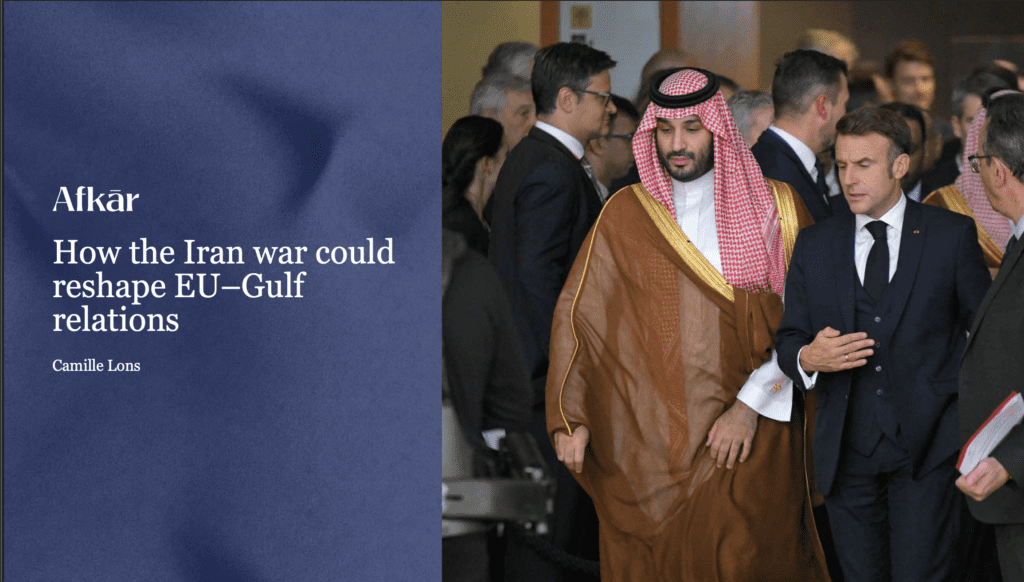

From Brussels to the Gulf: a fragmented response
Von der Leyen’s speech triggered an “ad‑hoc summit with Middle Eastern leaders”, a rapid humanitarian airlift to Lebanon for 130,000 people and a flurry of naval deployments. France sent a dozen vessels to the Mediterranean and the Red Sea. Yet, according to the Middle East Council, most European governments “distanced themselves from U.S. Offensive operations”, inviting “explicit threats” from Washington to curtail NATO commitments.
Internal dissent was palpable. Former EU diplomats labeled the bloc’s reaction “stunned, sidelined, and disunited”, while a former head of the EU diplomatic service wrote that “Brussels has slipped into a starkly paralysed role as mere commentator on the geopolitical upheaval on its Southern flank”. Spain’s prime minister refused to “be complicit in something that is bad for the world”, and Germany’s chancellor warned against “lecturing partners and allies”. By contrast, French foreign minister Jean‑Noël Barrot rebuked the Commission for “usurping” the EU foreign‑policy chief’s mandate, prompting senior MEP Nathalie Loiseau to call von der Leyen’s Gulf outreach “NOT your business”.
“Europe’s response to the American and Israeli strikes on Iran has been shameful: stunned, sidelined, and disunited,”
former EU representative to the Palestinian territories, via The Guardian
Defenders of the Commission argue that a crisis of this scale warrants decisive leadership. “The criticism of the commission overstepping its mandate is just a fig leaf for saying, ‘We don’t like this, that or the other decision that you took,’” an EU diplomat told The Guardian.
Legal norms under fire
Leiden scholars echo the view that the war is eroding the credibility of international law. “The Trump administration no longer bothers to offer legal justification for these attacks or to frame them in the language of international law,” wrote advisory council member Marhold. He warned that the breakdown of a “belief system” at the heart of international law “undermines the credibility of international law” and may embolden other powers, such as China with Taiwan.
Research on Iran’s internal dynamics adds another layer. RezaeeDaryakenari notes that the death of the Supreme Leader and several senior military figures has created an unprecedented moment of succession for the Islamic Republic. The scholar’s ongoing survey of roughly 3,000 respondents inside Iran shows “60% fully support foreign military intervention, 15% partially support it, 9% oppose it but primarily blame the Islamic Republic and 12% are fully opposed”.
Economic shockwaves
Piie modeled a scenario where oil spikes to $120 per barrel for a year, slowing global growth and lifting inflation especially in oil‑dependent economies. The same analysis warned that the fallout would be “very uneven”, with fertilizer and LNG prices also soaring.
Europe’s exposure is acute despite modest direct hydrocarbon imports. The Mecouncil notes that since 2023, insecurity in the Red Sea forced shipping routes to circumnavigate the Cape of Good Hope, adding more than 10 days to transit times, increasing costs, and weakening supply chain resilience.
Strategic realignments
Gulf states are recalibrating their security calculus. The war has revived the EU‑GCC Strategic Partnership adopted in 2022, particularly its focus on maritime security and energy resilience. Gulf nations, while still reliant on U.S. Guarantees, are “seeking to diversify their security relationships”, according to the Mecouncil, creating a paradox where the United States remains both “the main obstacle to, and the strongest argument for, a deeper partnership”.
European military aid, though welcomed, remains “limited relative to the scale of the threat”. France led the most visible effort, dispatching the aircraft carrier Charles de Gaulle, Rafale fighter jets, and additional naval assets, while also providing air defense support. The Gulf’s “anti‑drone cooperation” with Ukraine, driven by a need to counter Iranian low‑cost drones, hints at a nascent convergence of interests that could bolster Europe’s position on Russia‑Ukraine.
Implications for the EU’s future
Von der Leyen’s call for realism is an attempt to keep Trump on side over Ukraine. The European Council president António Costa summed up the strategic calculus: “So far, there is only one winner in this war – Russia,” benefitting from higher energy prices and reduced attention to the war it launched on its neighbour.
Whether the EU can emerge from the conflict or reshape a more autonomous foreign‑policy architecture hinges on internal consensus on the Commission’s diplomatic outreach and the durability of Gulf partnerships. The coming weeks will test the bloc’s resolve. As the war’s “global scenarios” outlined by Geopolitika range from negotiated de‑escalation to a broader confrontation involving major powers, Europe’s next moves could either cement its role as a diplomatic bridge or consign it to the sidelines of a reshaped world order.


