US judge strikes down Trump visa policy limiting foreign students to four years
A federal judge has invalidated a DHS regulation that sought to replace the duration-of-status framework with fixed admission periods for international students and visitors.
What the rule would have changed
The DHS regulation sought to replace the longstanding "duration of status" framework — in place for nearly five decades — with fixed admission periods. Under the proposal, F-1 visa holders would generally have been limited to an initial stay of four years. Students whose programmes ran longer would have needed federal approval to extend. J-1 exchange visitors, including researchers and professors, faced the same four-year ceiling. Foreign journalists on I visas would have been restricted to 240 days, with Chinese journalists limited to 90 days. The rule also proposed cutting the post-completion grace period from 60 days to 30 days and capping language-programme participants at 24 months aggregate.
| Category | Current rule | Proposed rule (vacated) |
|---|---|---|
| F-1 students | Duration of status | Four-year initial stay, extensions required |
| J-1 exchange visitors | Duration of status | Four-year initial stay, extensions required |
| I-visa journalists (general) | Up to five years | 240 days, extensions of similar duration |
| I-visa journalists (Chinese nationals) | Up to five years | 90 days, extensions of 90 days |
| Post-completion grace period | 60 days | 30 days |
| Language-programme participants | Duration of status | 24 months aggregate |
Judge's reasoning
In an eight-page order, Saylor wrote that "the statute simply does not grant DHS such broad and open-ended authority to undermine the F-1 visa program." He characterised the policy as "arbitrary, capricious, an abuse of discretion, and otherwise not in accordance with law." The court found that DHS failed to adequately justify the restrictions on fraud-prevention or national-security grounds, did not assess costs and benefits, and did not consider less burdensome alternatives. Saylor also warned that the rule could prevent international students from pursuing extended courses such as PhD programmes, obtaining joint degrees or changing academic specialisations.
Media additions
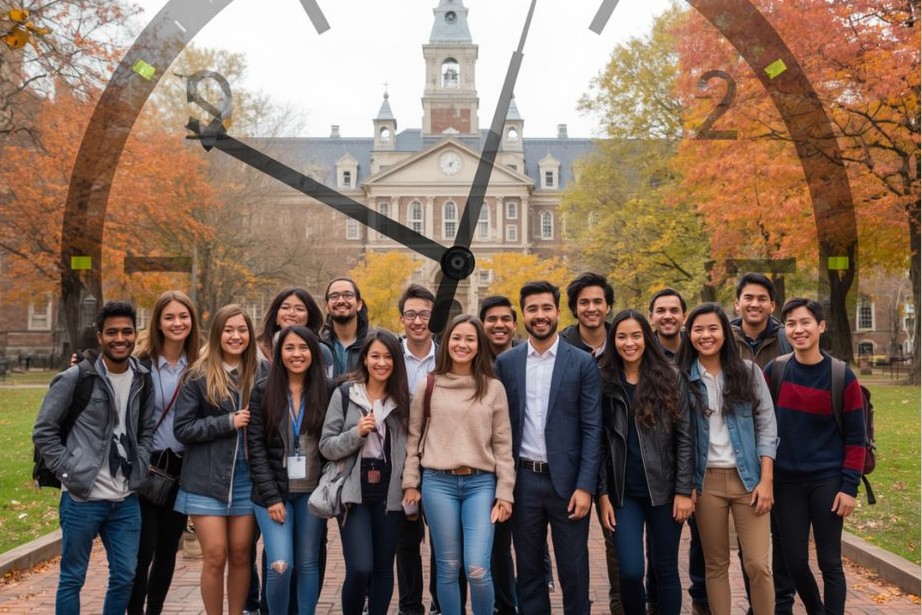
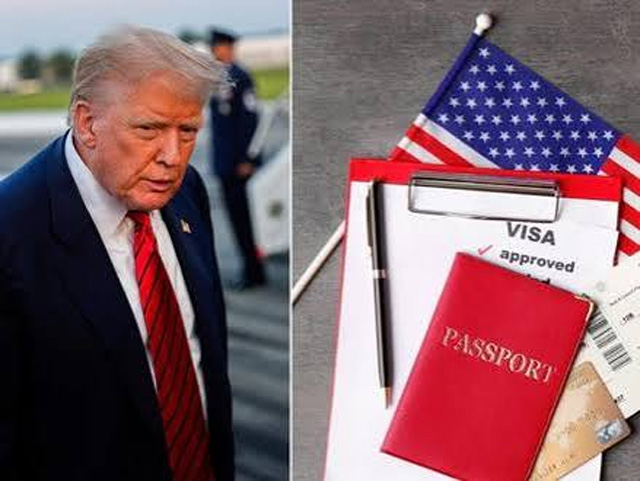
"Put bluntly, DHS is seeking to prevent or discourage the very activity -- providing educational opportunities for foreign students in the United States -- that Congress sought to permit and encourage."
Judge F. Dennis Saylor IV, U.S. District Court for the District of Massachusetts
Enrollment context
The ruling arrives alongside new data showing a sharp decline in Indian graduate enrolment at American universities. The Open Doors 2026 report, released Monday by the Institute of International Education, found that the number of Indian students in the United States fell by 6 percent to 339,435 during the 2025-26 academic year. Indian graduate enrolment dropped 34 percent to 116,609, while undergraduate enrolment slipped 1 percent to 39,711. Optional Practical Training participation by Indian students rose 27 percent to 182,201. India remains the largest source of international students in the U.S. For the third consecutive year. The U.S. Hosted more than 1.1 million international students in the 2023-24 academic year, according to official data cited by Moneycontrol.
Legal timeline
- July 17, 2026: DHS finalises regulation replacing duration of status with fixed admission periods.
- August 2026: Coalition of higher-education groups and unions files lawsuit in Massachusetts federal court.
- September 14, 2026: Judge Saylor issues nationwide preliminary injunction blocking the rule one day before its scheduled effective date.
- September 2026: Federal government appeals the injunction to the U.S. Court of Appeals for the First Circuit.
- November 13, 2026: First Circuit grants government's request to pause the appeal for 30 days, allowing the district court to proceed to final judgment.
- November 16, 2026: Judge Saylor strikes down the regulation in its entirety.
What happens next
The Trump administration is expected to appeal Monday's final judgment. An appeal alone would not reinstate the four-year rule; the duration-of-status system remains in effect nationwide unless a higher court stays or overturns Saylor's order. The First Circuit's 30-day pause on the earlier appeal expires in mid-December, at which point the appellate court could resume consideration of the government's challenge to the preliminary injunction, now largely moot, or the administration could file a new appeal targeting the final judgment.
Miriam Feldblum, president and CEO of the Presidents' Alliance on Higher Education and Immigration, called the decision a significant victory for international students, scholars and educational institutions, saying the administration's policy actions had already contributed to a decline in enrolment and interest. Fanta Aw, executive director and CEO of NAFSA, said the ruling "reaffirmed the continuation of the longstanding Duration of Status policy" and sent "an unequivocal and resounding message" that the framework is retained. Khanderao Kand, president and chief of policy and strategy at the Foundation for India and Indian Diaspora Studies, said the court had "helped protect the future of American science, technology, research, and innovation."
For now, international students can continue pursuing academic programmes without the new four-year admission limit. Universities and advocacy groups are monitoring whether the administration seeks an emergency stay from the First Circuit or the Supreme Court.