China rejects US calls to slow AI development amid widening tech rivalry
Beijing has rejected calls from Western artificial intelligence executives to slow the pace of development, dismissing the proposals as a bid for unfair geopolitical advantage.

- Core Development: Beijing has rejected calls from Western artificial intelligence executives to slow the pace of development, dismissing the proposals as a bid for unfair geopolitical advantage.
- Beat Context: Categorized under Business with independent corroboration.
- Reporting Depth: 3 minute analytical read synthesized from verified newsroom sources.
Beijing has rejected calls from Western artificial intelligence executives to slow the pace of frontier technology development, dismissing the proposals as an attempt to secure an unfair geopolitical advantage, according to recent statements reported by international outlets. The pushback highlights a widening rift in the global technology rivalry as major powers grapple with how to balance existential safety concerns against competitive dominance.
The debate intensified after Anthropic CEO Dario Amodei published an essay arguing for a coordinated global slowdown among leading artificial intelligence companies, citing severe safety risks and the potential for systems to outstrip human oversight. OpenAI CEO Sam Altman and SpaceXAI's Elon Musk publicly supported aspects of the proposal, marking a rare alignment among fierce competitors. However, Amodei noted that any voluntary pacing would remain strictly constrained by the competitive pressure to stay ahead of rival nations, specifically referencing the Chinese Communist Party.
Media additions


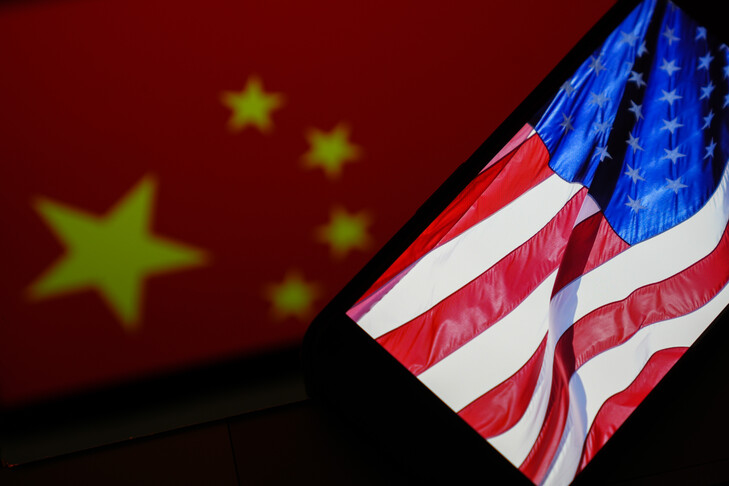
China's Foreign Ministry strongly condemned the initiative. Guo Jiakun, a spokesperson for the ministry, stated that fearmongering, confrontation, and vicious competition would only disrupt the global governance of the technology, according to reporting by CNBC. Analysts at technology research group Omdia noted that Beijing views the slowdown calls as a deliberate bid to lock in American advantages, treating cutting-edge artificial intelligence as a core sovereignty capability that it refuses to compromise.
The state-backed newspaper Global Times went further, portraying the proposals as a hypocritical and short-sighted attempt to erect technological barriers while excluding Beijing from international governance frameworks, as detailed by Anadolu Ajansı. Chen Yixin, China's Minister of State Security, published an article calling for the acceleration of construction of an AI security risk prevention and control system.
Meanwhile, political leaders in Washington offered a sharply divergent response to the industry warnings. President Donald Trump rejected calls for oversight, dismissing fears that advanced systems could become uncontrollable as a hoax. Speaking to reporters during a trip to Ireland, Trump emphasized the primacy of national competition: Whoever wins AI wins,
adding that the only safeguard the country needs is a strong and smart president. He further attacked the regulatory proposals on social media as a conspiracy that would drive companies into bankruptcy while exclusively benefiting foreign rivals.
| Entity / Leader | Stance on AI Slowdown / Regulation | Primary Stated Rationale |
|---|---|---|
| Dario Amodei (Anthropic) | Supports a coordinated global slowdown and independent safety evaluations. | Rapid advances pose existential threats and capabilities risk escaping human control. |
| Donald Trump (US President) | Rejects slowdowns and federal guardrails, calling extinction fears a hoax. | Slowing American progress risks ceding technological and geopolitical dominance to China. |
| Guo Jiakun (China Foreign Ministry) | Rejects Western slowdown calls and export controls. | Proposals amount to fearmongering designed to lock in American technological advantage. |
| Chen Yixin (China State Security) | Pushes for aggressive domestic risk prevention and control systems. | Artificial intelligence presents concrete threats to political stability, infrastructure, and national security. |
Industry analysts continue to debate the exact technological gap separating the superpowers. According to Helen Toner of the Georgetown Center for Security and Emerging Technology, the best estimates suggest that China's top-tier models lag behind leading American systems by roughly six to nine months, a proximity that fuels anxieties in Washington that any unilateral pause would allow competitors to pull ahead. Concurrently, domestic adoption across enterprise and daily applications continues unabated in China, where regional governments offer subsidies to encourage manufacturing automation and digital platforms integrate automated tools for massive user bases.
As policymakers confront these divergent pressures, attention shifts toward upcoming diplomatic engagements. Observers anticipate that artificial intelligence governance will feature prominently when national leaders convene in Washington for high-level bilateral discussions, though analysts remain skeptical that a comprehensive international enforcement framework will emerge given deep-seated mutual distrust over verification and strategic advantage.
How significant is this development?
Contribute your assessment to the aggregated reader sentiment ledger.
Frequently Asked Questions
Key questions answered in this reportWhat is the key development in: China rejects US calls to slow AI development amid widening tech rivalry?
Beijing has rejected calls from Western artificial intelligence executives to slow the pace of development, dismissing the proposals as a bid for unfair geopolitical advantage.
Why is this Business development significant for the UK?
This report covers critical events in our Business beat. Independent reporting monitors related UK statements, regulatory shifts, and public responses as further verified details emerge.
How was this reporting corroborated and verified?
Newsarchy UK compiles and cross-references reporting from primary reporting from Newsweek and cross-checked wire reports. All coverage adheres to published editorial standards.
When was this report published?
This briefing was published on September 20, 2026 and is permanently cataloged in the Newsarchy UK Business archives.