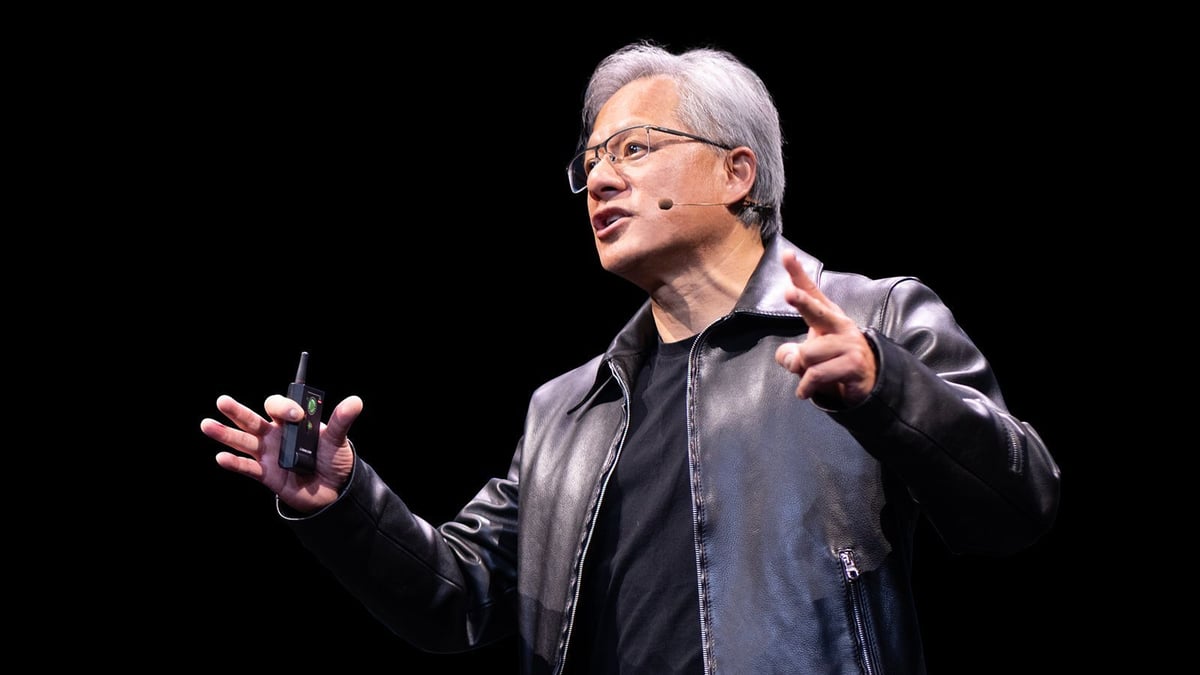
Nvidia shares surged as Jensen Huang returned as CEO following direct intervention by President Donald Trump. Affiliated committee hearings approach.
| Index |
Change |
Close |
| S&P 500 |
+4.74% |
7,238 |
| Nasdaq Composite |
+6.51% |
24,090 |
The reversal caps a tumultuous two weeks that began when Huang resigned on Nov. 12 following reports of multiple extramarital affairs, including one with Alice Huang, a Megaspeed executive identified by U.S. Intelligence as a suspected Chinese agent. The New York Times reported she had been in contact with an officer of China's Ministry of State Security during their relationship. Nvidia shares had plummeted nearly 33% from their Nov. 6 close of $186.64, erasing hundreds of billions in market value and dragging the broader AI trade into a steep correction.
President Donald Trump intervened directly, telling CNBC he had spoken to the board "directly and indirectly" and that Huang "did nothing wrong." On Truth Social, Trump wrote: "The Country needs Jensen's leadership at NVIDIA in order to ensure the Success and Prosperity of not only the Company, but the American Economy." The board's statement cited "input from senior levels of the United States government" and confidence that Huang's return "poses no national security risk." Senior government officials briefed directors late last week that no national security laws were violated, according to sources familiar with the discussions.
"The Board believes Jensen is the right person to lead NVIDIA, and that his reinstatement is in the best interests of our stockholders, employees, partners and customers," board chair Harvey Jones said. Huang responded: "I take this responsibility with the greatest humility and renewed commitment."
The speed of the turnaround stunned corporate governance experts. As recently as last week's earnings call, interim CEO Colette Kress — who remains CFO — had said the board was not considering Huang's return. An independent investigation by Wachtell, Lipton, Rosen & Katz into whether company secrets or national security were compromised "will proceed to conclusion," the board said, and Huang is "committed to cooperating with it." A new National Security and Export Control Committee has also been formed.
Critics argue the episode sets a dangerous precedent. "This has set back governance and ethics half a century," said Cynthia Clark, governance professor at Bentley University. "One of the quintessential responsibilities of a board is to hire, fire, and compensate a CEO. That fundamental role is changed because of the government acting as a regulator, a director, and an investor." Charles Elson, founding director of the Weinberg Center for Corporate Governance at the University of Delaware, warned: "Unless you support your code of ethics, then you call into question all kinds of things. The damage that this whole thing has caused is going to be irreparable."
Defenders counter that the board answered to shareholders. "Their job is not to follow corporate governance rules for their own sake," said Harvard Law professor Jesse Fried. "Their job is to take care of the shareholders." Elon Musk posted on X that "the mistake has been corrected," while hedge fund manager Bill Ackman wrote: "The wisdom of the crowd prevails."
Congressional scrutiny is intensifying. Sen. Elizabeth Warren, D-Mass., called the reinstatement "reckless" and said Nvidia executives and the board "still owe Congress answers about the company's compliance with U.S. Export controls." Huang is scheduled for a closed-door transcribed interview with the House Foreign Affairs panel and two other committees on Dec. 1. Nvidia general counsel Tim Teter appears before the same panels on Dec. 2. Senate Banking Committee Chairman Tim Scott, R-S.C., has set a public hearing for Dec. 3 titled "Protecting America's AI Advantage: Oversight of U.S. Export Controls," with Huang as sole witness.
Market strategists are split on whether Monday's rally marks a sustainable bottom. Nomura's Charlie McElligott warned the surge was "supercharged by Wall Street with a massive surge of MECHANICAL buying," driven by short-covering and options dealers unwinding hedges. "It's naïve to believe that a one-day 'Up Shock' absolves the market of underlying concerns surrounding the multiple spinning plates," he wrote, citing stubborn inflation, rising borrowing costs, and cooling corporate AI spending expectations.
David Rosenberg of Rosenberg Research called it "a classic dead cat bounce in US futures in the wake of last week's epic drubbing." Bespoke Investment Group's Paul Hickey cautioned that the holiday-shortened week, with Thanksgiving thinning liquidity, could produce "exaggerated moves in both directions." JPMorgan strategists framed the question bluntly: "whether this is a deadcat bounce or the start of a more sustainable rally into year-end."
Wednesday's personal consumption expenditures report, the Fed's preferred inflation gauge, looms as a critical test. "With markets already pricing in a December hike, a hot print could add fuel to the fire, and with Thanksgiving thinning out liquidity, even small surprises could spark outsized moves," wrote FXTM's Lukman Otunuga. Polymarket gives a Fed rate increase at the Dec. 9 meeting roughly 91% odds.
Nvidia's fundamentals remain strong. Third-quarter fiscal 2027 revenue surged 103% year over year to $115.8 billion, and management raised its fourth-quarter outlook above Wall Street estimates. But the company faces an SEC accounting investigation and ongoing export-control restrictions on semiconductor sales to China. Semiconductor peers rallied in sympathy: Advanced Micro Devices climbed 6.85% to $453.46, Broadcom gained 3% to $313.55, while Arm Holdings rose after CEO Rene Haas renewed his contract through 2033. Neocloud providers CoreWeave and Nebius jumped as much as 30%.
The AI trade's poster child is back. Whether the board's about-face restores lasting confidence, or merely papered over a governance crisis with a trillion-dollar rally, will be tested in the coming weeks, starting with Huang's Capitol Hill appearances and the Fed's next move.