Ukraine sinks Russian warship Merkury off Libya in drone attack
Ukrainian naval drones reportedly struck a Russian corvette at a Libyan naval base in an attack that opened a new maritime theater in the Mediterranean.

Ukraine says it sank a modern Russian warship at a Libyan naval base on Sunday, extending the war more than 1,500 miles from its own front line and opening a new maritime theater in the Mediterranean.
President Volodymyr Zelenskyy announced on Monday that seven Ukrainian-made naval drones struck the corvette Merkury at Benghazi, also hitting the Russian dry cargo vessel MV Angara and destroying a Ka-27 helicopter aboard the warship. Libyan authorities in the east offered a different account, saying the vessel was heavily damaged but not sunk, and that several drones were intercepted before two reached their target.
Media additions


The discrepancy matters because it is the first time Ukraine has claimed the destruction of a Russian warship inside a foreign port so far from the Black Sea, and it exposes the competing narratives now hardening around an attack that has drawn in the United Nations, the Kremlin, and two rival Libyan governments.
| Detail | Ukrainian account | Libyan eastern authorities |
|---|---|---|
| Fate of the Merkury | Sunk | Heavily damaged |
| Number of drones | Seven | Several launched; at least four intercepted, two struck |
| Casualties | Not stated | At least 10 wounded, including Russian and Libyan crew |
| Second vessel hit | MV Angara struck | Maltese-flagged commercial vessel hit off Benghazi |
| Launch point | Drones delivered by “mother ship” | Base run by Ukrainian forces in western Libya |
Zelenskyy described the Merkury as one of Russia’s newest vessels, commissioned in 2023 during the full-scale war, and said the operation was carried out by Ukraine’s Security Service in coordination with the country’s defense forces. “Despite all the enemy’s efforts to counter the attack, the Russian corvette Merkury was sunk,” he wrote on social media. He added that the Angara had been used to transport weapons and that both vessels were “legitimate military targets for Ukraine because they directly supported Russia’s military capabilities.”
Two Libyan officials, speaking on condition of anonymity, said the Merkury had been docked at Benghazi’s naval base for refuelling and resupply under a cooperation agreement between Russia and the eastern-based government. They said an initial investigation showed that two naval drones struck the warship after several were launched from a base operated by Ukrainian forces in western Libya. The Libyan coast guard said a follow-up naval drone attack hit a Maltese-flagged commercial vessel sailing off Benghazi, and the local health ministry said it received injured people from a commercial ship targeted off the coast.
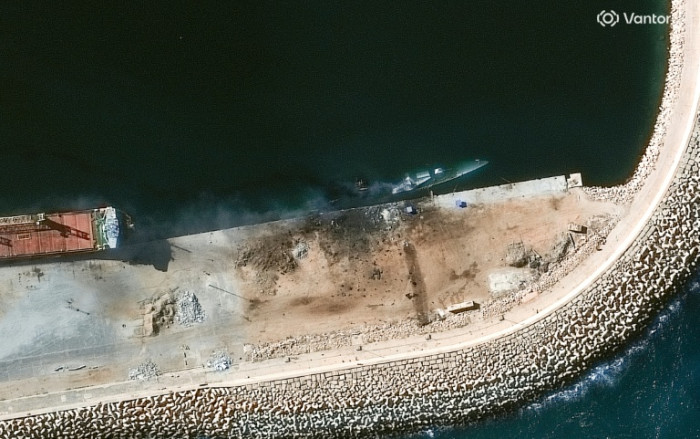
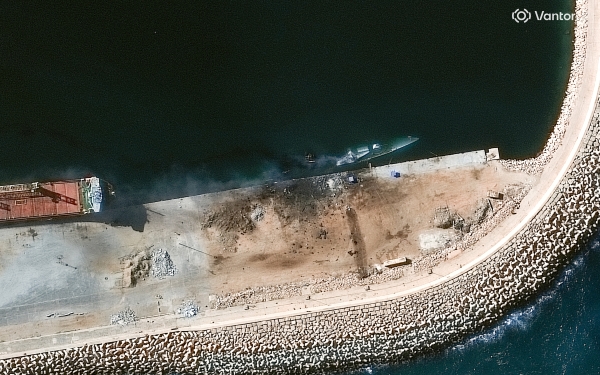
Satellite imagery from the US company Vantor showed the corvette capsized in the harbor with most of its hull submerged, providing early visual evidence of the damage before Ukraine officially acknowledged responsibility. The vessel was a Project 20380 corvette, 343 feet long with a crew of about 90, according to reporting that drew on satellite analysis.
The attack came one day after drones set the Russian cargo ship Sparta II on fire in international waters in the Gulf of Finland. Finnish military officials considered Ukraine the likely source of that strike, although Kyiv did not claim responsibility. All 16 crew members abandoned ship, and vessels from Finland, Estonia and Russia moved in to contain the fire. The two incidents, occurring in different seas and under different levels of confirmed Ukrainian responsibility, highlighted the challenges facing Russian-linked shipping across two important maritime regions.
Kremlin spokesman Dmitry Peskov acknowledged Zelenskyy’s statement on Monday and told reporters that the Defence Ministry would provide information “if it deems it appropriate.” He declined to comment directly on the strikes off Libya but warned that the Baltic attack represented “a very dangerous trend — the expansion of terrorist activity in the Baltic region,” adding that it was “leading to an escalation of tensions in the region.” Russia would like to hope that Baltic states would use their influence on Ukraine to “warn it against continuing such dangerous terrorist practices,” he said.
Libya’s eastern-based government condemned the attack and requested a United Nations investigation, while the UN-recognised government in Tripoli said it was alarmed by “risks posed by involving civilian ports and facilities in activities linked to external conflicts.” The United Nations Support Mission in Libya called for “an immediate, independent and transparent investigation,” warning that “Libya cannot afford, and must not become a battleground for foreign conflicts.”
Libya has remained divided since the 2011 uprising that toppled Muammar Gaddafi. The internationally recognized Government of National Unity operates from Tripoli, while a rival administration governs the east with the support of military commander Khalifa Haftar. Russia has cultivated relationships with the eastern authorities, giving Moscow access to strategically important facilities along the Mediterranean.
Experts said the Benghazi strike illustrates a shift in the geography of the conflict. Alexey D. Muraviev, a senior research fellow in defense and strategic studies at Australia’s Edith Cowan University, told Al Jazeera that the Mediterranean had become an external theater of maritime operations in the Ukraine war, warning that the attacks could create additional risks for international shipping.
The Merkury had stopped in Benghazi to refuel and take on supplies under a cooperation agreement with the eastern Libyan administration. According to Ukraine’s Security Service, the corvette regularly escorted Russian maritime convoys and belonged to the Black Sea Fleet. President Vladimir Putin had previously highlighted the vessel during Navy Day celebrations as proof of Russia’s fleet modernization, naming it among 30 new vessels in 2023.
The Angara is a Russian-flagged roll-on, roll-off cargo ship of 8,811 gross tons that the US Treasury lists as blocked property linked to the Russian company M Leasing LLC. Ukraine’s military intelligence says it has carried North Korean ammunition to Russia, and that it ran military cargo on routes known as the “Syrian Express” and the “Libyan Express.” Zelenskyy said only that it was hit.
Ukraine’s Security Service said seven unmanned surface vessels took part in the operation, transported to the designated area aboard a mother ship before being launched against Russian targets. The SBU said Russian forces tried to destroy the drones on the way in, but the boats still found and hit both ships. Footage released by Zelenskyy showed maritime drones approaching vessels before explosions erupted, and the BBC verified footage showing a ship ablaze at Benghazi’s port.
What to watch next
- The Russian Defence Ministry’s eventual statement on the fate of the Merkury and the Angara.
- The outcome of the joint Libyan-Russian investigation and any UN inquiry into Ukrainian forces in western Libya.
- Whether Russia follows through on Peskov’s warning of “painful consequences” for Kyiv.
- Further long-range drone strikes on Russian-linked shipping in the Mediterranean or Baltic.
Zelenskyy gave no sign of stopping. “We continue our operations in designated waters,” he wrote. “We are responding to Russia’s aggression. We are developing Ukrainian weapons.” For Russia, the destruction of a modern corvette tied up in a friendly port 1,500 miles from the front demonstrates that geographical distance and access to friendly ports do not necessarily guarantee protection. The wider question is whether Russia can maintain its overseas maritime network without exposing its partners and logistical facilities to the risks of a war that began in Europe.