Renault Duster Strong Hybrid Launched in India at Rs 16.99 Lakh
Renault has officially launched the Duster Strong Hybrid in India at an introductory starting price of ₹16.99 lakh, delivering 160 PS and 29 km/l mileage.

- Core Development: Renault has officially launched the Duster Strong Hybrid in India at an introductory starting price of ₹16.99 lakh, delivering 160 PS and 29 km/l mileage.
- Beat Context: Categorized under Business with independent corroboration.
- Reporting Depth: 5 minute analytical read synthesized from verified newsroom sources.
Renault has officially launched the Duster Strong Hybrid in India, bringing a high-efficiency electrified powertrain to the midsize SUV segment at an introductory starting price of ₹16.99 lakh. According to reports from Autopunditz, the new model enters a competitive field currently populated by established Japanese-derived hybrids, aiming to capture urban buyers seeking better fuel economy without transitioning immediately to fully electric vehicles.
The vehicle pairs a 1.8-litre petrol engine with dual electric motors and a 1.4 kWh battery pack. As noted by Auto, this configuration yields a combined output of 160 PS alongside an ARAI-rated fuel economy of 29 km/l. Reporting from Urbanacres indicates that the onboard battery is designed to support pure electric operation for up to 80 per cent of urban driving conditions.
Media additions
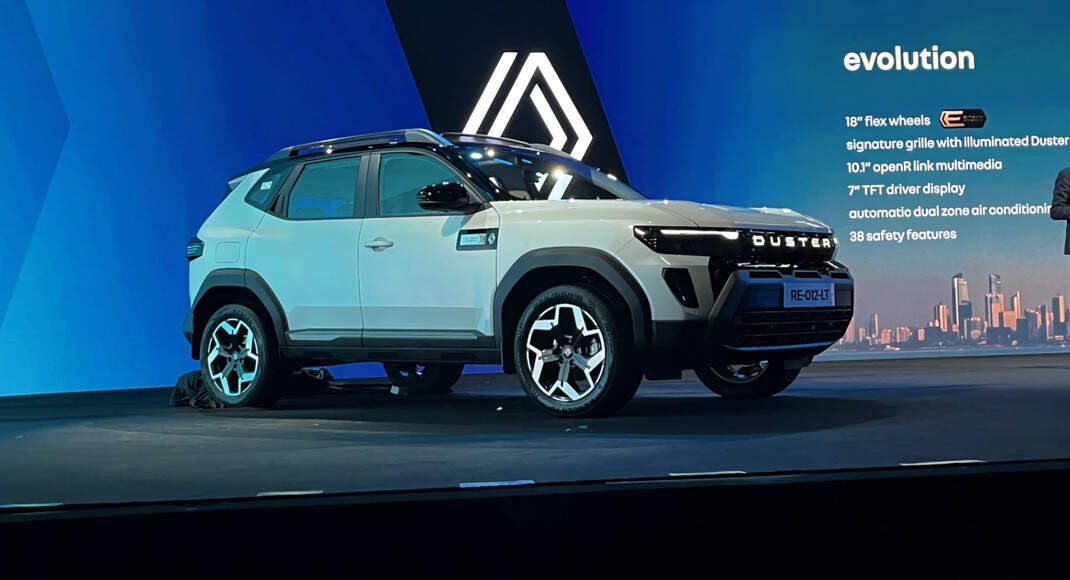
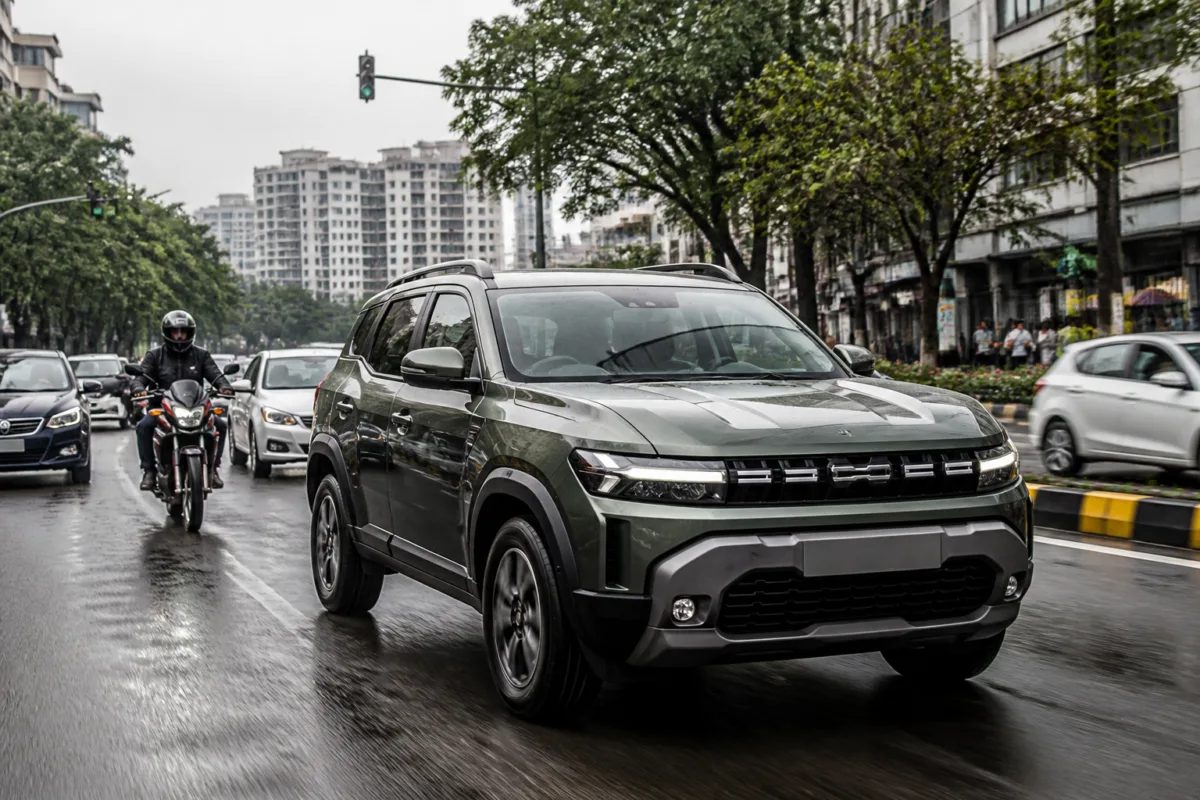
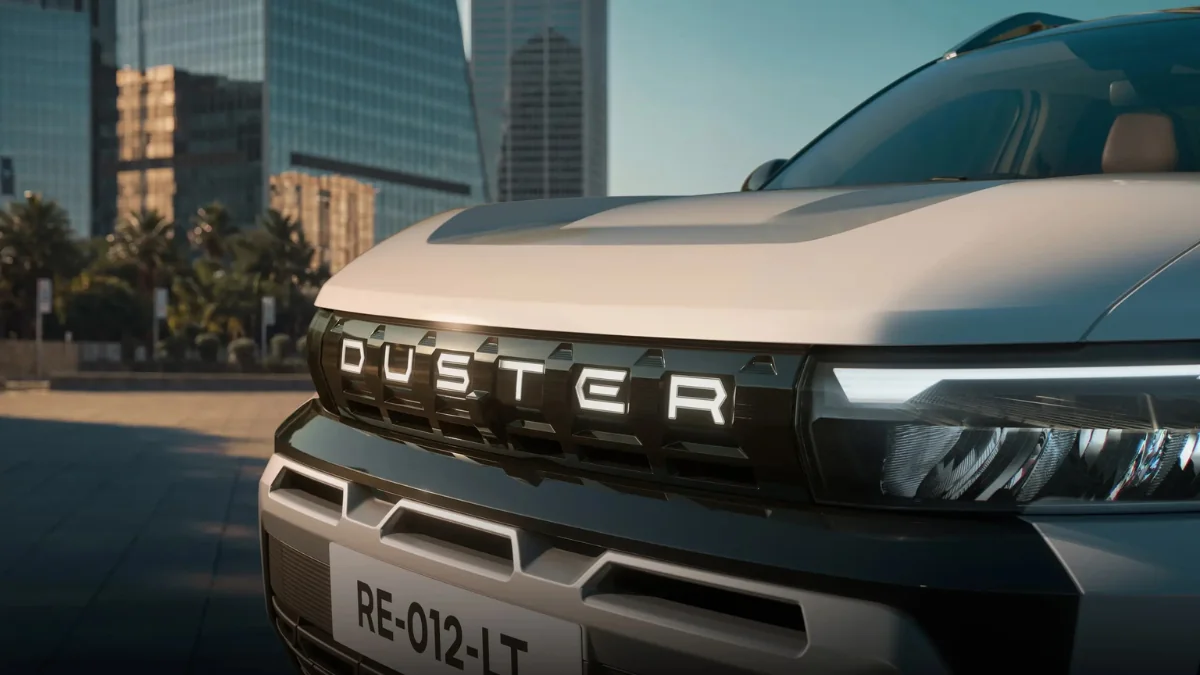
Positioned against current market offerings, the Duster undercuts several competitor variants while outpacing them in raw performance metrics. Additional pricing and dimension comparisons are detailed below.
| Model | Starting Price (Ex-Showroom) | Combined Power (PS) | Claimed Mileage (km/l) |
|---|---|---|---|
| Renault Duster Strong Hybrid | ₹16.99 lakh | 160 PS | 29 km/l |
| Maruti Suzuki Grand Vitara Strong Hybrid | ₹16.68 lakh | 116 PS | 27.97 km/l |
| Toyota Urban Cruiser Hyryder Strong Hybrid | ₹16.66 lakh – ₹17.18 lakh | 116 PS | 27.97 km/l |
| Maruti Suzuki Victoris Strong Hybrid | ₹16.43 lakh | 116 PS | 28.65 km/l |
According to CarLelo, the Duster's modular floor packaging provides 430 litres of usable boot space, surpassing the 255-litre capacity found in models where the battery pack is positioned above the floor. CarDekho notes that top trims feature a 10.1-inch touchscreen, a 10.25-inch digital driver display, a panoramic sunroof, ventilated front seats, and a 5-star Bharat NCAP safety rating.
Despite these specifications, market analysts point to strategic hurdles. Urbanacres reported that Renault's retail market share remains below 1 per cent, trailing the extensive dealership and service networks established by Maruti Suzuki and Toyota. Stéphane Deblaise, Renault Group India Chief Executive Officer, acknowledged post-launch gaps in the company's service infrastructure and spare-parts pricing, stating that the firm is actively working on localization efforts and dealer training to support the rollout.
Delivery timelines and customer reception over the upcoming quarters will determine whether the Duster Strong Hybrid can convert technical advantages into sustained retail demand. Observers will monitor upcoming sales figures, dealership expansion, and localized component pricing as the model establishes its presence in showrooms.
India's strong-hybrid passenger-vehicle market is estimated at 1.23 lakh units in FY26, and registrations rose 9.5 per cent to 86,403 units during January–September 2026 from 78,881 in the same period a year earlier, according to vehicle-registration data cited in reporting by Urbanacres. This demonstrates that while the category remains a small portion of the overall passenger-vehicle market, fuel efficiency is playing a growing role in urban vehicle purchasing decisions.
Stéphane Deblaise noted that consumers cannot transition overnight from internal-combustion vehicles to battery-electric cars. Renault is therefore treating hybrids as an intermediate technology rather than as a final destination for the passenger-vehicle market. This approach aligns with a seven-model roadmap through 2030 that spans petrol, CNG, strong-hybrid, and electric vehicles across two platforms.
The roadmap includes the sub-four-metre Bridger SUV, expected in late 2027, followed by an electric model expected in 2028. At the same time, Renault has clarified that it has no immediate plans to introduce the Duster's hybrid system in smaller models such as the Kwid, Triber, and Kiger, because adapting the technology to those vehicles would require significant engineering and packaging changes.
Localization is central to that effort. Renault is targeting up to 90 per cent localization across future product programmes to improve cost competitiveness and has also outlined an ambition of €2 billion in annual exports by 2030, covering vehicles, components, and engineering services. These targets connect the Duster launch to a broader manufacturing and supply-chain strategy rather than treating the vehicle as an isolated product introduction.
Toyota and Maruti Suzuki have an advantage because their hybrid SUVs already provide a reference point for buyers, backed by stronger dealership networks and customer familiarity. Renault's Duster must therefore compete on more than price. Its 160 PS output, 29 km/l claimed mileage, and electric-only city-driving capability provide measurable points of distinction, but those features must be supported by confidence in service, parts, and resale value.
The Duster's arrival could widen the definition of what urban SUV buyers consider an alternative to diesel. Instead of choosing only between petrol and diesel, buyers increasingly face a range of powertrain options, each linked to different expectations about running costs, environmental performance, and convenience. Strong hybrids are attempting to capture consumers who want improved efficiency without depending entirely on charging infrastructure.
Renault's immediate test is whether the Duster can overcome the gap between product capability and institutional reach. Its pricing is close to established hybrid competitors, while its claimed efficiency and power output are stronger on paper. But the company enters with less than 1 per cent retail market share and has identified service infrastructure, parts pricing, and dealer training as areas requiring attention.
The outcome will depend on whether urban buyers treat the Duster's hybrid system as a credible ownership proposition rather than simply an attractive specification sheet. The next signals to monitor are sustained sales, the expansion of service capacity, progress on localization, and Renault's ability to execute the wider seven-model roadmap. The launch confirms that strong hybrids are gaining a larger role in India's transition debate, though it does not yet establish whether they can move beyond a growing niche into mainstream urban mobility.
How significant is this development?
Contribute your assessment to the aggregated reader sentiment ledger.
Frequently Asked Questions
Key questions answered in this reportWhat is the key development in: Renault Duster Strong Hybrid Launched in India at Rs 16.99 Lakh?
Renault has officially launched the Duster Strong Hybrid in India at an introductory starting price of ₹16.99 lakh, delivering 160 PS and 29 km/l mileage.
Why is this Business development significant for the UK?
This report covers critical events in our Business beat. Independent reporting monitors related UK statements, regulatory shifts, and public responses as further verified details emerge.
How was this reporting corroborated and verified?
Newsarchy UK compiles and cross-references reporting from primary reporting from autoX and cross-checked wire reports. All coverage adheres to published editorial standards.
When was this report published?
This briefing was published on October 17, 2026 and is permanently cataloged in the Newsarchy UK Business archives.