NVIDIA restricted chips found at Shanghai data center linked to Alice Huang
Restricted Nvidia Blackwell-class hardware has been discovered inside a massive data center project in Shanghai, raising questions about international semiconductor controls.
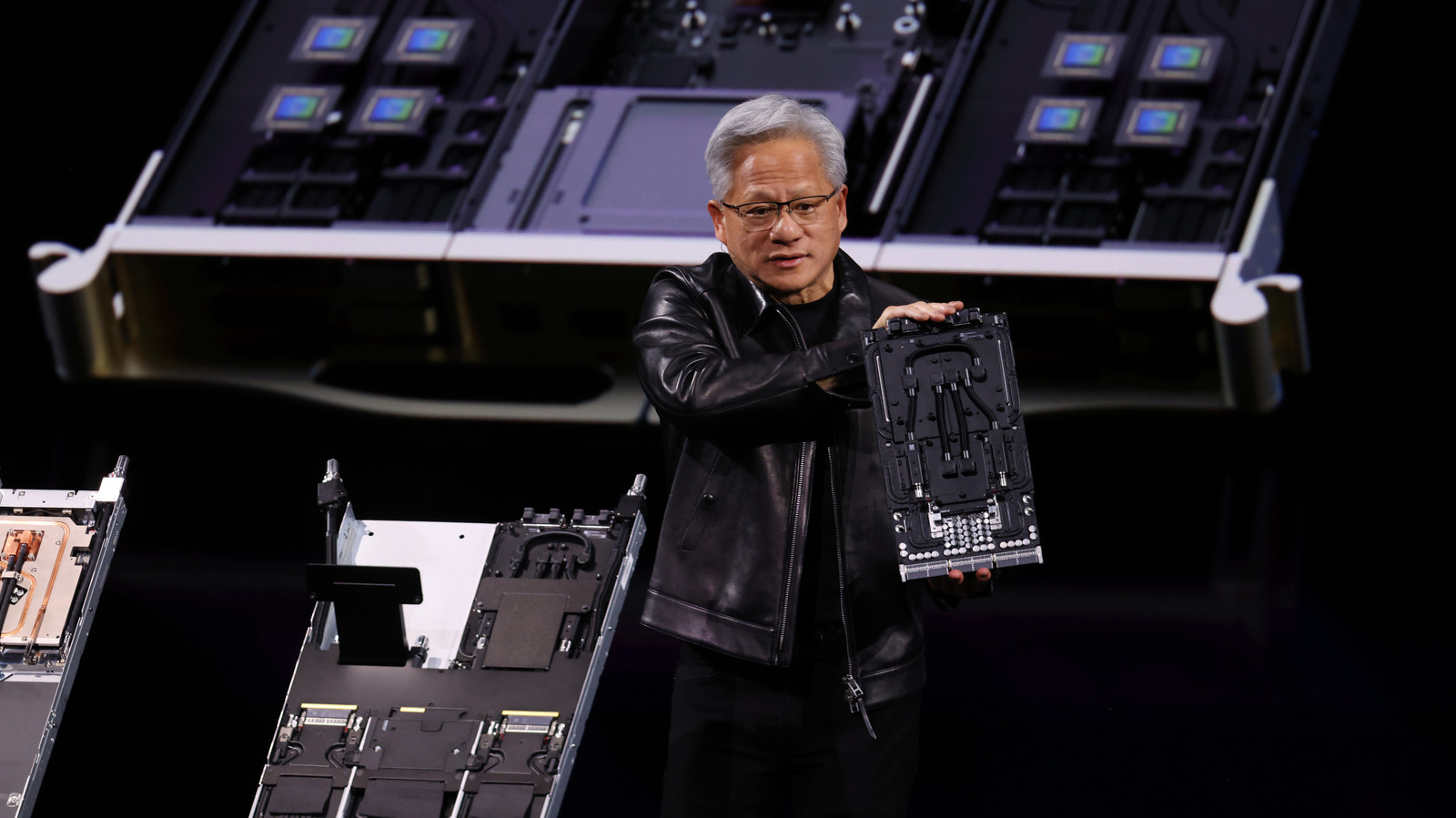
Restricted advanced computing hardware has turned up inside a massive data center project in Shanghai, raising fresh questions about international semiconductor controls.
Regulatory filings reviewed by Engadget indicate that two Chinese firms installed Nvidia Blackwell-class gear at the Yangtze River Delta Project. According to documentation submitted to Chinese authorities, Shanghai Shuoyao utilized a GB300 NVL72 rack as collateral to secure a loan from Shanghai Innovation Bank, while a second entity, Shanghai Kezhan, referenced a GB200 server in paperwork tied to a financing agreement with a local government-owned leasing firm. A single GB300 NVL72 unit contains Blackwell Ultra units alongside Grace processors and can weigh about 3,300 pounds.
Media additions


The discovery directly intersects with a tangled web of corporate and personal controversies surrounding Alice Huang, the founder of Singapore-based Megaspeed. As reported by Gizmodo, Alice Huang previously maintained executive ties with Megaspeed before stepping away, and has faced intense scrutiny over her connections to both the facility and Nvidia leadership. Regulatory and corporate disclosures link Shanghai Shuoyao as a service provider to Megaspeed, describing their arrangement as commercial cooperation, while The Times notes that Shanghai Kezhan is tied to a Tokyo-based parent company that business reporting outlet Caixin identified as being under her control. Furthermore, the facility's president is Kang Wei, who has been introduced in reports as her romantic partner.
U.S. Export regulations strictly prohibit shipping advanced Blackwell processors to China without government licenses. Korea JoongAng Daily notes that these findings contradict previous assertions from Nvidia Chief Executive Jensen Huang, who argued that such massive server cabinets were simply too large and heavy to smuggle effectively. By plugging the serial number of the pledged GB300 rack into a public warranty database, investigators traced the hardware's manufacturing origin to Taiwan's Gigabyte Technology. When queried, Gigabyte declined to identify the original purchaser, maintaining via Anadolu Ajansı that all transactions comply with applicable laws and internal compliance rules.
The disclosures have triggered immediate fallout across financial markets. Meanwhile, Finance notes that the Trump administration recently placed Megaspeed on a trade blacklist over fears of unauthorized semiconductor diversion, though Bloomberg has emphasized that investigators have not established direct evidence that Megaspeed itself smuggled the specific hardware uncovered in the Shanghai collateral filings.
| Entity / Company | Involved Hardware | Financing Source |
|---|---|---|
| Shanghai Shuoyao | GB300 NVL72 server rack | Shanghai Innovation Bank (~$14 million loan) |
| Shanghai Kezhan | GB200 server & H200 chips | Shanghai municipal leasing agency |
| Shanghai Longjie | Hopper-generation servers (Supermicro/Dell) | Shanghai Innovation Bank (200 million yuan loan) |
Additional paperwork uncovered by reporters points to older generation hardware already present within the sprawling campus, which local planning documents suggest could eventually house as many as 800,000 servers. Filings show that Shanghai Longjie—sharing a parent company with Shanghai Shuoyao—pledged restricted Hopper-generation units manufactured by Super Micro Computer and Dell Technologies. Shanghai Kezhan disclosed the presence of numerous servers equipped with H200 chips bearing Gigabyte model markers.
The regulatory and political pressure surrounding the semiconductor sector continues to intensify. President Donald Trump remarked to the New York Post that he remains open to the U.S. Government taking a direct equity stake in Nvidia, drawing parallels to previous federal arrangements with domestic chipmakers. Attention now turns to upcoming legislative proceedings, where Jensen Huang is scheduled to appear for closed-door interviews with House committees before a formal Senate Banking Committee hearing.
What to Watch Next
- Jensen Huang's scheduled testimony before the Senate Banking Committee.
- Further developments in the U.S. Commerce Department and Justice Department investigations into Megaspeed and export control compliance.
- Additional regulatory submissions or warranty audits tracking the broader supply chain lineage of hardware deployed across the Yangtze River Delta Project.
For related reporting and broader corporate updates, explore additional Business coverage.