Samsung reports 19‑fold Q2 profit jump as shares fall 7% on AI doubts
Samsung Electronics announced record-breaking quarterly profits driven by demand for memory chips, but shares dropped as analysts pointed to investor skepticism.
- Core Development: Samsung Electronics announced record-breaking quarterly profits driven by demand for memory chips, but shares dropped as analysts pointed to investor skepticism.
- Beat Context: Categorized under Business with independent corroboration.
- Reporting Depth: 3 minute analytical read synthesized from verified newsroom sources.
On July 7, 2026 Samsung Electronics announced that its operating profit for the April‑June quarter is expected to hit 89.4 trillion won (about $58.4 billion), roughly nineteen times the 4.7 trillion won it earned a year earlier and more than the combined profit of the previous three years.
Revenue is projected at 171 trillion won, a 129 % year‑on‑year rise.
Media additions
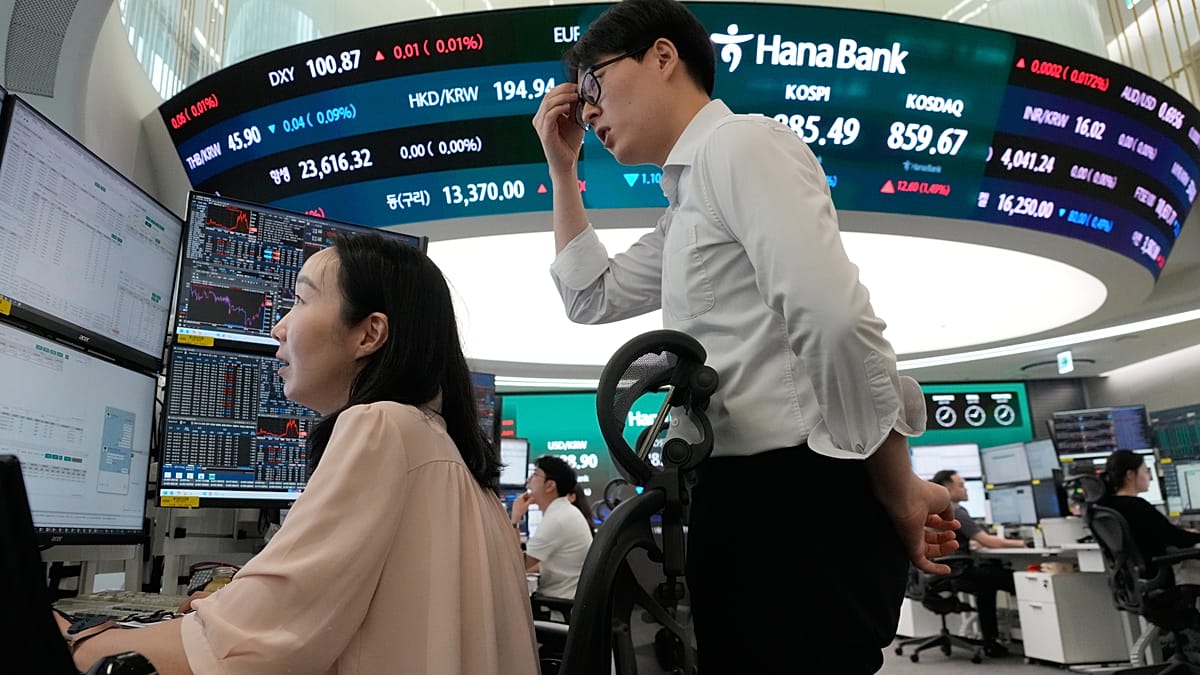


Memory‑chip surge drives the numbers
Samsung’s record‑breaking profit stems from a surge in demand for AI‑powered data‑centre memory. Citi Research reported that average selling prices for DRAM rose 44 % quarter‑on‑quarter and NAND flash jumped 53 % in the same period, buoying Samsung’s semiconductor division.
High‑bandwidth memory (HBM) production has accelerated, tightening supply of conventional DRAM and NAND that power smartphones, PCs and enterprise servers. Analysts noted that the rapid HBM build‑out has “tightened supply of conventional memory products … further supporting prices.”
Samsung also earmarked a sizable bonus pool for its semiconductor staff under a wage deal signed in May. Without the bonus expense, operating profit would likely have topped 100 trillion won, analysts said.
Market reaction: profit versus price
Despite the historic earnings, Samsung’s shares tumbled. The stock fell as much as 10.1 % intraday and closed down 6.9 %, wiping more than $80 billion off its market value. The slump pulled rival SK Hynix, which fell 6 %, and dragged South Korea’s KOSPI index down 4.9 %.
In the United States, the broader AI‑heavy tech sector also slipped. The S&P 500 fell 0.7 %, the Nasdaq 1.5 % and the Dow Jones Industrial Average was down 0.4 %.
Analyst take: expectations already priced in
Albert Yong, managing partner at Petra Capital Management, said “Samsung’s strong earnings were widely expected and had largely been priced in after its shares rallied ahead of the results.” He added that “investors remain concerned about the sustainability of the AI boom and the risk of slower AI infrastructure spending by major U.S. Technology firms.”
Morningstar analyst Jing Jie Yu echoed the revenue‑miss concern:
“We believe the slight revenue miss was largely driven by more moderate DRAM price hikes than expected, which likely spooked investors who are increasingly pricing in structural strength in memory prices.”
JPMorgan’s global market strategist Raisah Rasid said, “We’re confident the earnings are going to come through,” but warned that “we’re going to see a moderation” and that the triple‑digit gains of the first half of the year are unlikely to repeat.
Broader chip‑sector pressure
Samsung’s results arrived amid a wave of skepticism over the AI‑driven semiconductor rally. Morgan Stanley warned that recent weakness in U.S. Semiconductor stocks “likely continues” as investors brace for “more capex discipline in the near‑term” from hyperscalers.
Geopolitical backdrop and other market forces
Parallel to the chip‑sector sell‑off, oil prices rose after the British military said three tankers were struck by projectiles in the Strait of Hormuz. Brent crude climbed to $73.83, nudging Treasury yields higher; the U.S. 10‑year yield rose to 4.51 %.
Investors are watching whether firms such as Meta, Microsoft, Amazon and Alphabet will need to borrow heavily to fund AI infrastructure.
What comes next?
Samsung will publish a detailed breakdown of its second‑quarter results on July 30, 2026, including earnings by division. SK Hynix, Samsung’s main rival, is also preparing a large capital raise—a U.S. Share sale expected to raise 43 trillion won.
How significant is this development?
Contribute your assessment to the aggregated reader sentiment ledger.
Frequently Asked Questions
Key questions answered in this reportWhat is the key development in: Samsung reports 19‑fold Q2 profit jump as shares fall 7% on AI doubts?
Samsung Electronics announced record-breaking quarterly profits driven by demand for memory chips, but shares dropped as analysts pointed to investor skepticism.
Why is this Business development significant for the UK?
This report covers critical events in our Business beat. Independent reporting monitors related UK statements, regulatory shifts, and public responses as further verified details emerge.
How was this reporting corroborated and verified?
Newsarchy UK compiles and cross-references reporting from primary reporting from finance.yahoo.com and cross-checked wire reports. All coverage adheres to published editorial standards.
When was this report published?
This briefing was published on July 7, 2026 and is permanently cataloged in the Newsarchy UK Business archives.


