From Dead Economy to 7% Growth: Trump Holds Up India
US President Donald Trump cited India's 7% GDP growth and interest rates as an economic benchmark, sparking a political debate in New Delhi.
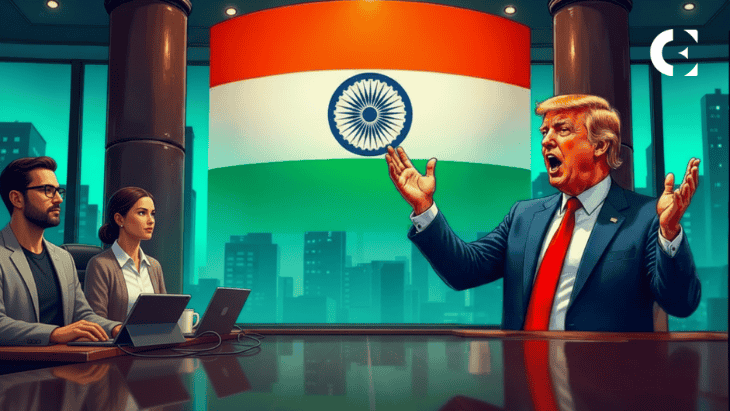
US President Donald Trump held up India's economy as a benchmark for growth while criticizing domestic monetary policy, sparking a political row back in New Delhi.
Speaking at a White House press conference on Friday, November 20, 2026, following a four-day trip to Asia, US President Donald Trump pointed to India's low interest rates and 7% GDP growth rate. The remarks marked a sharp tonal shift from past commentary, during which the US leader had previously dismissed the South Asian nation as a dead economy.
Media additions


The White House briefing featured Vice President JD Vance and Secretary of State Marco Rubio, according to India TV News. Trump argued that the United States could achieve dramatic expansion if borrowing costs were reduced. If you look at India, they have low interest rates and they have a 7% GDP. We'd have a 14%, 15%, maybe even a 20% GDP,
Trump stated, according to Coin Edition.
The US president took direct aim at the US Federal Reserve, accusing the central bank of operating under political influence and raising borrowing costs whenever positive economic figures are announced. He contrasted current leadership with former Fed Chairman Alan Greenspan, whom he credited with lowering interest rates during periods of strong economic performance.
Economists and analysts noted that direct comparisons between the two monetary systems overlook fundamental structural differences. While the Federal Reserve operates under a dual mandate prioritizing price stability and maximum employment, central banks face distinct inflationary pressures and domestic conditions.
The US central bank raised its benchmark federal funds rate to a target range of 3.75-4% in September 2026, and subsequently held rates steady at its October 28 meeting by a 10-2 vote. Federal Reserve governors Lisa Cook and Beth Hammack dissented at the October meeting, advocating for another quarter-percentage-point increase to combat elevated inflation.
| Metric / Institution | United States (Federal Reserve) | India (RBI / National Data) |
|---|---|---|
| Reported GDP Growth | Estimated at 4% (Trump projection) / 3.4% (Jul-Sep quarter) | 7% (Trump cited) / 7.8% (Apr-Jun quarter) |
| Benchmark / Repo Interest Rate | 3.75% – 4% target range | 5.5% (Repo rate set in September) |
| Recent Policy Action | Held rates in October; September hike of 0.25 percentage points | Repo rate increased by 25 basis points in September |
The presidential praise quickly reverberated through domestic Indian politics. The Bharatiya Janata Party (BJP) seized upon the remarks to criticize the parliamentary opposition, accusing leaders of ignoring national economic achievements.
BJP leader Ashish Sood claimed that global leaders are recognizing the country's economic trajectory while domestic critics overlook progress. BJP MP Praveen Khandelwal echoed those sentiments, stating that the economy remained completely stable under Prime Minister Narendra Modi despite challenging global circumstances. Additional support came from BJP leader Ram Kadam and Vishva Hindu Parishad (VHP) International President Alok Kumar, who welcomed the validation from Washington and criticized statements made by opposition figures abroad.
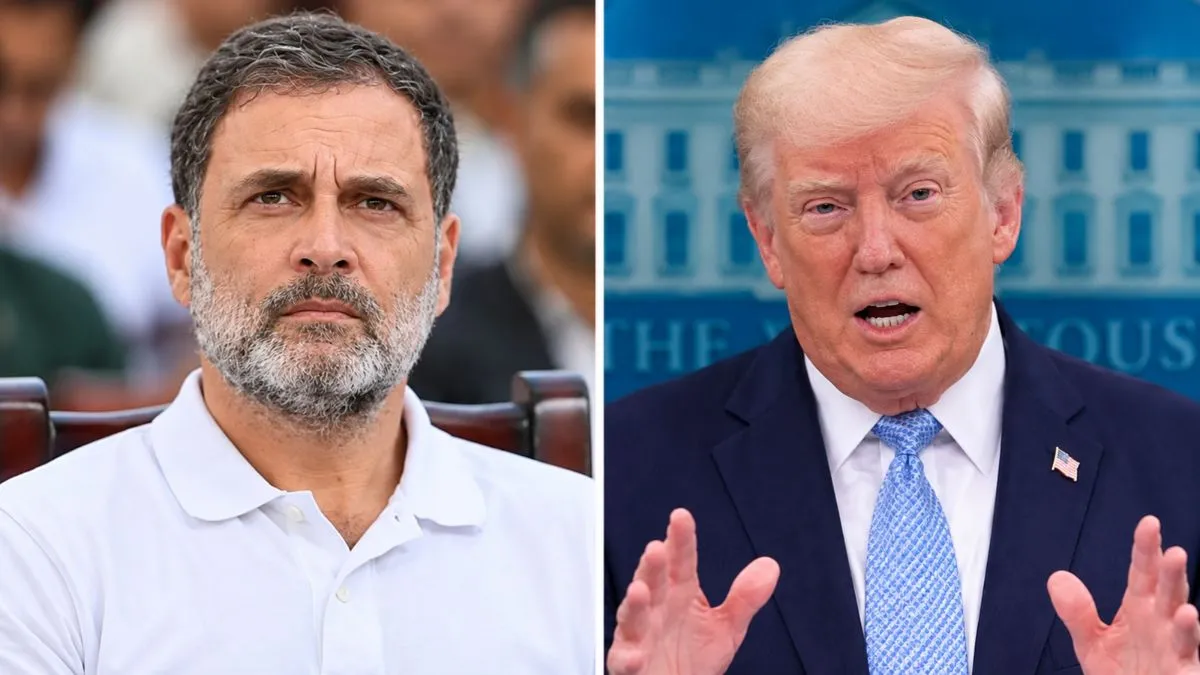
The political clash stems from recent remarks by opposition figures, including Leader of the Opposition in the Lok Sabha Rahul Gandhi, who characterized the domestic economic state as an economic disaster during an appearance at Columbia University. Ruling party officials argued that external validation from the head of the world's largest economy directly refutes such characterizations.
International financial institutions have also weighed in on regional performance. According to Social News XYZ, late 2026 economic assessments from the World Bank and the International Monetary Fund projected growth for India hovering between 7% and 7.1%, driven largely by robust domestic demand, services, and exports.
Friction between the executive branch and America's central bank has a lengthy history. The tension intensified during Trump's first term after he appointed Jerome Powell as Fed chairman in 2018, only to clash over subsequent rate decisions. The disputes escalated into 2025 and 2026 amid a Justice Department grand jury investigation into Federal Reserve headquarters renovation cost overruns, which grew from an initial estimate of $1.88 billion to $2.46 billion, before a federal judge blocked related subpoenas in March 2026.
Although Powell's term as chairman concluded in May 2026, he retained his seat on the Board of Governors to safeguard institutional independence, while Kevin Warsh assumed leadership of the central bank.
What to Watch Next
- Further US Federal Reserve policy announcements and potential rate path adjustments following warnings from officials like Governor Michael Barr regarding future increases.
- Upcoming domestic economic data releases from the Reserve Bank of India as it monitors repo rates and inflation targets.
- Continued parliamentary debates in New Delhi concerning national economic indicators and growth figures.