White House officials meet senators to resolve Clarity Act ethics impasse
The White House is working to secure bipartisan support for the Digital Asset Market Clarity Act by addressing Democratic demands for strict crypto-ethics rules.
- Core Development: The White House is working to secure bipartisan support for the Digital Asset Market Clarity Act by addressing Democratic demands for strict crypto-ethics rules.
- Beat Context: Categorized under Business with independent corroboration.
- Reporting Depth: 4 minute analytical read synthesized from verified newsroom sources.
Senior White House officials are traveling to Capitol Hill this week to try to resolve a stand‑still that threatens the Digital Asset Market Clarity Act – the most ambitious crypto‑regulatory proposal the United States has ever seen. The meeting comes after the bill cleared the Senate Banking Committee by a vote of 15‑9 on May 14 and was placed on the Senate Legislative Calendar on June 1. With the Senate’s August recess fast approaching, the administration is racing to secure the votes needed to meet the 60‑vote threshold before the chamber breaks for the summer.
Why ethics provisions matter now
Democratic senators have united around a single demand: the legislation must contain enforceable ethics rules that bar the president, the vice president, members of Congress, senior officials and their families from profiting from digital‑asset activities while in office. The request grew louder after disclosures that former President Donald Trump earned more than $1 billion from crypto‑related ventures in 2025. Those figures have been described by Senate Democrats as “invitation for corrupt practices.”
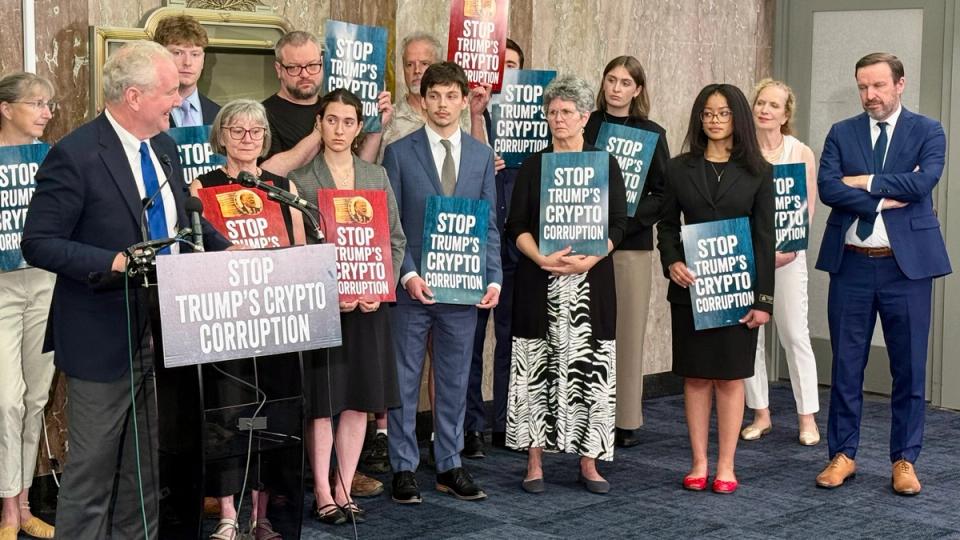
Senator Chris Murphy, who has not been at the negotiating table with Republicans, articulated the concern at a Capitol Hill press conference:
"If this system does not stop Trump's corruption of the entire industry, this bill is worthless. If it protects Trump's dominance over an industry that he will have more control to regulate, in fact, the bill is, in and of itself, a fundamental corruption if it gives Trump's corruption the protection of law."
Chris Murphy, U.S. Senator, via Coindesk
Senator Chris Van Hollen, a member of the Banking Committee, echoed the sentiment, calling the draft a “corrupt piece of legislation that will do a lot of harm.”
"Corrupt piece of legislation that will do a lot of harm."
Chris Van Hollen, U.S. Senator, via Coindesk
Senator Jeff Merkley and Senator Elizabeth Warren have similarly pressed for a provision that would sever any personal crypto ties for senior officials, arguing that the current wording leaves an “invitation for what they call corrupt practices.”
Republican view and the scope‑creep argument
Republican senators have countered that ethics rules belong in a separate piece of legislation, not in a market‑structure bill that is meant to clarify the division of authority between the Securities and Exchange Commission and the Commodity Futures Trading Commission. They warn that adding such language could dilute the bill’s focus on establishing clear regulatory lanes for tokens, potentially alienating supporters who view the legislation as essential for market certainty.
The administration, however, insists that the ethics issue is not a distraction but a make‑or‑break element. White House crypto adviser Patrick Witt has repeatedly stressed the “extensive work already invested” in shaping the bill and warned that without a compromise the legislation could stall forever. Witt told reporters that the White House team is searching for language that provides “enough assurance to skeptical Democrats” while avoiding “unnecessary scope creep” that would upset Republican allies.
Legislative backdrop and recent moves
The House version of the bill passed in 2025, making the Senate the final hurdle. During the May committee vote, two Democrats crossed party lines to join Republicans, a sign that bipartisan support exists if the ethics gap can be closed. The same week, former President Trump used a public statement on July 13 to pressure the Senate to pass the bill, invoking the memory of the late Senator Lindsey Graham, a long‑time participant in the negotiations.
According to the source material, a “new and potentially final draft” of the bill is slated to emerge as soon as Tuesday, suggesting that the White House meeting could produce a revised ethics section in time for a Senate vote before the August recess.
What the ethics clause would change
If the final version includes a ban on senior officials personally engaging in crypto, the clause could “boost public trust in the regulatory framework,” as one analyst noted. Conversely, opponents argue that such a ban would set a precedent for future legislation, forcing every market‑structure bill to carry a blanket ethics add‑on.
The stakes are amplified by the upcoming midterm elections. Democrats need a coalition large enough to clear the 60‑vote hurdle, while Republicans hope the bill’s market‑structure merits will win over enough moderate senators. The White House’s negotiating team is therefore walking a tightrope: craft language that satisfies Democratic demands without jeopardizing the narrow Republican margin that carried the bill through the committee vote.
Looking ahead
The next few days will determine whether the Senate can reach a consensus before the chamber adjourns for its summer break. If a revised draft is released on Tuesday, senators will have just a handful of days to debate, amend and cast their votes. Should the ethics provisions remain absent, the bill could face a filibuster or be sent back to the Senate Banking Committee for further revision, potentially delaying any regulatory clarity until after the 2026 midterms.
Both sides have signaled that they will continue talks through the weekend, with the White House team poised to return to Washington on Thursday. Observers will be watching for any language that specifically defines “personal engagement” and outlines enforcement mechanisms, as those details will likely dictate whether the bill survives the final Senate vote.
How significant is this development?
Contribute your assessment to the aggregated reader sentiment ledger.
Frequently Asked Questions
Key questions answered in this reportWhat is the key development in: White House officials meet senators to resolve Clarity Act ethics impasse?
The White House is working to secure bipartisan support for the Digital Asset Market Clarity Act by addressing Democratic demands for strict crypto-ethics rules.
Why is this Business development significant for the UK?
This report covers critical events in our Business beat. Independent reporting monitors related UK statements, regulatory shifts, and public responses as further verified details emerge.
How was this reporting corroborated and verified?
Newsarchy UK compiles and cross-references reporting from primary reporting from cryptobriefing.com and cross-checked wire reports. All coverage adheres to published editorial standards.
When was this report published?
This briefing was published on July 15, 2026 and is permanently cataloged in the Newsarchy UK Business archives.