DWP confirms cyber attack on pensions and benefits services
The Department for Work and Pensions confirmed that a deliberate cyber attack forced major benefit and pension portals offline, though officials assured claimants that regular payments would continue unaffected.

The Department for Work and Pensions confirmed that a cyber incident affecting major benefit and pension portals was a deliberate attack rather than an accident.
Millions of claimants across the United Kingdom lost access to digital platforms after unusual activity was detected late on Thursday, 26 November 2026. The Department for Work and Pensions shut down key citizen-facing systems as a precaution, leaving digital spaces such as the state pension, Universal Credit, and Personal Independence Payment (PIP) portals offline. Several of these essential portals remained unavailable on Saturday, 28 November 2026.
Media additions
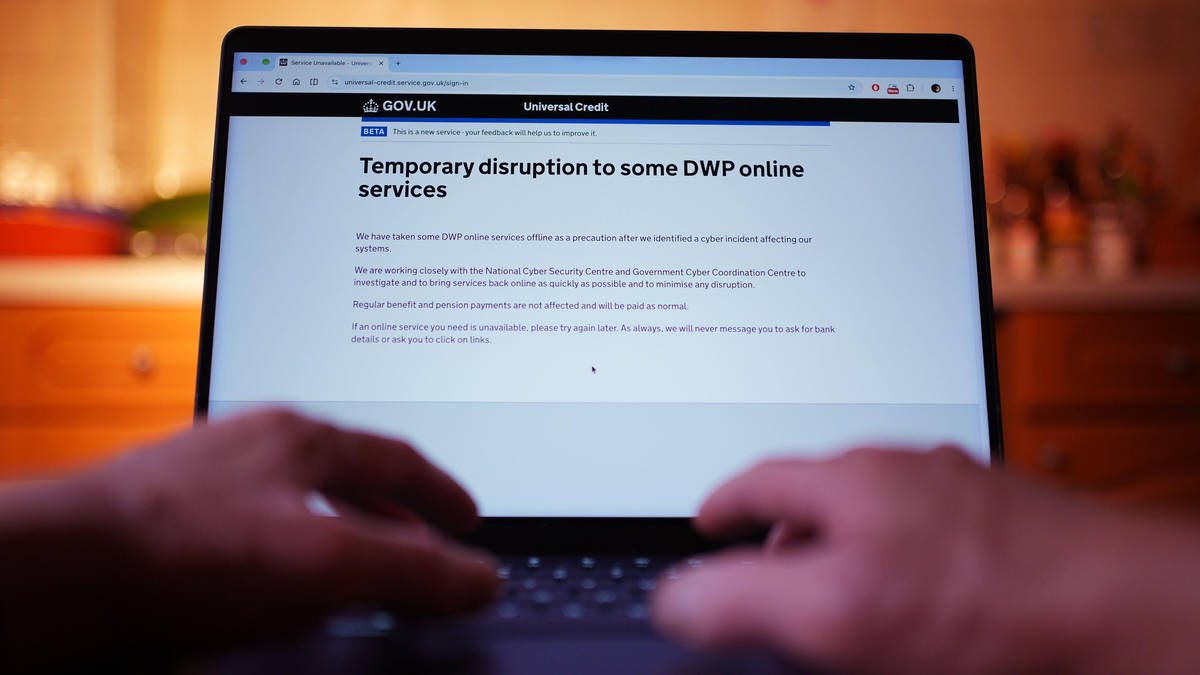


A spokesperson stated that teams and specialist cyber experts continued to investigate a cyber-attack on the department's systems, working to understand the cause of an attempt to gain unauthorised access. Officials emphasized that the government has well-rehearsed plans for these scenarios that were immediately implemented. Downing Street stated on Friday, 27 November 2026, that there was no evidence a malicious actor had targeted other government departments. At the time, Work and Pensions Secretary Pat McFadden described it as a serious cyber incident.
GCHQ's National Cyber Security Centre joined government experts in investigating the incident alongside the Government Cyber Co-ordination Centre. David Knott, who led government technology until December 2025, stated that his strong suspicion was an attack, noting via Bbc Newsnight that the use of the word "cyber" and the closure of citizen-facing services implied a front-door threat. Amanda Finch, chief executive of the Chartered Institute of Information Security, stated that the disruption was more likely state-sponsored crime aimed at undermining confidence in government rather than pursuing money.
Despite the digital blackout, officials assured the public that regular benefit and pension payments would continue unaffected. The department makes about 2.5 million regular payments daily. While some claimants reported payment delays, it was understood that any such delays were entirely unrelated to the cyber incident.
To assist affected individuals during the outage, the department confirmed that customers directly affected would not face sanctions for missed appointments or an inability to update online journals. Claimants unable to manage their accounts online were advised to contact telephone helplines or try accessing the services later. Cybersecurity authorities also warned the public to remain vigilant against opportunistic phishing scams capitalizing on the outage, reminding customers that the department will never ask for personal or financial information by text message or email, nor ask them to click on links.
| Date / Phase | Reported Status | Official Action |
|---|---|---|
| Thursday, 26 November 2026 | Suspicious activity detected late at night | Online portals taken offline as a precaution |
| Friday, 27 November 2026 | Wide disruption; ministers confirm serious incident | Investigation launched with NCSC and GCHQ |
| Saturday, 28 November 2026 | Portals remain down; attack officially confirmed | Payments continue normally; sanction waivers issued |
The breach arrives amid heightened national anxiety regarding digital infrastructure security. Earlier in November 2026, Permanent Secretary Dame Sarah Healey told a select committee hearing that antiquated software and staff working on extremely old computer systems kept her awake at night, emphasizing that system security was critical given the money and personal data flowing through the department.
Investigation into the source of the breach remains ongoing, with no official timeline announced for the complete restoration of all online services.