PM Andy Burnham warns NHS will collapse without social care reform
Prime Minister Andy Burnham has warned that the NHS faces collapse without urgent social care reform, as Downing Street considers accelerating the Casey Commission.
- Core Development: Prime Minister Andy Burnham has warned that the NHS faces collapse without urgent social care reform, as Downing Street considers accelerating the Casey Commission.
- Beat Context: Categorized under Politics with independent corroboration.
- Reporting Depth: 5 minute analytical read synthesized from verified newsroom sources.
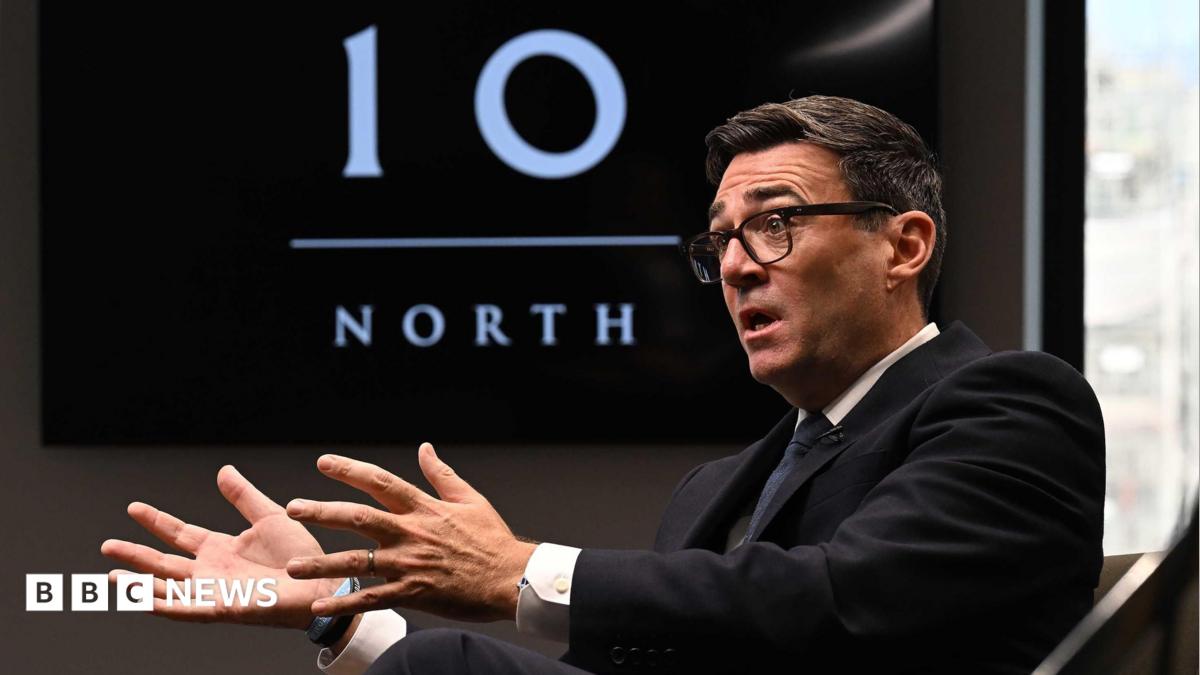
Prime Minister Andy Burnham has warned that the NHS will face severe collapse if the adult social care system is not reformed. Speaking to the Bbc on Monday, 27 July 2026, Burnham stated that without change, the health service would collapse under the weight of trying to care for people who should not have had to end up in the NHS system. He stated that he could not put an exact timeline on introducing a new system, though he vowed to invest whatever political capital he possesses into fixing social care before leaving office.
The warnings arrive as health experts highlight mounting pressures across the sector. Sarah Woolnough, chief executive of the King's Fund, told BBC Radio 4's Today programme that the current punitive system leaves many people without necessary care, noting that one in seven individuals pay over £100,000 for social care. Woolnough added that Burnham has long mooted a social care system similar to the NHS, which could cost low billions per year compared with the £200 billion spent on the NHS.
Media additions


"The PM has for a long time mooted the idea of a social care system similar to NHS. It would be expensive but on the scale of what we spend on other public services - around £200bn on the NHS - we are talking for some of these options low billions per year."
Sarah Woolnough, Chief Executive of the King's Fund, via BBC
As part of his approach, Burnham is looking to speed up the Casey Commission, an independent review of adult social care chaired by Baroness Louise Casey. While Baroness Casey's final recommendations are not expected until 2028, the prime minister wants to bring that schedule forward. Adult social care currently provides state support to help people live independently, but unlike the NHS, it is not free at the point of use. In England and Northern Ireland, people with savings worth more than £23,250 are ineligible for council-funded help with care costs.
Political reaction has been swift across the political spectrum. Conservative leader Kemi Badenoch wrote to Burnham demanding that any social care solution remain fair to individuals who have saved and made provisions throughout their lives, while also calling on him to rule out tax rises or increased borrowing to fund the overhaul. Robert Jenrick, speaking for the Conservative Treasury team, warned that the party would fight any universal death tax that raids life savings and drags families into paying tax upon bereavement. Liberal Democrat MP and Health and Social Care Committee chair Layla Moran emphasized the need to discuss funding sources, while Lib Dem leader Sir Ed Davey pledged to put family carers at the heart of any new system.
Burnham also hinted at potential changes to tighten benefit eligibility, arguing that the country must get serious about reducing the welfare bill and that some support should be conditional upon people taking available work opportunities. However, he stopped short of blaming claimants directly, noting that young people in their twenties have been seriously let down by a lack of proper support.
Council tax reform and property levy proposals
The debate over funding social care and local services has thrown a spotlight onto council tax, with Burnham acknowledging that big decisions lie ahead for the government. In an interview with the BBC's Laura Kuenssberg, Burnham pointed out regional disparities, noting that households in Greater Manchester pay much higher council tax than residents living in much larger homes in London because valuation bands have not been updated since 1991. He praised former Chancellor Rachel Reeves for starting to reform council tax to create fairness.
Downing Street subsequently clarified that suggestions the prime minister is actively considering scrapping council tax or stamp duty are untrue. A Downing Street spokesperson told reporters that any tax decisions are a matter for the Chancellor to set out at upcoming fiscal events, adding:
"It wouldn't be right to comment outside of those circumstances"
Downing Street spokesperson, via Yahoo News
When pressed directly, Burnham stated clearly that changes to stamp duty will not be happening at the next budget. Nevertheless, Treasury officials have examined options for wider reform. According to reports from the i Paper and analysis by think-tanks, three primary models have been considered:
- A proportional property tax, championed by the Fairer Share campaign, which would replace both council tax and stamp duty with a flat 0.48 per cent annual charge on a home's current market value.
- A land value tax, which charges owners solely on the value of the underlying land rather than the building itself, thereby avoiding penalising homeowners who improve their properties. Burnham previously expressed support for this concept during past leadership bids.
- A straightforward revaluation of the existing 1991 valuation bands, described by the Institute for Fiscal Studies as the bare minimum required reform.
Proponents of the proportional property tax argue it would benefit northern households. Jonathan Brash, MP for Hartlepool, cited figures suggesting that under such a model, 100% of households in his constituency would see bills fall, with an average saving of around £950 a year. However, reform models face internal caution. Lord Blunkett, a close ally of Burnham, warned that a land value tax would be politically problematic and could dislocate the system. Meanwhile, Institute for Fiscal Studies analysis shows that London house prices have risen more than sixfold since 1995 compared with just under threefold in the North East, leaving nine of the ten highest council tax burdens relative to property values concentrated in northern constituencies.
What happens next
Burnham is scheduled to deliver a speech on adult social care, though Downing Street indicated he will stop short of unveiling a fully formed new system on that occasion. Instead, attention turns to the acceleration of the Casey Commission ahead of its scheduled 2028 reporting window, alongside upcoming fiscal events where the Chancellor will outline tax policy. Politically, the government enters the debate bolstered by recent polling reported on 27 July 2026, which showed Labour moving ahead of Reform UK in the polls for the first time since Burnham took office, even as opposition figures press the prime minister over how he intends to finance reform without breaking manifesto commitments or raising taxes.
How significant is this development?
Contribute your assessment to the aggregated reader sentiment ledger.
Frequently Asked Questions
Key questions answered in this reportWhat is the key development in: PM Andy Burnham warns NHS will collapse without social care reform?
Prime Minister Andy Burnham has warned that the NHS faces collapse without urgent social care reform, as Downing Street considers accelerating the Casey Commission.
Why is this Politics development significant for the UK?
This report covers critical events in our Politics beat. Independent reporting monitors related UK statements, regulatory shifts, and public responses as further verified details emerge.
How was this reporting corroborated and verified?
Newsarchy UK compiles and cross-references reporting from primary reporting from inews.co.uk and cross-checked wire reports. All coverage adheres to published editorial standards.
When was this report published?
This briefing was published on July 27, 2026 and is permanently cataloged in the Newsarchy UK Politics archives.