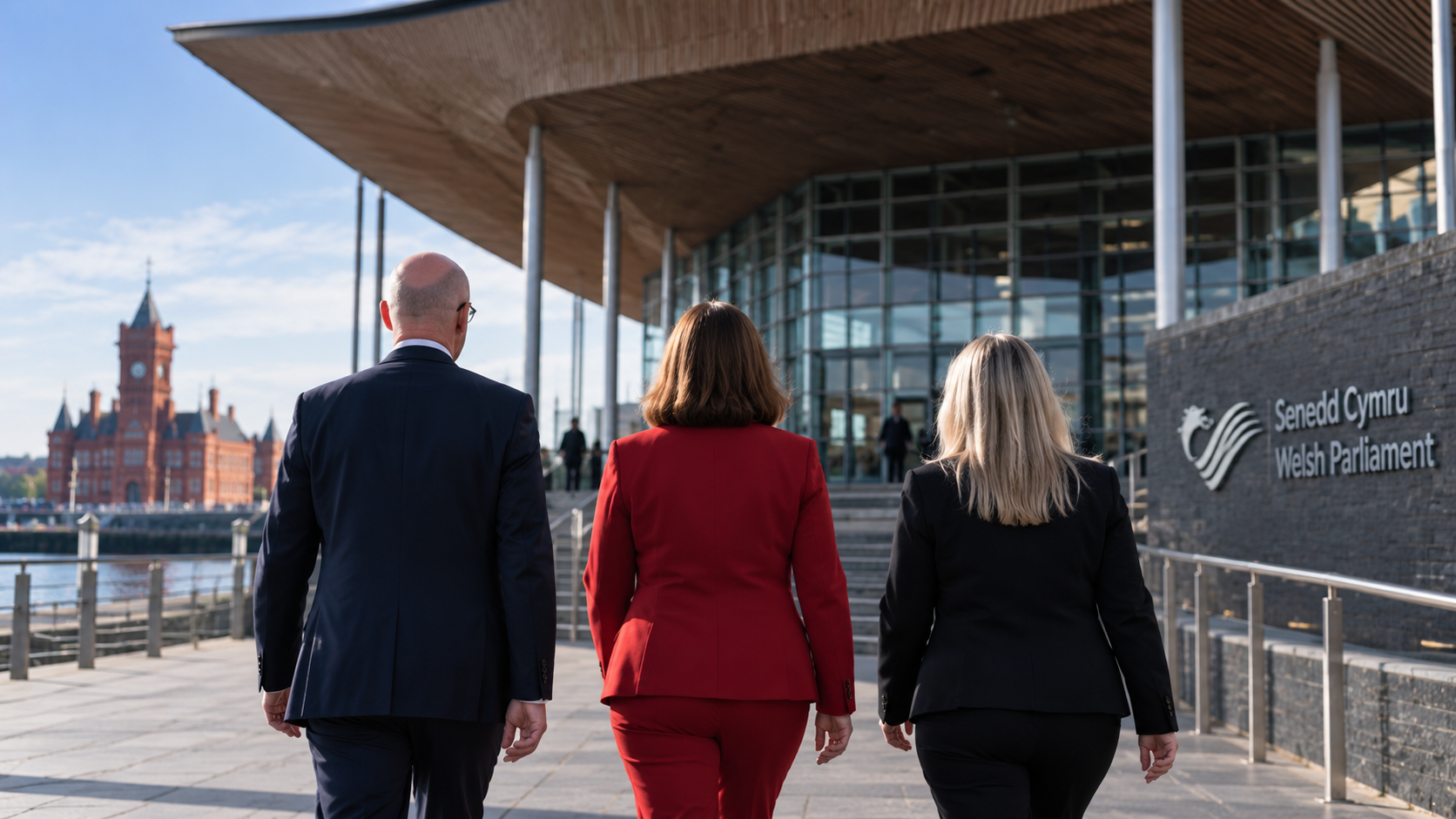
Scottish and Welsh governments sign Cardiff Agreement to boost co-operation
The Scottish and Welsh governments have signed the landmark Cardiff Agreement, establishing a shared framework for policy co-operation and constitutional reform.

Political dynamics across the British Isles entered a new phase on Monday, 14 September 2026, as the leaders of Scotland and Wales formally signed the Cardiff Agreement during a historic summit in Cardiff, establishing a shared framework for co-operation on constitutional reform, economic strategy, and social policy. The landmark accord follows an unprecedented gathering of nationalist leaders from across the United Kingdom's Celtic nations, who used the platform to declare that Westminster's political model is drawing to a close. According to reporting from Yahoo News UK, the agreement marks the first time since the advent of devolution that both Scotland and Wales are led by administrations committed to self-determination.
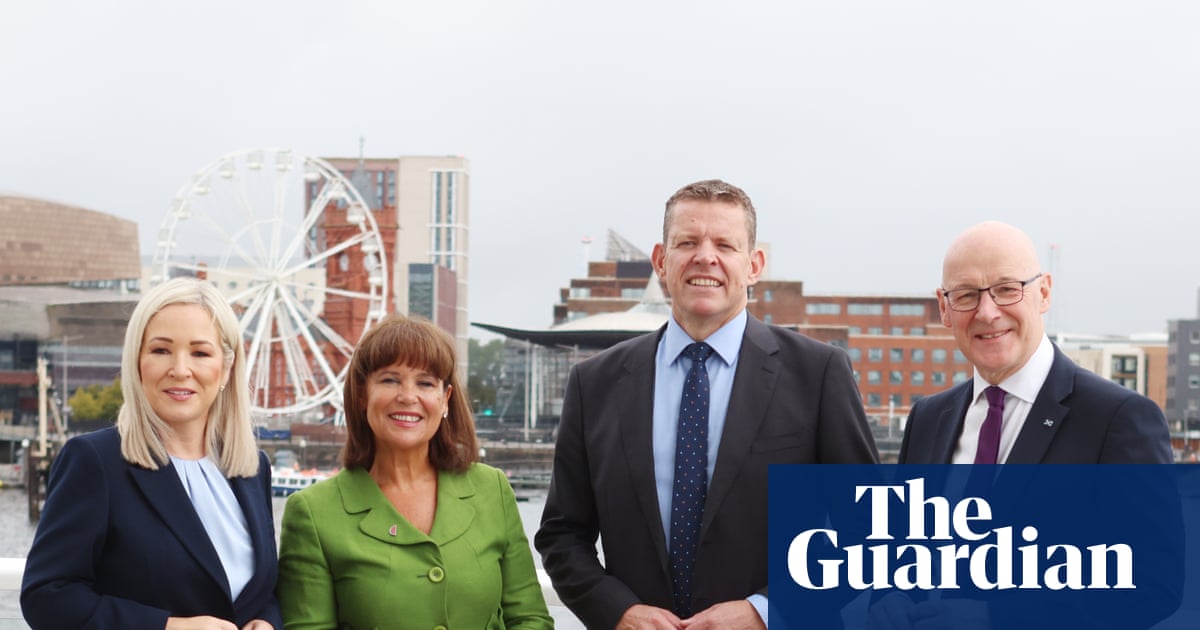
The intergovernmental pact was struck after a high-profile morning session where Scottish First Minister John Swinney, Welsh First Minister Rhun ap Iorwerth, Northern Ireland First Minister Michelle O’Neill, and Sinn Féin president Mary Lou McDonald signed a broader memorandum of understanding. Reporting by The Guardian noted that the joint declaration asserts that no Westminster government possesses the right to block democracy or undermine the principle that local populations should decide their own futures. Al Jazeera highlighted that the summit represents the first occasion where the constituent nations have attempted to proactively drive the constitutional question in a unified manner.
Media additions


Underpinning the political declarations are substantial policy intersections. The Cardiff Agreement establishes structured channels for sharing administrative expertise, specifically pointing to Wales replicating Scotland's child payment scheme via its own pilot project, known as Cynnal, to support low-income households. Furthermore, the two governments pledged to pursue sustainable economic growth, renewable energy development, and closer institutional ties with the European Union. As detailed by Yahoo News UK, the framework remains non-legally binding and preserves the distinct legislative accountabilities of both the Scottish Parliament and Senedd Cymru, while mandating at least annual meetings between the first ministers.
Despite the visual unity in Cardiff, analysts emphasize significant divergence in the underlying constitutional mechanics and electoral mandates of the participating nations. Laura McAllister, a professor of public policy at Cardiff University, told The Guardian and Al Jazeera that while the optics are powerful, the actual timelines and goals sought by the leaders are fundamentally distinct. The Scottish National Party is pushing for a second independence referendum within the current Holyrood term, aiming for a vote by 2031 or as early as 2028, according to BBC News. Conversely, Plaid Cymru has ruled out an immediate referendum during its initial term in the Senedd, focusing instead on securing broader devolution powers equivalent to those held in Scotland and Northern Ireland. In Northern Ireland, the path to constitutional change is governed by the statutory provisions of the 1998 Good Friday Agreement, requiring a secretary of state to call a poll if a majority appears likely to favour a united Ireland.
| Nation | Leading Nationalist Party | Stated Timeline / Mechanism | Recent Polling Support |
|---|---|---|---|
| Scotland | Scottish National Party (SNP) | Referendum targeted within current Holyrood term (by 2031) | 47% |
| Northern Ireland | Sinn Féin | Reunification poll anticipated by 2030 under Good Friday Agreement | 36% |
| Wales | Plaid Cymru | Longer-term ambition; immediate focus on enhanced devolution powers | 32% |
The coordinated push has drawn sharp rebukes from unionist politicians and the UK government in London. The Independent and BBC News reported that Prime Minister Andy Burnham's official spokesperson reiterated that the prime minister remains focused on easing cost-of-living pressures and delivering economic security rather than engaging in constitutional division. The UK government maintains that a repeat of the 2014 Scottish referendum is off limits due to the absence of a broad public consensus. Scottish Secretary Douglas Alexander dismissed the nationalist summit as a distraction from vital economic growth, while Scottish Conservative leader Russell Findlay asserted that voters would recoil at the sight of the SNP joining forces with Sinn Féin.
The geopolitical backdrop of the summit was further complicated by recent international commentary. The Independent and Al Jazeera noted that US President Donald Trump expressed support for a united Ireland during a visit to the region, remarks that Michelle O’Neill argued demonstrated that the unity debate is very much alive.
What to Watch Next
- Prime Minister Andy Burnham is expected to hold face-to-face talks with the first ministers of Scotland, Wales, and Northern Ireland next month.
- Implementation of the joint policy pilots, including the Welsh Cynnal child poverty scheme modelled on Scottish best practice.
- Ongoing parliamentary debates in Holyrood and the Senedd regarding legislative consent mechanisms and the scope of devolved powers under the UK Internal Market Act.