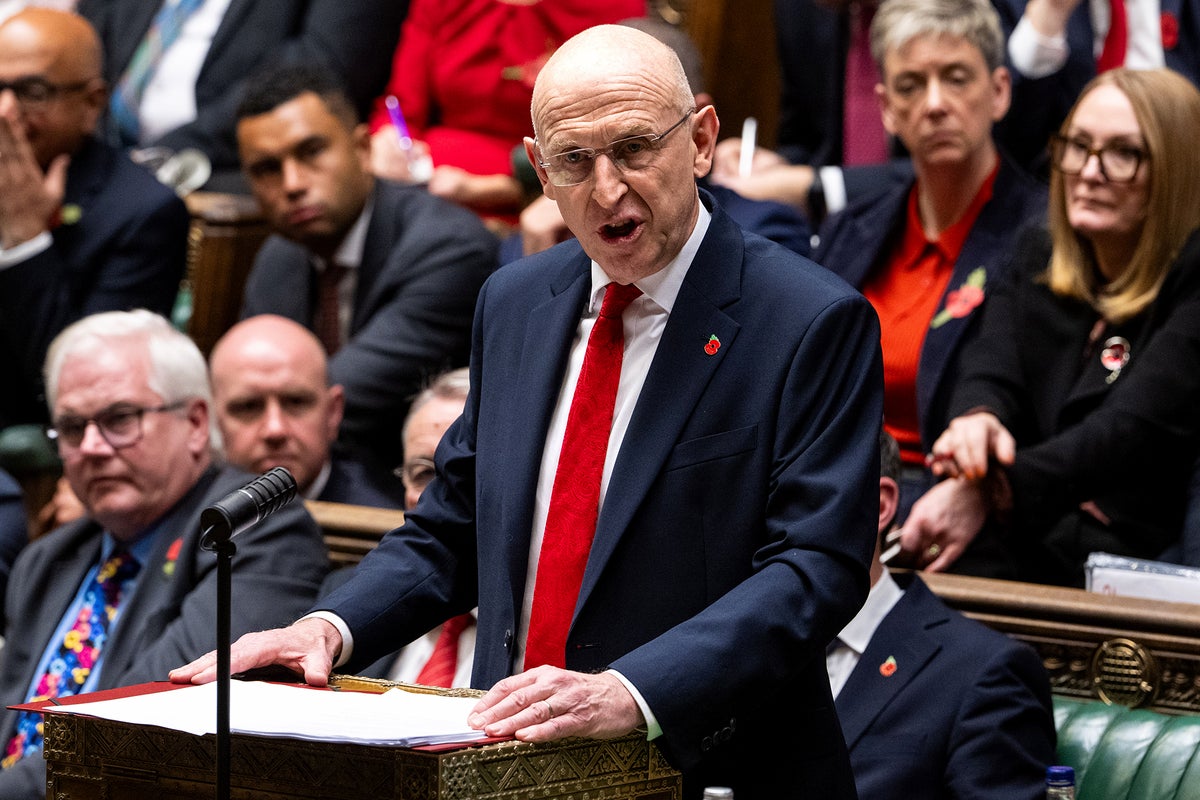
Chancellor John Healey defends Budget as IFS warns of worst income growth decade
Chancellor John Healey has defended his debut fiscal package against criticism from economic forecasters and business groups, as the IFS warns of a severe stagnation in household living standards.

- Core Development: Chancellor John Healey has defended his debut fiscal package against criticism from economic forecasters and business groups, as the IFS warns of a severe stagnation in household living standards.
- Beat Context: Categorized under Politics with independent corroboration.
- Reporting Depth: 4 minute analytical read synthesized from verified newsroom sources.
Chancellor John Healey has defended his debut fiscal package against a barrage of criticism from economic forecasters and business groups, insisting that his administration has provided essential relief while acknowledging that no administration can completely insulate the public from global economic turbulence. The Budget 2026 has ignited an intense political debate over the state of the nation's finances, arriving as independent analysts warn that British households face an unprecedented stagnation in living standards.
Speaking across a series of broadcast interviews, Healey maintained that his fiscal strategy was designed to support workers and businesses without resorting to crude, damaging spending cuts. According to reporting by Yahoo News, the Chancellor pointed directly to international conflicts and trade headwinds as the primary drivers of domestic financial pain. Prime Minister Andy Burnham echoed this sentiment during a visit, asserting that the British economy was defying the expectations of forecasters despite official downward revisions to gross domestic product growth.
Media additions



Those revisions, published by the Office for Budget Responsibility, indicate that UK economic growth will slow to 1% next year. More alarming for long-term financial security, the Finance report via Yahoo highlighted warnings from the Institute for Fiscal Studies that disposable incomes will rise by a paltry 2% across the decade. Helen Miller, director of the think tank, described the trajectory as the worst decade for growth in household incomes on record, contrasting sharply with the 12% growth seen during the previous decade.
| Economic Indicator | Previous Decade (2010s) | Current Decade (2020s Projection) |
|---|---|---|
| Disposable Income Growth | ~12% | ~2% |
| Projected Energy Cost Jump (Oct 2026 – July 2027) | N/A | ~£400 per household |
| Average Budget Energy Savings per Family | N/A | ~£140 over the same period |
Think tanks argued these measures fall short of neutralizing soaring household overheads. Energy costs are projected to climb by approximately £400 per household between October 2026 and July 2027, driven by ongoing disruption linked to the Iran war.
Political opposition leaders seized on the gloomy forecasts to condemn the government's approach. Shadow chancellor Andrew Griffith lambasted the fiscal event in the Commons, characterizing it as a missed opportunity that relies on higher taxes and increased borrowing while lowering growth and living standards.
Retail and business leaders added their voices to the chorus of discontent. As reported by Fibre2Fashion, the British Retail Consortium warned that the high street is burdened by £41 billion in business taxes this year alone, with one in seven shops lying empty. Although the Chancellor raised the small business rate relief threshold from £12,000 to £18,000, exempting 70,000 smaller firms, industry representatives argued that a real-terms freeze on rates for medium and large retailers actually equates to a 3.5% increase, adding £250 million to sector bills next April. Combined with above-inflation increases to the National Living Wage and unresolved employer National Insurance contributions, trade bodies warned that job losses and store closures would accelerate.
Controversy also surrounded the Chancellor's mechanisms for funding public commitments. The IFS criticized Healey for tapping Treasury reserves to plug a £4.7 billion shortfall in the defence investment plan, a move economists warned depletes the nation's buffer against future economic shocks and increases the likelihood of brutal departmental spending cuts during next year's Spending Review. Furthermore, UK news via Yahoo reported on intense scrutiny regarding welfare spending, after ministers faced conflicting interpretations over whether benefit bills would be actively reduced before the next general election. Downing Street subsequently clarified that no arbitrary timetable or crude benefit cuts had been mandated, with further details expected following upcoming reviews into youth employment and disability benefits.
With business groups warning of potential tax speculation ahead of future fiscal statements and economists urging structural rather than temporary fixes, attention turns toward upcoming policy milestones. Readers can monitor developments through our dedicated Politics coverage, alongside previous reports detailing how Budget 2026 sets record tax high as OBR warns living standards will stall and how John Healey warns of more ‘hard decisions’ and departmental spending cuts amid ongoing debates over government borrowing and spending.
How significant is this development?
Contribute your assessment to the aggregated reader sentiment ledger.
Frequently Asked Questions
Key questions answered in this reportWhat is the key development in: Chancellor John Healey defends Budget as IFS warns of worst income growth decade?
Chancellor John Healey has defended his debut fiscal package against criticism from economic forecasters and business groups, as the IFS warns of a severe stagnation in household living standards.
Why is this Politics development significant for the UK?
This report covers critical events in our Politics beat. Independent reporting monitors related UK statements, regulatory shifts, and public responses as further verified details emerge.
How was this reporting corroborated and verified?
Newsarchy UK compiles and cross-references reporting from primary reporting from ABN AMRO and cross-checked wire reports. All coverage adheres to published editorial standards.
When was this report published?
This briefing was published on October 30, 2026 and is permanently cataloged in the Newsarchy UK Politics archives.