Michigan appeals federal ruling blocking Whitmer bid to shut down Line 5
Michigan state officials have appealed a federal decision blocking the state from enforcing its termination of the Line 5 easement beneath the Straits of Mackinac.

- Core Development: Michigan state officials have appealed a federal decision blocking the state from enforcing its termination of the Line 5 easement beneath the Straits of Mackinac.
- Beat Context: Categorized under Transport with independent corroboration.
- Reporting Depth: 4 minute analytical read synthesized from verified newsroom sources.
Michigan state officials are pressing ahead with their legal fight over the Enbridge Line 5 pipeline, asking appellate judges to revive an effort to remove the petroleum infrastructure from the bottomlands of the Great Lakes. The move comes after a lower federal court ruled that state-level attempts to terminate the pipeline's operational easement could not be enforced, setting up a high-stakes legal clash over state land authority, federal pipeline safety oversight, and cross-border trade relations.
The dispute centers on twin pipelines resting on the lakebed in the Straits of Mackinac, a channel connecting Lake Huron and Lake Michigan. Governor Whitmer and Michigan Department of Natural Resources Director Scott Bowen filed a brief with the 6th Circuit Court of Appeals, challenging a decision by U.S. District Judge Robert Jonker. Judge Jonker had previously ruled in favor of Enbridge, concluding that Congress prohibited states from regulating interstate pipeline safety through the Pipeline Safety Act and that state action interfered with federal foreign policy and trade relations with Canada.
Media additions


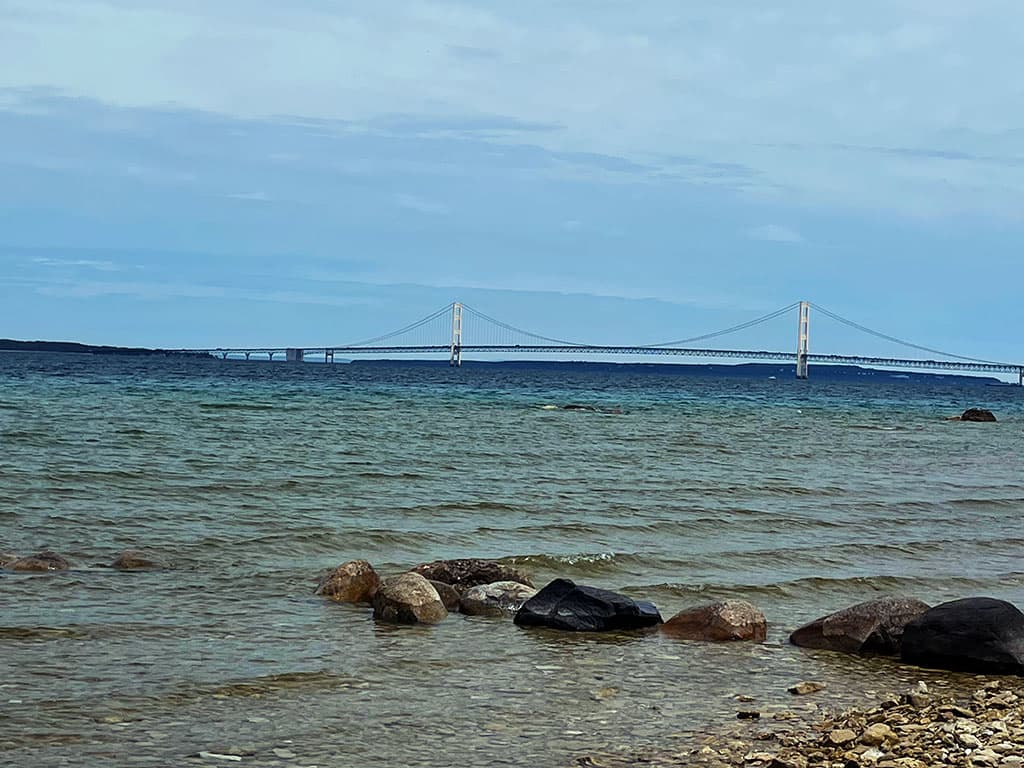
At the core of the state's appeal is the argument that the district court improperly accepted Enbridge's position that federal law and foreign affairs doctrines permanently strip Michigan of control over its own public lands. State attorneys argued in their filing that upholding the lower ruling would force Michigan into an endless, congressionally compelled occupation of its land even if an operator failed to comply with access terms. According to the state's legal team, neither the Pipeline Safety Act nor a 1977 transit treaty between the United States and Canada grants the company a right to use public land without a valid easement or state consent.
Enbridge countered that the legal push by Michigan is fundamentally about pipeline safety, an area regulated exclusively by the federal Pipeline and Hazardous Materials Safety Administration. Enbridge spokesperson Ryan Duffy stated that the federal agency has taken no action against Line 5, underscoring its safe operation, according to reporting cited by Yahoo News. Enbridge also emphasized that a closure would cause significant energy disruptions in the United States and Canada, and asserted that any disputes must be resolved through the dispute resolution process of the 1977 Transit Treaty invoked by Canada.
The wider controversy involves overlapping legal actions and regulatory decisions across multiple jurisdictions, drawing in state agencies, tribal nations, and environmental advocates.
| Entity / Action | Key Development | Context / Stance |
|---|---|---|
| State of Michigan Appeal | Filed response brief in the 6th Circuit Court of Appeals | Seeking to overturn a lower court ruling that blocked the termination of the 1953 Straits easement. |
| Enbridge Defense | Defending federal regulatory primacy | Argues the Pipeline Safety Act and the 1977 Transit Treaty protect the pipeline from state shutdowns. |
| Tribal Opposition | Amicus briefs and intervention petitions | Great Lakes tribes, including the Bay Mills Indian Community, argue the pipeline threatens treaty-reserved fishing and cultural resources. |
While the appellate battle over the existing easement proceeds, state agencies have simultaneously advanced regulatory reviews for a replacement project. The Michigan Department of Environment, Great Lakes, and Energy and the Department of Natural Resources issued permits for Enbridge's proposed tunnel project beneath the Straits of Mackinac, which would house a new replacement pipeline. Those permit decisions drew sharp criticism from environmental organizations and tribal nations who argue that the state should decommission the pipeline entirely rather than facilitate its continued operation.
Opposition to the pipeline is deeply rooted in tribal sovereignty and treaty rights. Ten Native American tribes filed an amicus brief with the U.S. Supreme Court supporting the state's right to pursue litigation in state court, pointing to long-standing fishing and harvesting rights in the Straits of Mackinac according to reporting by the Detroit Free Press. Organizations such as the Native American Rights Fund and Earthjustice have actively represented the Bay Mills Indian Community in opposing the pipeline and its proposed tunnel, citing environmental risks and past spills within Enbridge's broader network.
Further court proceedings in the 6th Circuit will determine whether the state's easement termination can move forward or if federal authorities and international treaties retain exclusive sway over the cross-border energy corridor.
How significant is this development?
Contribute your assessment to the aggregated reader sentiment ledger.
Frequently Asked Questions
Key questions answered in this reportWhat is the key development in: Michigan appeals federal ruling blocking Whitmer bid to shut down Line 5?
Michigan state officials have appealed a federal decision blocking the state from enforcing its termination of the Line 5 easement beneath the Straits of Mackinac.
Why is this Transport development significant for the UK?
This report covers critical events in our Transport beat. Independent reporting monitors related UK statements, regulatory shifts, and public responses as further verified details emerge.
How was this reporting corroborated and verified?
Newsarchy UK compiles and cross-references reporting from primary reporting from Unicorn Riot and cross-checked wire reports. All coverage adheres to published editorial standards.
When was this report published?
This briefing was published on September 5, 2026 and is permanently cataloged in the Newsarchy UK Transport archives.