At least 18 die after thousands breach border between Morocco and Spanish territory
Thousands of people surged across the border into the Spanish enclave of Ceuta, leaving at least 18 dead and overwhelming local services.
- Core Development: Thousands of people surged across the border into the Spanish enclave of Ceuta, leaving at least 18 dead and overwhelming local services.
- Beat Context: Categorized under World with independent corroboration.
- Reporting Depth: 4 minute analytical read synthesized from verified newsroom sources.
Thousands of people surged across the border between Morocco and the Spanish enclave of Ceuta on Thursday night, overwhelming local services and leaving at least 18 dead. The sudden influx, described by a local workers’ association as a “serious humanitarian crisis,” forced Madrid to dispatch troops and prompted a visit by Prime Minister Pedro Sánchez and Interior Minister Fernando Grande‑Marlaska on Friday.
Scale of the breach
- Official estimates put the number of irregular entries at roughly 49 000 in a 24‑hour period, a figure that would represent more than half of Ceuta’s resident population of about 83 600.
- A police source in Ceuta said the total number of arrivals over the past few days is around 40 000, matching the enclave’s population of roughly 80 000.
- At least 7 000 of those reported to be minors, according to Spanish officials.
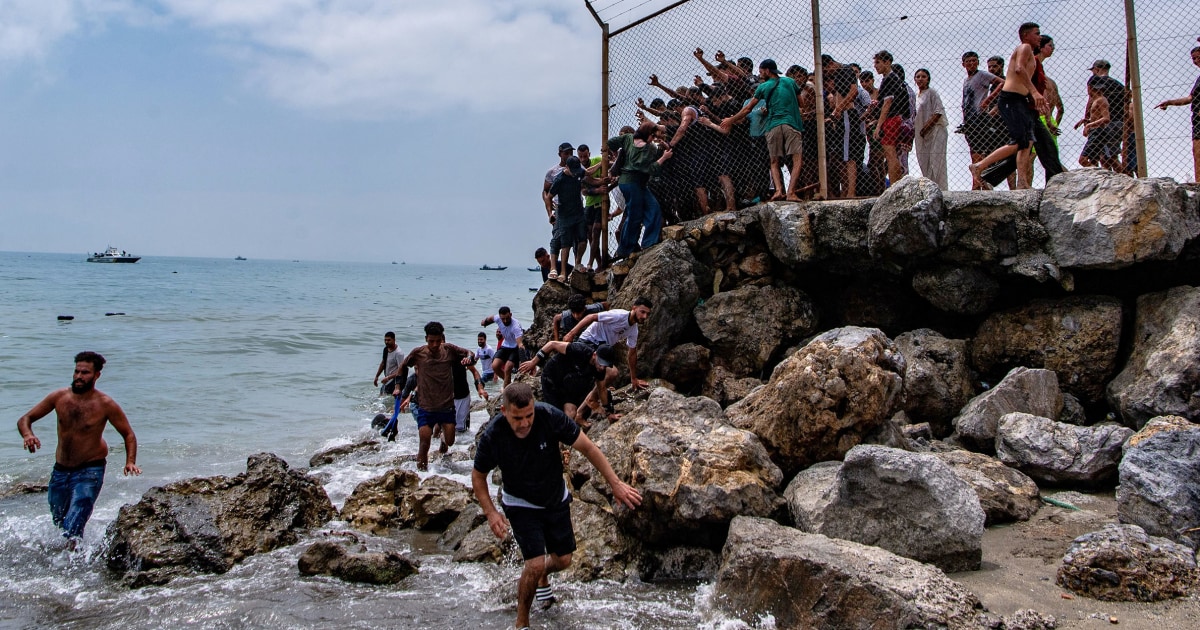
- Eighteen migrants have died – many by drowning, others in a stampede at the breakwater fence on Tarajal beach.
Videos shared by Spain’s state broadcaster RTVE showed burned vehicles on the Moroccan side of the frontier and crowds of mainly young men, families and children streaming across the breakwaters and onto the streets of Ceuta.
Media additions
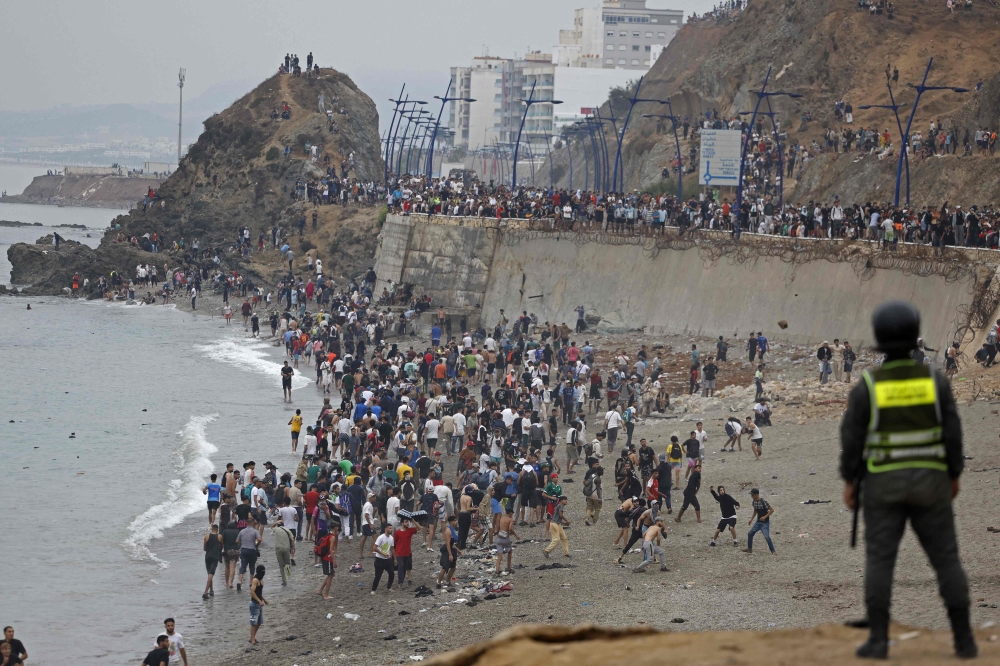
“People are still entering. The reinforcements that have arrived are only helping the injured and other humanitarian efforts. It’s chaotic.”
Rachid Sbihi, head of a workers’ association representing Civil Guard officers, via NBC News
Rachid Sbihi, who leads a local workers’ association representing Civil Guard officers, said thousands of migrants – including unaccompanied children – were sleeping in parks and on sidewalks while others roamed the streets “aimlessly.” The association’s assessment parallels a similar description from a police source quoted by Malay Mail, which noted a “steady stream of people all night long.”
What triggered the mass crossing?
Ceuta authorities have linked the surge to a Spanish Supreme Court ruling issued earlier in the month that bars the immediate return of migrants rescued at sea. The ruling applies only to sea‑borne arrivals; it does not affect those who reach the enclave by scaling the fence. Some Moroccan activists, however, doubt the legal decision was known to the bulk of migrants, arguing that “most migrants would have been unaware of such legal decisions.”
Other analysts point to the broader diplomatic backdrop. In 2021, a dispute over the Western Sahara led Morocco to relax its border controls, allowing a wave of 8 000 migrants to cross. A similar diplomatic tension resurfaced after Sánchez’s recent trip to Algeria, a country that backs Sahrawi independence. The Moroccan Association of Human Rights’ Omar Naji told the Associated Press that “the latest surge appeared to have been driven by the situation in Ceuta,” without naming a specific catalyst.
Regional and international reactions
Italy’s Prime Minister Giorgia Meloni described the images as “shocking” and warned that “uncontrolled immigration” poses a security threat to Europe. She called for the suspension of the Schengen arrangement between Italy and Spain, a move later clarified by Italy’s foreign ministry as a call for a temporary suspension at the Italy‑Spain border rather than a broader exclusion.
France responded by activating its Rapid Intervention Border Force, with Interior Minister Laurent Nunez posting on X that France would “strengthen border checks with Spain.”
Spain’s foreign minister, José Manuel Albares, rebuked the Italian comments as “improper” and urged “European solidarity” rather than “partisan demagoguery.” Finland’s Interior Minister Mari Rantanen backed the Italian stance, stating Spain had “failed to protect its border.”
Military deployment and government response
By Friday morning, Madrid had moved troops into both Ceuta and its sister enclave Melilla, where 300‑400 additional crossings were reported overnight. The deployment aims to “guarantee the inviolability of the frontier and citizen safety,” according to Ceuta’s regional president Juan Jesús Vivas.
Spain’s Interior Ministry, while declining to publish precise figures, said it would release its next migration report on Monday. The ministry also noted that existing legislation does not categorize mass migration as a national‑security emergency, limiting the options for a formal emergency declaration.
What to watch next
| Date | Event |
|---|---|
| Friday morning | Prime Minister Sánchez and Interior Minister Grande‑Marlaska visit Ceuta; troops deployed. |
| Monday | Spain’s Interior Ministry expected to publish its migration report. |
Authorities on both sides of the fence remain silent on the precise cause of the breach, and Moroccan officials have not issued a public statement.
For ongoing coverage of the Ceuta crisis, see Spain deploys military to Ceuta border after thousands cross and the broader World section of Newsarchy UK.
How significant is this development?
Contribute your assessment to the aggregated reader sentiment ledger.
Frequently Asked Questions
Key questions answered in this reportWhat is the key development in: At least 18 die after thousands breach border between Morocco and Spanish territory?
Thousands of people surged across the border into the Spanish enclave of Ceuta, leaving at least 18 dead and overwhelming local services.
Why is this World development significant for the UK?
This report covers critical events in our World beat. Independent reporting monitors related UK statements, regulatory shifts, and public responses as further verified details emerge.
How was this reporting corroborated and verified?
Newsarchy UK compiles and cross-references reporting from primary reporting from nbcnews.com and cross-checked wire reports. All coverage adheres to published editorial standards.
When was this report published?
This briefing was published on July 31, 2026 and is permanently cataloged in the Newsarchy UK World archives.