Iran signals readiness for US ground operations as MoU expires
Iranian military authorities have signaled a potential shift toward offensive operations as a key bilateral memorandum with Washington expires, heightening regional tensions.

- Core Development: Iranian military authorities have signaled a potential shift toward offensive operations as a key bilateral memorandum with Washington expires, heightening regional tensions.
- Beat Context: Categorized under World with independent corroboration.
- Reporting Depth: 4 minute analytical read synthesized from verified newsroom sources.
Iranian military and political authorities have signalled a potential shift toward a more aggressive posture as a key diplomatic framework governing regional tensions reaches its formal conclusion. The developments unfold against a backdrop of prolonged friction concerning critical maritime choke points, drawing intense scrutiny across Al Jazeera reporting.
Tehran officials indicated that defensive efforts could evolve into offensive measures as a Memorandum of Understanding with Washington expires on Monday, August 18, 2026. The bilateral agreement had previously experienced severe strain after hostilities resumed in July following an earlier June ceasefire.
Media additions

Brigadier General Yadollah Javani, head of the political bureau of the Islamic Revolutionary Guard Corps, addressed state television to confirm that armed forces stand prepared for any necessary defensive action. The enemy started the war and our efforts have been defensive, although they might take on an offensive aspect,
Javani stated, adding that adversaries should anticipate strategic surprises without elaborating on specific tactical implementations. Earlier, IRGC spokesman Hossein Mohebbi cautioned that infrastructure belonging to the United States and regional allies—including power plants, energy grids, and digital networks—could face targeting if American forces strike civilian installations inside Iran.
Hardline factions within domestic political circles have also debated potential ground incursions targeting foreign interests in neighboring states if a direct invasion materializes. Observers and analysts have questioned the logistical viability and inherent escalation risks associated with such scenarios, while independent monitors note an absence of verifiable indicators pointing toward imminent allied ground campaigns on Iranian soil.
The hardening stance follows a consolidation of security leadership by Supreme Leader Mojtaba Khamenei, who elevated several figures from the military old guard into pivotal defence portfolios. Newly appointed IRGC commander Major General Ahmad Vahidi received directives to balance maximum deterrence with readiness for powerful offensive operations. Vahidi asserted that national armed forces had successfully humbled the world's most heavily armed military following initial joint air raids launched by foreign adversaries on February 28, 2026.
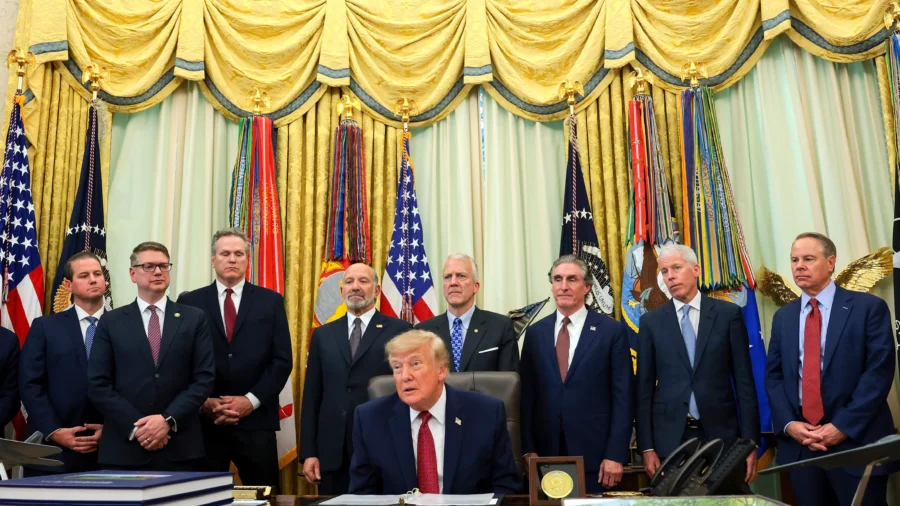
Washington has maintained a competing narrative regarding the trajectory of the conflict. United States President Donald Trump asserted that Tehran suffered a definitive defeat under a naval blockade functioning as a steel wall, while reiterating assertions that the Strait of Hormuz would soon be classified as American territory. Although White House officials subsequently characterized those remarks as informal, the rhetoric drew sharp reactions from Iranian military commanders.
Army chief Amir Hatami announced financial bounties for any individual neutralizing foreign soldiers involved in potential ground operations within national borders, offering doubled incentives for female participants. Hatami maintained that military operational reach remains unhindered, pointing to prior retaliatory strikes against foreign positions in Jordan as evidence of tactical readiness.
Meanwhile, Mohsen Rezaee, secretary of the Supreme National Security Council, claimed that United States Central Command previously weighed ground incursions to seize control of the Strait of Hormuz and nuclear research infrastructure in Isfahan. According to Rezaee, allied planners ultimately shelved those proposals due to inadequate troop projections, estimating that any successful land invasion would require at least one hundred thousand personnel to successfully navigate regional geographic barriers such as the Zagros Mountains.
Defensive preparations have intensified across southern coastal territories and strategic islands, including Kharg Island oil export terminals. Mohammad-Reza Akraminia, an army spokesperson, emphasized that rapid-response units have deployed to prevent any foreign amphibious landings. Territorial safeguards have similarly expanded along western and eastern borders to counter potential destabilisation involving armed separatist groups operating near neighbouring jurisdictions.
Diplomatic channels face parallel complications. Javani maintained that the Strait of Hormuz will remain restricted until Washington fulfills all commitments stipulated under the expired June memorandum. Conversely, the Ministry of Foreign Affairs clarified that the temporary cessation window lacked explicit timeline definitions within the primary text, minimizing the significance of the expiration date regarding ongoing negotiations mediated through Oman.
Ministry spokesperson Baghaei told reporters during a briefing that national policymaking remains entirely autonomous from external ultimatums. He attributed delays in reaching a formalized agreement over the partial reopening of maritime routes to legal complexities and interference from adversarial spoilers. Parliamentary speaker Mohammad Bagher Ghalibaf praised the diplomatic framework as a historic achievement, arguing that defending the nation against multiple stated military objectives constituted a significant strategic victory for the administration.
What to watch next
- Monitor official diplomatic updates from ongoing talks in Oman regarding the potential partial reopening of the Strait of Hormuz.
- Observe any formal security announcements or military posture adjustments following the expiration of the bilateral Memorandum of Understanding.
- Track developments in regional infrastructure security and border defence deployments across southern coastal provinces.
For broader international reporting and background context, consult World coverage.
How significant is this development?
Contribute your assessment to the aggregated reader sentiment ledger.
Frequently Asked Questions
Key questions answered in this reportWhat is the key development in: Iran signals readiness for US ground operations as MoU expires?
Iranian military authorities have signaled a potential shift toward offensive operations as a key bilateral memorandum with Washington expires, heightening regional tensions.
Why is this World development significant for the UK?
This report covers critical events in our World beat. Independent reporting monitors related UK statements, regulatory shifts, and public responses as further verified details emerge.
How was this reporting corroborated and verified?
Newsarchy UK compiles and cross-references reporting from primary reporting from aljazeera.com and cross-checked wire reports. All coverage adheres to published editorial standards.
When was this report published?
This briefing was published on August 17, 2026 and is permanently cataloged in the Newsarchy UK World archives.