Israeli strikes in Gaza kill 7 including senior Hamas security official
Israeli airstrikes across the Gaza Strip killed at least seven people on Tuesday, including Hamas internal security chief Naim Muhammad Ashour Abu Nahal, despite a US-backed ceasefire that began in October 2025.
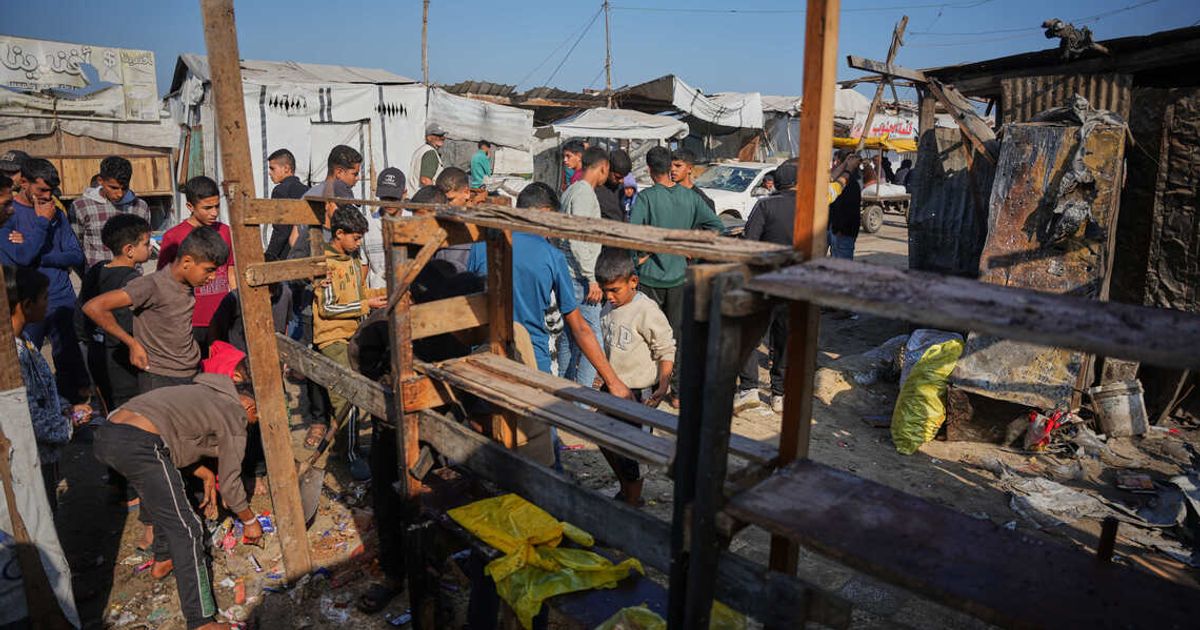
Israeli airstrikes across the Gaza Strip killed at least seven people on Tuesday, including a senior Hamas security official, according to Palestinian officials, medics, and first responders. The escalation unfolded despite a US-backed ceasefire that took effect in October 2025.
The most prominent target of the Tuesday operations was Naim Muhammad Ashour Abu Nahal, identified by Gaza's interior ministry as a 50-year-old brigadier general who served as the director-general of the Internal Security Service. Witnesses told the BBC that an Israeli drone targeted Abu Nahel as he walked on a side street near a tent camp for displaced people in Gaza City's Rimal neighbourhood. Several other individuals sustained serious injuries in the blast.
Media additions


Israel's military and the Shin Bet domestic security agency confirmed the killing in a joint statement, asserting that they had eliminated the terrorist Naim Muhammad Ashour Abu Nahal. The military stated that Abu Nahal had been appointed to his post just two months prior — following the capture of his predecessor in a raid by Israeli special forces — though he had a long history with Hamas. According to the Israeli military, Abu Nahal possessed extensive institutional knowledge regarding Hamas's internal security service, which enforces discipline and roots out informants, and had advanced attacks against Israeli troops and civilians during the conflict.
Caretaker Prime Minister Benjamin Netanyahu and Defence Minister Israel Katz publicly congratulated security forces on the operation. Netanyahu's office issued a statement declaring that no terrorist will manage to escape the long reach of the State of Israel. Conversely, Gaza's interior ministry condemned the strike, asserting that Abu Nahal was targeted because of the internal security service's recent achievements in combating gangs collaborating with Israel.
The strike on Abu Nahel was one of multiple attacks carried out on Tuesday. Mahmoud Bassal, a spokesman for Gaza's civil defence agency, reported that a separate Israeli strike near Gaza City killed three people, including a 17-year-old. A third strike hit a police station in the Al-Mawasi area of southern Gaza, near Khan Younis, resulting in three additional deaths. Gaza's police force stated that two officers, aged 23 and 33, were among those killed and condemned the attack as part of an ongoing campaign targeting the police apparatus aimed at sowing chaos. The Israeli military stated that it had struck military operatives in both areas but did not confirm the strike that killed the teenager.
| Reporting Source | Palestinians Killed Since Truce | Israeli Casualties Since Truce | Estimated Displaced Population | Israeli Territorial Control |
|---|---|---|---|---|
| AFP / Straits Times / Edition.mv | More than 1,650 | 7 soldiers, 1 contractor | 2.1 million | More than 60% |
| Reuters / The Whistler / Al-Monitor | At least 1,600 | 5 soldiers | Approximately 2 million | Around two-thirds |
| BBC | At least 1,679 | 6 soldiers | 2.1 million | Not specified |
| Al Jazeera | At least 1,643 | Not specified | Not specified | Not specified |
The ongoing violence coincides with a political transition in Israel. Netanyahu is serving as caretaker prime minister after his right-wing bloc lost its parliamentary majority in national elections held in October. President Isaac Herzog has tasked centrist rival Gadi Eisenkot with forming a government, though Eisenkot lacks a clear path to a stable majority. Netanyahu, who built his reputation as a security hawk following the Hamas-led attack on October 7, 2023, remains in charge of military operations while coalition negotiations continue.
Disagreements persist over the terms of the October 2025 ceasefire, which halted major fighting and secured the return of remaining Israeli hostages. The agreement outlined a framework intended to lead to Hamas's disarmament, alternative Palestinian governance, and an eventual Israeli withdrawal. Israel accuses Hamas of attempting to regroup, rebuild military capabilities, construct tunnels, and accumulate weapons. Hamas denies these allegations, arguing that it remains committed to the agreement while accusing Israel of trying to undermine it. Since the truce began, differing tallies from the outlets indicate that at least 1,600 to 1,679 Palestinians have been killed, alongside between five and seven Israeli soldiers.
Humanitarian conditions across the enclave remain severely constrained. Heavy rainfall earlier in November caused flooding and damage to thousands of shelters housing displaced families. The United Nations and humanitarian partners have called on Israel, which controls Gaza's border crossings, to permit the entry of essential winter supplies, including tents, heaters, water pumps, vaccines, and medicines. On Tuesday, Gaza's health ministry warned of a rapid rise in meningitis cases, reporting 272 infections in October alone, roughly eight times the usual monthly average, alongside 15 deaths attributed to the infection over the year. The Israeli military liaison agency Cogat stated that it is working to provide a dedicated humanitarian response, noting that a newly approved package of water tankers, pumps, generators, and medical equipment was presented during a meeting with UN agencies.
Overall, the health ministry reports that more than 74,000 Palestinians have been killed since the war began in October 2023, when Hamas-led attackers killed 1,200 people and took 251 hostages.
What to watch next
- Whether Gadi Eisenkot can successfully assemble a governing coalition before his mandate expires, or if Benjamin Netanyahu secures a unity government that preserves his tenure.
- If the ceasefire's provisions concerning disarmament and governance make any headway, or if daily strikes and mutual violation accusations cause the agreement to collapse entirely.
- Whether Israeli authorities permit increased shipments of humanitarian aid and winter supplies as temperatures drop and meningitis cases climb.
- The longer-term impact of Abu Nahel's assassination on Hamas's internal security apparatus and its crackdown on suspected informants and rival militias.