Pope Francis Private Diary Reveals Spiritual Crisis and Encounters With Devil
The Vatican has published Pope Francis's private diary, exposing the late pontiff's claims of encountering the devil and a vision of hell.
The Vatican’s publication of Pope Francis’s private diary has exposed the late pontiff’s private claims of three physical encounters with the devil and a vision of the gates of hell, alongside a two-year spiritual crisis rooted in his struggle with power.
The revelations arrive in The Private Diary of Pope Francis, a 160-page book curated by Cardinal Víctor Manuel Fernández, head of the Vatican’s Dicastery for the Doctrine of the Faith and one of Francis’s closest aides. The diary spans entries from 1992 to August 18, 2024, covering Francis’s years as auxiliary bishop of Buenos Aires, cardinal archbishop of the Argentine capital, and finally pope. He died on April 21, 2025, aged 88, after leading the Catholic Church for 12 years.
Media additions
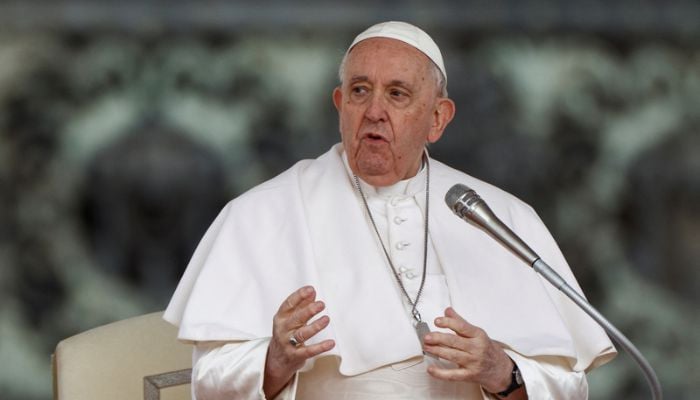

According to excerpts published by the Vatican on Tuesday, Francis wrote that he saw the devil three times: once from a car window while returning home to Buenos Aires, again inside a Carmelite chapel during Mass where he described “flaming eyes,” and a third time in Rome following his January 2018 visit to Chile. In that final encounter, he wrote that he saw and heard a triumphant figure saying, “Now I’ve gotten everything I wanted,” and recalled “the powerful raspiness of his voice.”
“I saw him and heard his voice, triumphant possessing everything. ‘Now I’ve gotten everything I wanted.’ Just as I can’t forget his eyes from the previous two, in this case, I can’t forget the powerful raspiness of his voice.”
Pope Francis, diary entry of January 24, 2021, via The Private Diary of Pope Francis
The diary also records a separate incident dated June 7, 2018, in which Francis wrote that he “saw the entrance to hell” and “peeked in to look a little,” adding that the experience terrified him. He described reaching for his rosary “as a weapon” and thanking God for spiritual protection.
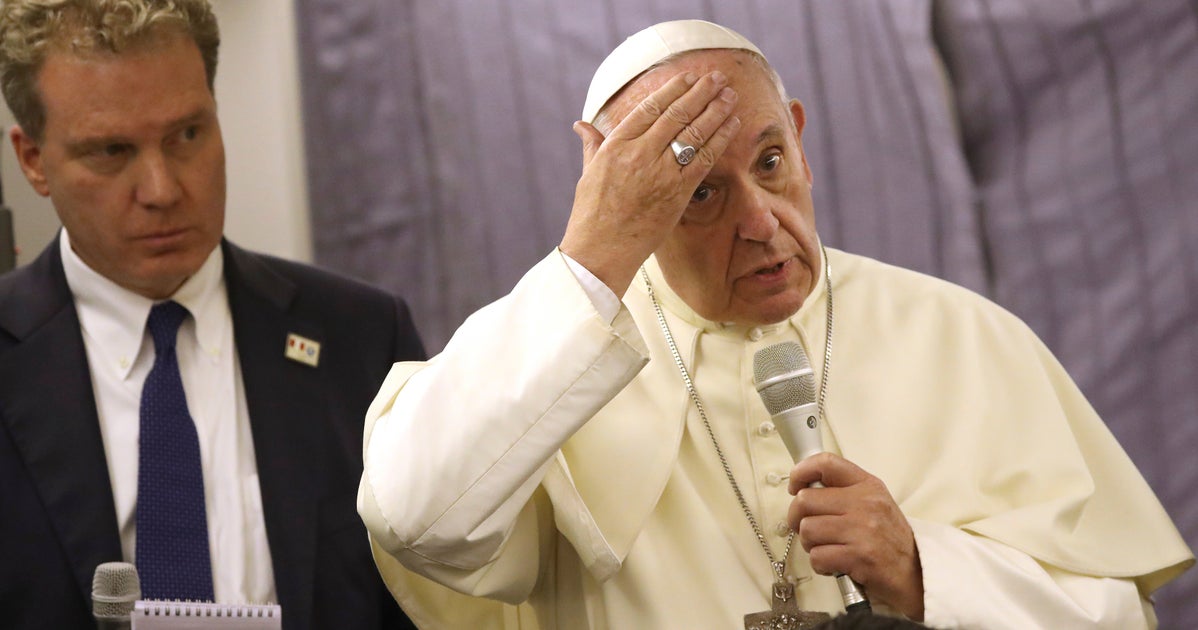
The timing of the hell vision is significant. It came in the aftermath of Francis’s 2018 trip to Chile, during which he discredited victims of the country’s most notorious abuser and defended Bishop Juan Barros, accused of covering up sexual abuse by Father Fernando Karadima. After journalists, including from The Associated Press, challenged him during an in-flight news conference on his return, Francis commissioned an investigation and later acknowledged he had been wrong and misled by the Chilean hierarchy.
“Devastated because of the situation in Chile and the dialogue with the journalists on the airplane,” Francis wrote later. “I became aware of how serious the problem was. … It was hard for me to admit what happened in Chile; I didn’t think it was so serious.”
In the months that followed, he wrote of “what shame and evil this has brought on the church” and “once more the gates of hell,” calling for holiness and conversion “in the midst of so many scandals.”
| Outlet | Diary page count | Languages | Countries |
|---|---|---|---|
| Ugdiplomat | 160 pages | Not specified | Not specified |
| America Magazine | 141 pages | Five | 94 |
The book dates the onset of Francis’s spiritual crisis to January 24, 2021. The day before, he canceled several public appearances, which the Vatican attributed to a bout of sciatica. Cardinal Fernández, however, reveals that Francis was suffering from “insupportable” pain from an intestinal problem that led to surgery in July 2021 to remove 33 centimeters — 13 inches — of his colon.
Fernández writes that the crisis was connected to Francis’s temptation to exercise power omnipotently, a vice the pope had publicly acknowledged in 2013 when he admitted a tendency to wield power in an “authoritarian” way. The crisis, Fernández says, was “mixed with governance issues, pressure regarding decisions to make, and aridity and desolation.” By December 30, 2022, Francis had apparently overcome it by entrusting himself to God’s mercy.
The publication required the approval of Francis’s successor, Pope Leo XIV. Fernández told Leo that he feared the writings would be “left forgotten in some storage,” and Leo granted permission to publish passages. Leo also asked for the removal of sentences mentioning “confusing things about living persons,” according to Fernández’s account in America Magazine.
Some of Francis’s most confidential thoughts remain unpublished. Fernández writes that parts of the diary are recorded in an indecipherable code using symbols, and that he omitted entries affecting third parties. He did include Francis’s personal musing about then-Cardinal Robert Prevost, now Pope Leo XIV: “A great pastor, a generous missionary and an irreproachable man.”
The posthumous release of a pope’s private spiritual writings is not without precedent. Pope John XXIII’s autobiography, Journal of a Soul, was published in 1960, while St. John Paul II’s personal notes, originally intended to be burned, were published in 2014 after his secretary defied his wishes.
For readers, the diary offers an unusually intimate portrait of a pontiff who presented himself publicly as a sinner reliant on divine mercy, yet privately wrestled with shame, worthlessness, and the burden of governing 1.4 billion Catholics. Whether the book will reshape public understanding of Francis’s papacy remains to be seen, but its release ensures that his inner struggles, spiritual, physical, and institutional, will form part of his historical record.
What to watch next
- Whether Pope Leo XIV comments publicly on the diary’s contents or authorizes further excerpts.
- How Catholic theologians and mysticism scholars interpret the coded passages Fernández says cannot be deciphered.
- Whether the Vatican’s ongoing financial investigation appeals, referenced indirectly in Fernández’s text, produce new developments involving Francis’s role.